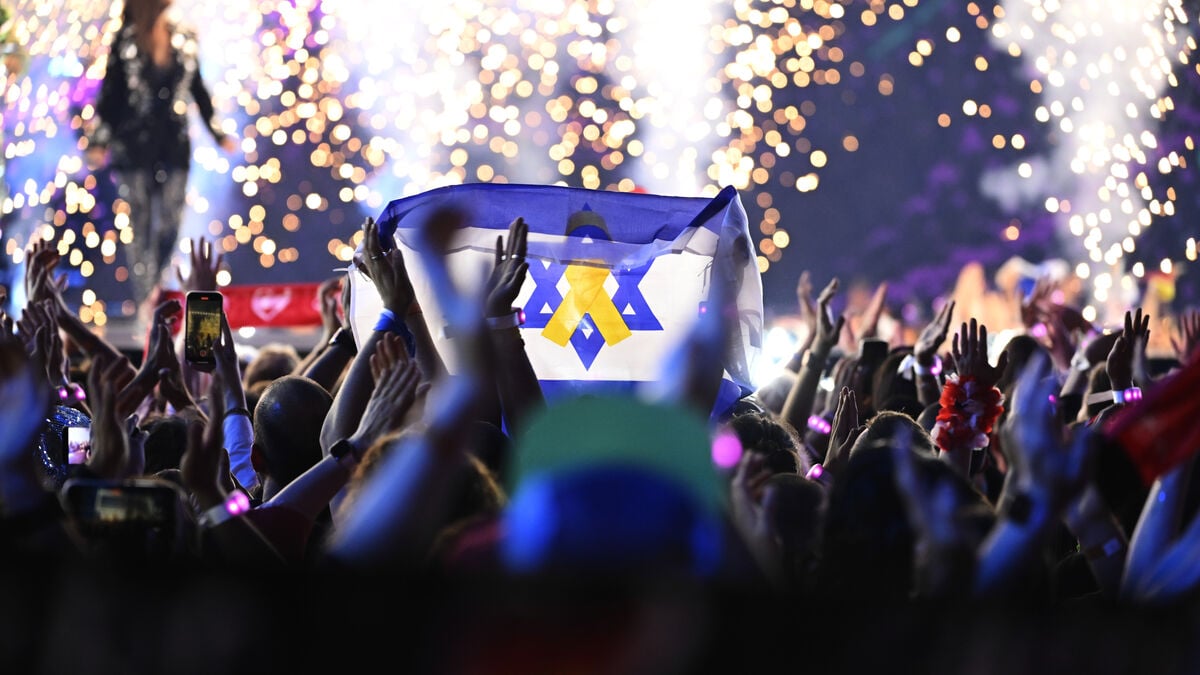
The countries that want to throw Israel out of the Eurovision Song Contest because of the Gaza war must confess their colors at the European Broadcasting Union (EBU) membership meeting in Geneva on December 4.
Do they accept a compromise proposal put forward to discourage voting campaigns and reduce viewer power, which would disadvantage Israel – but allow Israel's television company to send an artist to the Eurovision Song Contest in Vienna next year?
“Damage the competition”
Eurovision expert Dean Vuletic, who has taught university courses on the history and political influence of the contest in New York, Vienna and Prague, believes Israel will be allowed to remain in the contest, explaining that the compromise proposal is designed to accommodate the country's critics. Israel usually hunts for votes more aggressively than other countries, a possibility that will now be limited.
Because there is one thing critics fear more than Israel participating – and that is that the country will win the contest. Even fewer countries would go to the Eurovision Song Contest on Israeli soil.
It was incredibly close last time in Basel. And we know what would happen then. It would hurt the competition immensely, says Dean Vuletic.
Vuletic believes that it will only stop at the four or five countries that have so far spoken out critically boycotting the ESC, including Spain and the Netherlands.
“Political soup”
Carolina Norén, a long-time Eurovision commentator on Swedish Radio, believes that the EBU made a mistake when they opened the door to a vote on the new rules and, by extension, Israel's participation.
I hope the compromise is enough. But the various member states have spoken out so strongly, so it is difficult for them now, domestically, to back down. It has become a real political soup.
Political controversies are nothing new to the Eurovision Song Contest. In the 1960s, there were protests against the contest being held in Spain, in Sweden there was criticism from the left against the contest, and Sweden did not participate at all in 1976. Russia is excluded after the full-scale invasion of Ukraine in 2022.
What is new this time is that liberal Western democracies are on opposite sides. That is startling, says Dean Vuletic.
Everyone threatening to boycott is an EU member. And it's interesting to me that Germany and Austria would rather side with Israel than with their EU partners.