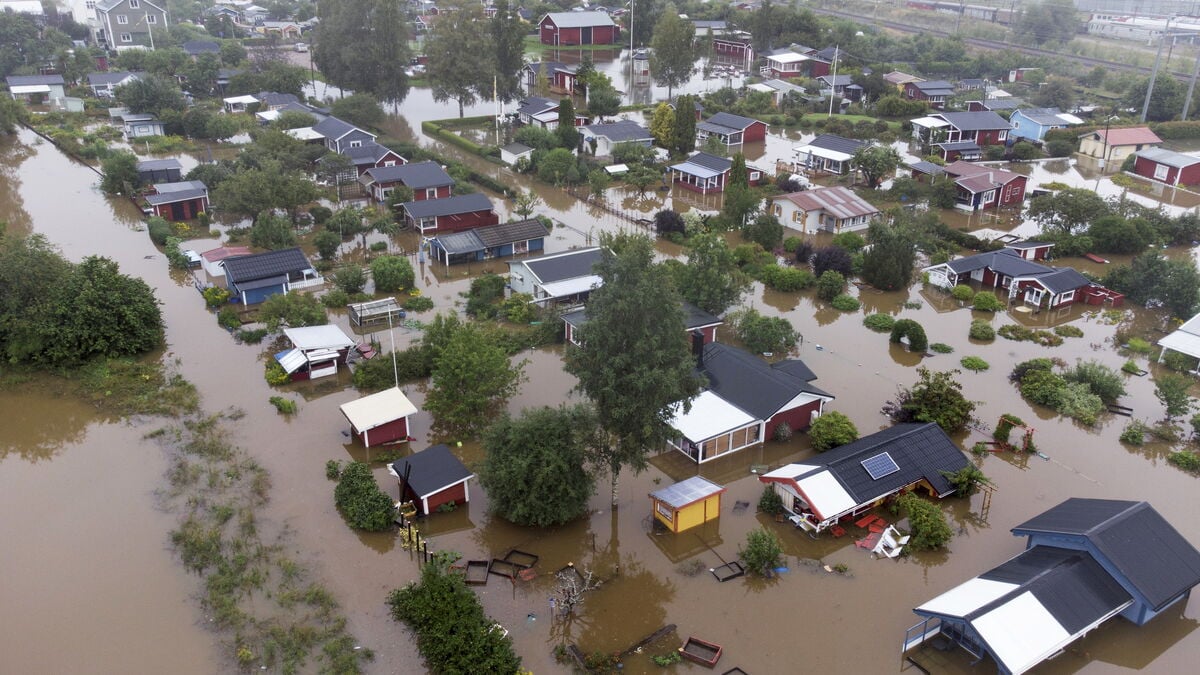
Three days before the screening, the water level in Ann Stigenberg's villa in Gävle was 80 centimeters high. A heavy downpour had flooded the basement.
We had to remove everything we had in the basement. Then we had a viewing, but no one wanted to buy a house with a basement at the time, so we couldn't sell it.
In the past five years, 68,000 villas have suffered such serious damage that they have collectively received insurance compensation of SEK 4.8 billion.
Increased sharply
Major events such as the flood in Gävle in 2021, when Ann Stigberg's basement was filled with water, affect the statistics.
But you should also be aware that even if you remove Gävle from those statistics, natural damage has increased significantly in the last five years, says Per Sangrud, sustainability manager at LF Fastighetsförmedling.
Ron Florax's holiday home at Ringsjön is also among those contributing to the increase in the numbers. It is located 150 meters from the lake and during the flood in January 2024 he needed waders to get to the house. The damage was extensive.
"We actually thought we would be fine because we didn't see any damage inside, but it had just reached the underside of the floor and then it sucked up into the walls. When everything was finished, we had to replace all the floors in the entire house and almost all the walls," he says.
Water damage is the most common, says Per Sangrud, followed by storm damage.
Storm-related damage can be roof tiles flying and flying onto other things, and it could be a tree falling on properties, or a flagpole, for example.
Thought about it
According to a survey by LF Fastighetsförmedling, only 4 percent of those who bought or sold a home during the fall believe that it will be affected by the effects of climate change to any great extent.
But the flood in Gävle made Ann Stigenberg reconsider. It was mostly things that had been in the basement that were destroyed and the house was sold the spring after the floods. After living in an apartment for a while, Ann Stigberg is now a homeowner again.
Now we have bought a new house. It is on a hill and has no basement, so it has left a little mark. And we don't know what the climate will be like in the future.
Home insurance can protect your home if the building is exposed to natural damage. In some cases, the insurance also covers damage to your property. However, you will not normally be compensated for damage that leaks through the roof, facade or drainage, so check what applies to your specific insurance policy.
Review the drainage around the house and check wells, valves and drains where water can leak in. Try to seal doors and windows to basement spaces, store things on shelves and get a drainage pump if the basement is in a vulnerable location.
Check for large trees around the property. Have an expert inspect them if you are unsure. Make sure the flagpole is properly anchored and store loose items such as barbecues and outdoor furniture indoors. Check the roof to make sure no roof tiles, roofing sheets or cladding are loose.
Source: LF Real Estate Agency