"Iran's nuclear facilities have been destroyed and to say otherwise is 'fake news'," read a headline on the White House website from June 25 last year.
A few days earlier, the United States had put an end to fruitless negotiations with Iran by attacking the country from the air and bombing three underground facilities.
According to Trump's victory cry, the matter was settled: Iran's nuclear program had been wiped out for the foreseeable future.
Despite that, negotiations over it have resumed - with threats of attack and war - and limited room for compromise.
Threats and fears
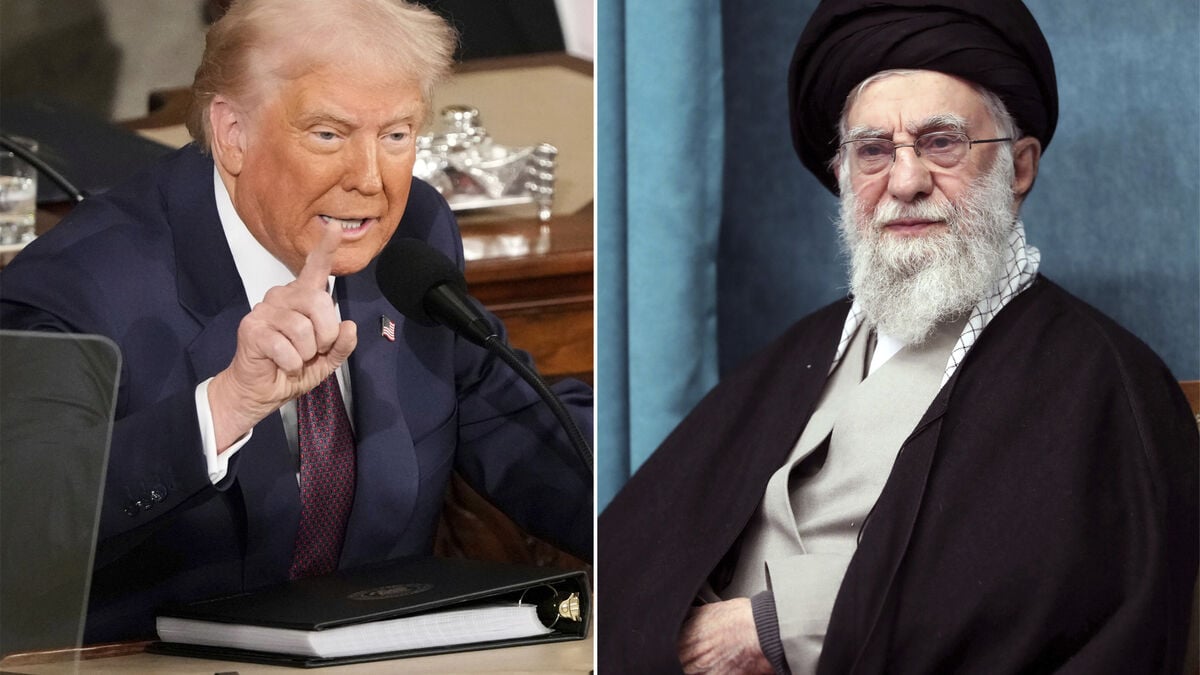
Trump has repeatedly said that Iran's nuclear program has been completely destroyed, most recently in his annual address to Congress on Tuesday. But he still emphasizes that Iran poses a threat.
The ongoing talks are being conducted against a backdrop where the US military has mobilized on a large scale in Iran's vicinity. Trump is reportedly considering military strikes - but there are concerns that it could trigger a major war.
Trump's tactic is "maximum pressure." On the one hand, he has suggested that regime change in Iran would be desirable and expressed support for protesting Iranians. On the other hand, he has demanded even greater limitations on Iran's military capabilities.
But now the nuclear issue is at the top of the agenda. According to Iran, it is the only issue.
“A week away”
US special envoy Steve Witkoff, who is handling the negotiations, claims that Iran has escalated uranium enrichment at such a rapid pace that the country could produce uranium for nuclear weapons in a week.
Iran has not allowed inspections after the bombings, but there have been reports that some highly enriched uranium remains.
In 2018, Donald Trump withdrew the United States from the international nuclear agreement that was signed in 2015 with the aim of controlling low-level enrichment in Iran.
Peaceful compromise?
The US demand is that Iran have no program at all - “zero enrichment”, with concerns about nuclear weapons - but Iran says it has not received such a sharp demand. Foreign Minister Abbas Araghchi says Iran is negotiating a nuclear energy program that can “remain peaceful forever”.
It is unclear how much a new agreement could differ from the previous one, whether it would involve slightly lower enrichment or new controls.
Media reports from different sides of the talks claim that they need to reach a compromise that both parties can present as a victory at home.
In March 2025, US President Donald Trump sent a letter to Iran's Ayatollah Ali Khamenei to open new negotiations. A month later, indirect talks began, but five meetings failed to produce results. Iran announced in June that a third facility would be commissioned.
On June 22, the United States entered the conflict between Israel and Iran and bombed the three nuclear facilities.
In September, previous UN sanctions on Iran were reimposed. The economy deteriorated and popular protests erupted across the country before the turn of the year. The US suspended contacts with Iran and Trump said he was prepared to intervene on the side of the protesters when thousands were killed, but this did not happen.
At the end of January, US military forces began to gather in Iran's vicinity on an unusually large scale. New negotiations began on February 3.
In 2015, the nuclear energy agreement JCPOA was signed between Iran and the “P5+1” - the five permanent members of the UN Security Council (France, China, the UK, Russia and the US) plus Germany.
Iran would only be allowed to enrich a certain amount of uranium to a relatively low purity, far from that required for nuclear weapons, but sufficient for civilian purposes. The outside world would also be given greater transparency. In exchange, sanctions would be lifted, with the goal of all being lifted after ten years, by October 2025.
In 2018, US President Donald Trump decided to withdraw from the agreement and impose stricter sanctions. Iran responded by stepping up its enrichment and stockpiles of uranium.