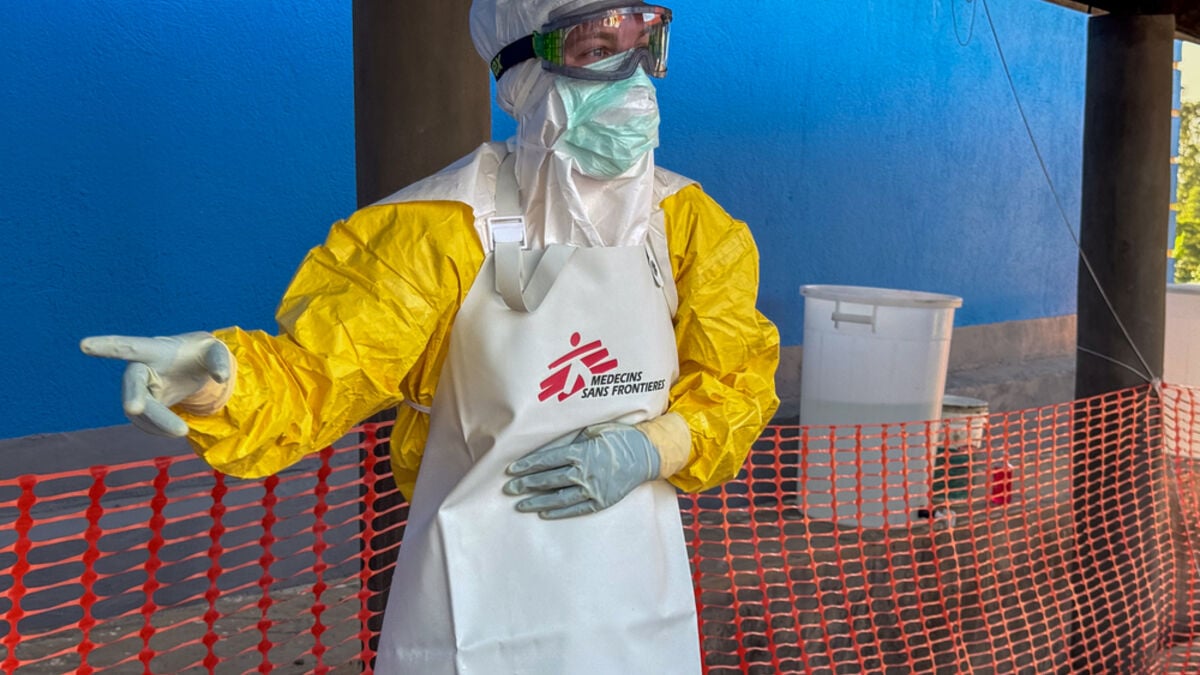
Martina Gustavsson is in the capital, Kinshasa, waiting to go home to Sweden. She has just spent a month in North Kivu in eastern Congo-Kinshasa - one of the areas hardest hit by the ongoing Ebola outbreak. But before she can board the plane home, she must have been symptom-free for a number of days to ensure she is not infected.
She was also here in 2019 when more than 2,000 people died from the disease. But this time it is different because the outbreak is driven by the unusual Bundibugyo virus variant, which has no vaccine or treatment.
I think this will last a long time, unfortunately, says Martina Gustavsson.
Spreading to more areas
The disease, which some analysts believe may have been circulating undetected since February, continues to spread to several areas in Central and East Africa. The worst-hit provinces are North Kivu and Ituri in northeastern Congo-Kinshasa. According to the World Health Organization (WHO), almost 650 people have died and more than 1,800 have been confirmed infected.
Martina Gustavsson is seconded by Doctors Without Borders (MSF), which runs several clinics and Ebola treatment centres. Since mid-June, she has been working with local staff to train healthcare workers on how to protect themselves and reduce the risk of infection. She has also helped set up isolation units at health clinics where people can be admitted and tested to prevent the spread of the infection to other patients.
It is a challenging job where things like running water and soap are not always available. Contact tracing is difficult because villages can be located in hard-to-reach areas.
The health centres smell of chlorine solution used to clean equipment. The air is dusty and the temperature is 30 degrees, says Martina Gustavsson, who does research in global disaster medicine at Karolinska Institutet.
Billions against the infection
The WHO has launched an effort worth almost five billion kronor to combat the current outbreak. Clinical trials are underway in Bunia in the eastern part of the country to find a vaccine and a treatment method for the Bundibugyo virus variant.
But efforts to contain the spread of the virus are hampered by violence and armed conflict between militant groups, which have driven millions of civilians to flee.
It is important to gain people's trust and get them to seek care in a timely manner, says Martina Gustavsson.
Ebola virus is an RNA virus that causes hemorrhagic fever. There are six variants of Ebola virus - four of which cause disease in humans.
The virus variant Bundibugyo is behind the current outbreak in Congo-Kinshasa. There are no vaccines or specific treatments for it, but development is underway.
Ebola virus is transmitted between people through bodily fluids. Sexual transmission also occurs. The illness occurs quickly with flu-like symptoms such as high fever, headache, sore throat, stomach and intestinal symptoms and muscle pain. At the end of the course, bleeding can occur on the skin and in internal organs.
The mortality rate is estimated to be 50-90 percent in outbreaks in affected African countries. With access to adequate intensive care, the mortality rate is likely to be significantly lower.
Source: WHO, Swedish Public Health Agency