The Centre Party's leader Elisabeth Thand Ringqvist has given conflicting statements in recent days about abolishing the qualifying period deduction. After initially saying that the Centre Party would go into opposition if the Social Democrats push through their demand, the message was somewhat different in Ekot's party leadership hearing.
"If it is the case that she (Magdalena Andersson) can find a solution that does not harm companies with this cost shock, then we can talk about how we should solve it," she said in the interview.
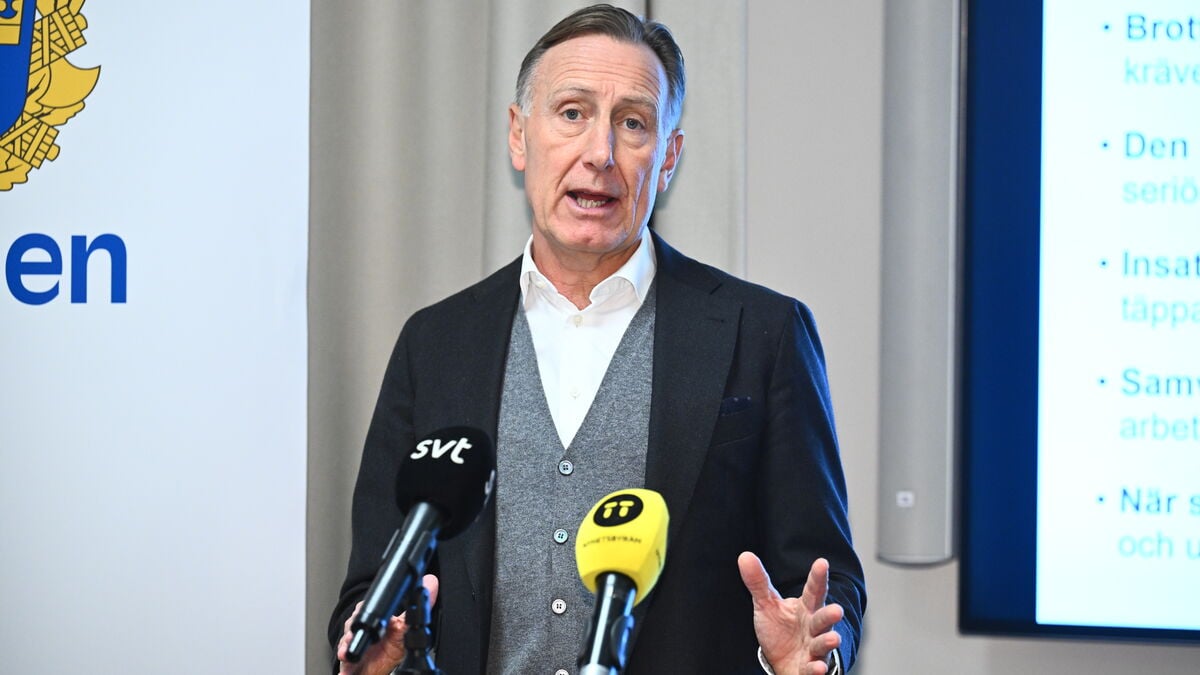
However, the Confederation of Swedish Enterprise and its CEO Jan-Olof Jacke are critical and believe that it is not possible without serious consequences for the Swedish economy.
The problem is that it is an experiment we have tried before and it failed, we have very bad experiences. If the qualifying period deduction disappears, sick leave will increase, he says and elaborates:
When sick leave increases, company costs rise and this reduces the possibility of the Swedish economy getting full momentum.
And that wouldn't be relevant even if the state were to cover the entire cost?
It's not really serious to think that you can have a model that covers the consequences of eliminating the qualifying period deduction. It's not just the immediate medical costs, but the behavioral changes that come with it.
No big difference
Jan-Olof Jacke understands the fairness perspective in the debate, that is, that in certain professions you cannot work from home if you feel symptoms of illness, but at the same time says:
It is often presented as a very big difference in how much qualifying deduction you have on average within the salaried collective versus what you have within the LO collective. That is not correct. There is a difference, but it is not very big, he claims.
Sees dangers with billionaire tax
Jan-Olof Jacke also sees great risks in the proposal for a so-called billionaire tax, which is being pushed by the Left Party and the Green Party. Like other critics, he reiterates his concern that it will entail risks of capital flight from the country and thereby reduced tax revenues.
"I am deeply concerned about discussions that, so to speak, want to punish those who have been very fortunate. Sometimes the discussions get a little skewed when you talk about how many percent you pay in taxes in different income groups," he says.