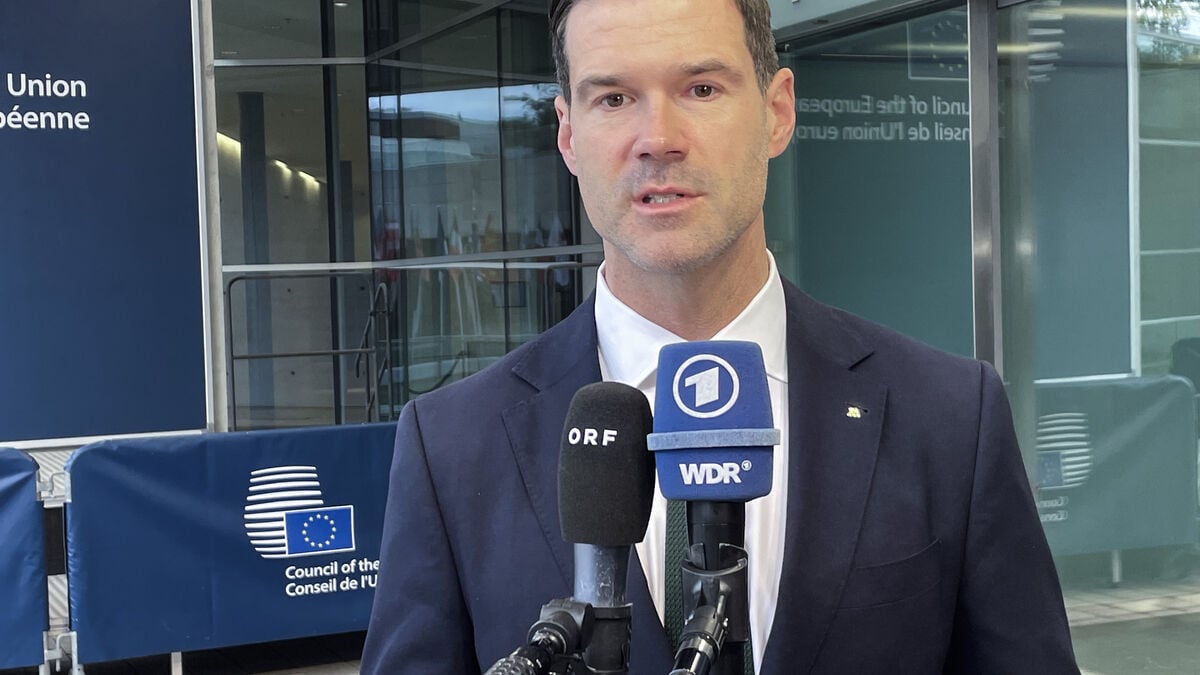
Migration Minister Johan Forssell (M) tells TT that the Swedish government has been "very proactive" in the EU on securing deportations to Afghanistan.
The issue of being able to carry out more criminal deportations, i.e. of people who have been convicted of crimes in Sweden or who pose a threat to Sweden's security, is one of my most important priorities, he says.
According to Forssell, Sweden has therefore been asked by the European Commission to stand as a "co-signatory" in talks with the Taliban alongside the Commission.
“Dangerous people”
He emphasizes that these are so-called technical talks and says that this is not a political recognition of the Taliban.
It is not a political dialogue, but rather at the civil-service level; it is about practical matters to get deportations of, unfortunately, often very dangerous people underway, he says.
According to the Minister of Migration, the talks with the Taliban are important because Afghanistan is one of the countries to which it has been most difficult to carry out deportations.
"It is a big problem today that they remain, both in Sweden and in the rest of the EU, when they have actually been sentenced to deportation. But it is not possible to enforce it, because there is no reception capacity," he says.
“Agreement with extremists”
The announcement has drawn sharp criticism from several opposition parties. Annika Hirvonen, migration policy spokesperson for the Green Party, says in a comment that it is a cynical deportation policy “through agreements with extremists”:
"It is a betrayal of Swedish Afghans and all the girls and women who are deprived of their freedom and future by the Taliban's oppression, and a careless way of using Swedish tax money."
The Center Party's migration and integration policy spokesperson Niels Paarup-Petersen is also sharply critical:
"It is completely unreasonable that aid money is used to finance a terrorist regime. Such funds should go to people in need, not to those in power who oppress their own people," he tells Omni.