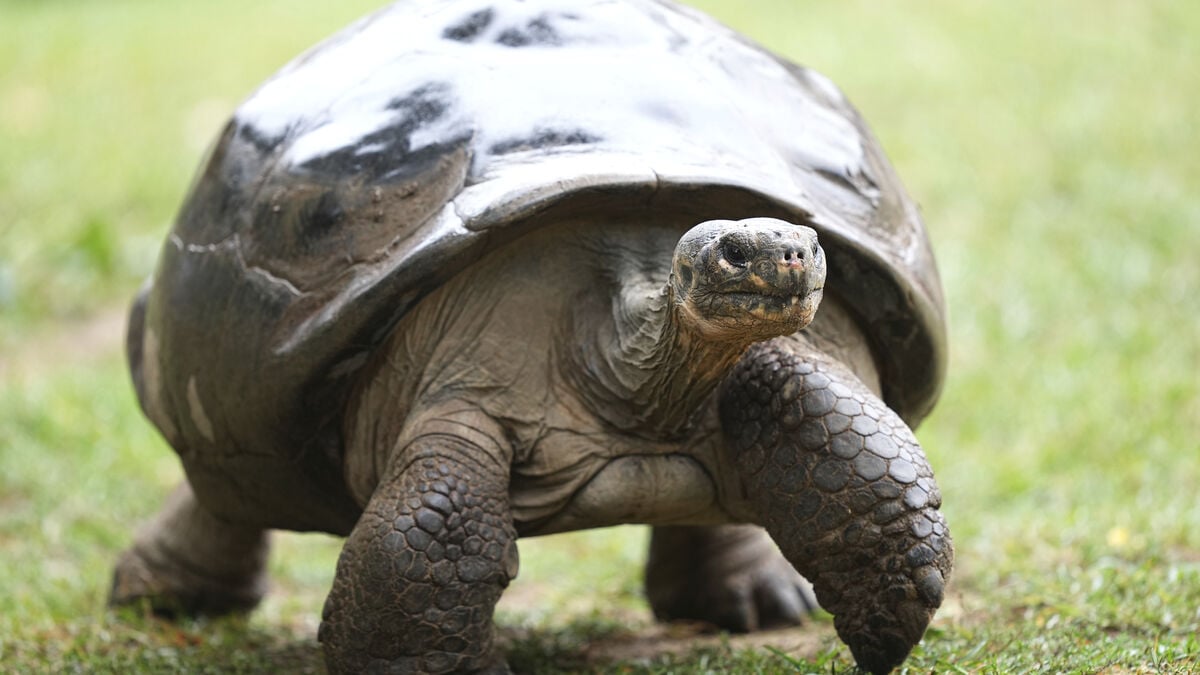
The study, published in the scientific journal Current Biology, is based on new analyses of a number of difficult-to-assess fossils from the periods when turtles, dinosaurs, prehistoric birds, crocodiles and pterosaurs evolved and spread across the Earth.
The researchers behind the study say that turtles evolved shortly after the mass extinction at the end of the Permian period 252 million years ago, when 90 percent of all species were wiped out - the worst catastrophe to hit life on Earth.
Among the first turtles was Pappochelys, which lived 240 million years ago. Interestingly, it had a hint of a future shell, but not on the top of its body, rather on the underside. This is probably how the typical turtle shell looked in its early days.
Scientists are dismissing an older turtle-like reptile, Eunotosaurus, which lived 260 million years ago. It had the beginnings of a full-covering shell, but was probably unrelated to the evolution of turtles. The structure of its skull shows that Eunotosaurus lacked a bone that protects the brain - a bone found in Pappochelys, the predecessors of crocodiles and birds.
All of this is confirmed by molecular studies that have placed turtles and birds together. This may sound strange, considering that the two groups undeniably look completely different. But now we have to get used to considering them as relatively close relatives.
Turtles, crocodiles, snakes and lizards are often lumped together in the group reptiles. But this lacks scientific basis. Snakes and lizards form a completely different evolutionary line than crocodiles, which are in fact closely related to dinosaurs, plus birds, which are not normally placed among reptiles. Now it seems that turtles also belong to this line.
Source: Current Biology