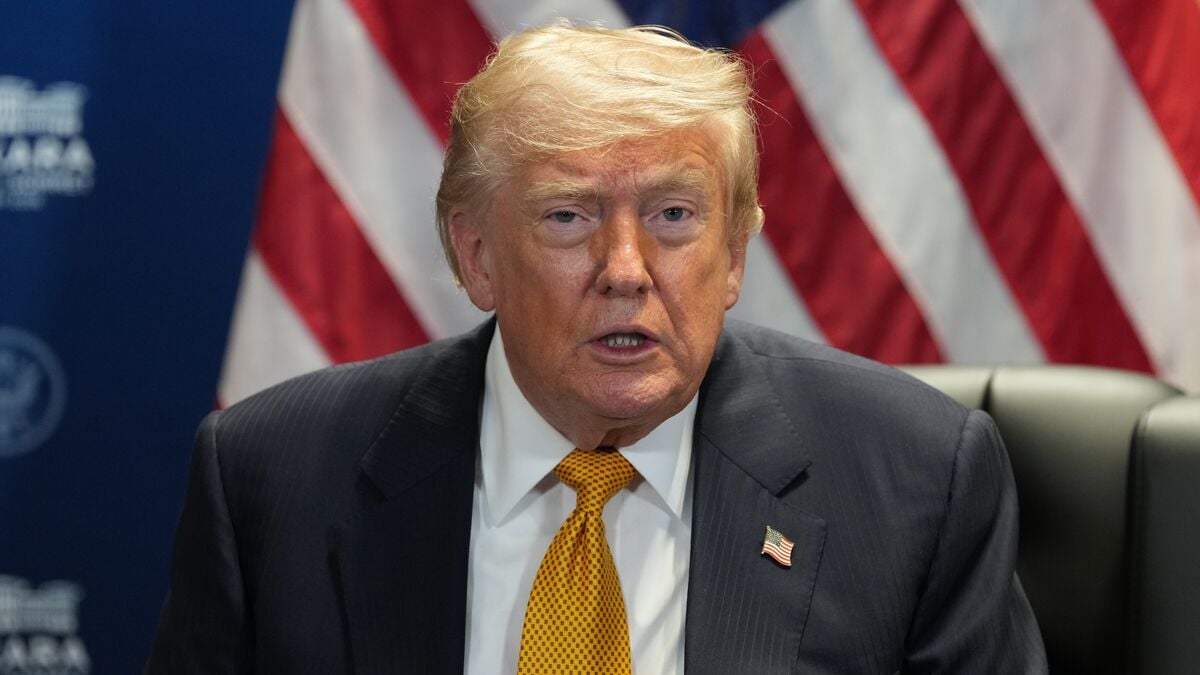
The US president seems to have lost patience with Iran. At the NATO summit in Ankara, Donald Trump's threats were frequent - including warnings that the US could strike critical infrastructure and desalination plants, reimpose a naval blockade of Iranian ports in the Strait of Hormuz, and take over the island of Kharg, reports the BBC.
Spokespeople for the Iranian regime have called Trump's threats provocations and say that Iran, along with its armed branches around the region, has its "finger on the trigger."
Ships in the strait were attacked
The threats of escalation come after the United States carried out several attacks on Iran in regions bordering the Strait of Hormuz late Tuesday night, Swedish time. They were said to be aimed at military targets - boats and air defences - belonging to Iran's powerful Revolutionary Guard. The attacks were in retaliation for attacks on three merchant ships in the strait in recent days.
Iran has been singled out as being behind the ship attacks. On Wednesday, the country demanded that a new “Iran-led” order be established in the Strait of Hormuz and that anything else would be “unacceptable,” the BBC reports.
On Wednesday morning, Kuwait and Bahrain raised the alarm about new Iranian attacks. At the same time, state media in Tehran reported explosions in the Iranian port city of Bushehr.
Clear escalation
The escalation in the Persian Gulf is the most serious since the United States and Iran signed a broader declaration of intent to continue peace talks less than a month ago. But ongoing negotiations between the countries are a “waste of time,” Trump said at a press conference in Ankara on Wednesday.
The US president also claimed that the purpose of US intervention is to end Iran's nuclear energy programme. At the same time, the president could not give a direct answer on how Iran's highly enriched uranium would be destroyed or moved.
Trade through the strait has resumed, but the volume has been limited and tensions are palpable. A number of details and terms of the agreement between the US and Iran have been left open to interpretation, with Iran on several occasions accusing ships of passing in violation of existing rules.
Oil more expensive again
US sanctions on Iran's valuable oil are also coming back into force. After Tuesday's attacks, it was announced that the waiver that was to apply during the summer's continued negotiations has been lifted.
Iran's Foreign Ministry and negotiator Ghalibaf accuse the US of violating the agreement and warn that there will be consequences.
Following the escalation and the parties' latest statements, the price of crude oil has risen again.
During the ceasefire that is formally supposed to prevail, Iran has begun a public and extensive funeral ceremony for the country's former supreme leader, Ayatollah Ali Khamenei, who was killed by the US and Israel at the outbreak of war in February.
Facts: The statement of intent
The US and Iran agreed in early June to a ceasefire and a 60-day deadline to negotiate a peace solution. The declaration of intent consists of 14 points.
In a first stage, both countries and their allies will cease all hostilities. Lebanon's "territorial integrity and sovereignty will be ensured."
The US will begin to lift its naval blockade of Iran and ensure that Iranian crude oil exports can resume. Frozen Iranian assets will begin to be made available.
Iran will ensure that trade through the Strait of Hormuz can resume for 60 days, including through mine clearance. The country reiterates a promise never to acquire nuclear weapons. Negotiations on Iran's nuclear material are linked to the issue of sanctions relief.
In a possible peace agreement, the US will lift all sanctions against Iran and move all military forces from Iran's vicinity. The US, together with partners in the region, will develop a plan in which Iran will receive the equivalent of just over SEK 2,800 billion for "reconstruction and economic development" in an agreement.
The 60-day deadline can be extended. A final agreement must be approved by the UN Security Council.