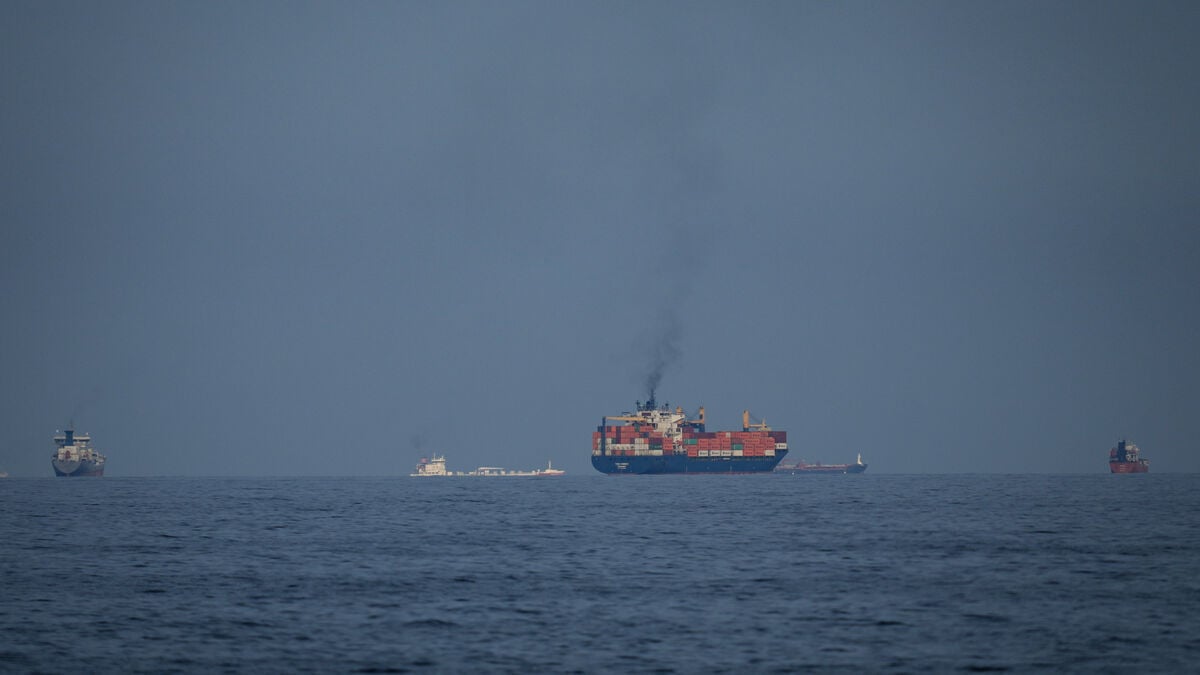
Iran and the United States have agreed to a two-week ceasefire and the reopening of the Strait of Hormuz, which is crucial for shipping. On Wednesday morning, the first two ships, a Greek-flagged ship and a Liberian-flagged ship, passed through the strait, AFP reports.
But the situation is complex, says Johan Woxenius, a professor of maritime transport economics at the School of Economics at the University of Gothenburg.
"I think it's probably too early to say it's safe yet. Both sides in this conflict have previously changed their minds quickly and accused each other of different things," he says.
A litmus test
Exactly how the passage through the strait will look going forward is unclear. Iranian Foreign Minister Abbas Araghchi writes on X that "safe passage" will be possible through coordination with Iran's military - while U.S. President Donald Trump announces that the U.S. will "help with the traffic congestion".
"We're going to be stocking up on supplies of all kinds and just hanging around to make sure everything goes well," Trump writes on Truth Social.
On Wednesday morning, more than 1,000 ships were waiting on both sides of the Strait of Hormuz, clustered around Dubai and Khor Fakkan in the Gulf of Oman, Bloomberg reports. A majority of the ships stuck in the Persian Gulf transport crude oil and natural gas.
According to Johan Woxenius, the real test will be whether new ships dare to sail into the strait.
"It's one thing if you now release the ships that have been stuck, but will any dare to go the other way? It will be a bit of a litmus test," he says.
Could affect shipping going forward
It is likely that those who want to transport goods through the strait will continue to have to pay higher costs.
"Shipping companies have higher insurance costs now, but there is also a commercial risk of being stuck for a long time if the strait is closed again."
Regardless of the outcome, the crisis will affect the view of the Strait of Hormuz as a transport route in the future, Woxenius believes. In particular, the Gulf states, which are highly dependent on the strait for both the inflow and outflow of goods, will likely look at building alternative transport routes.
"And from our perspective, we get an even clearer argument that the discovery of oil may not be the best thing we have become dependent on. I expect that in future election campaigns there will be even more arguments for us to favor the alternatives," says Johan Woxenius.