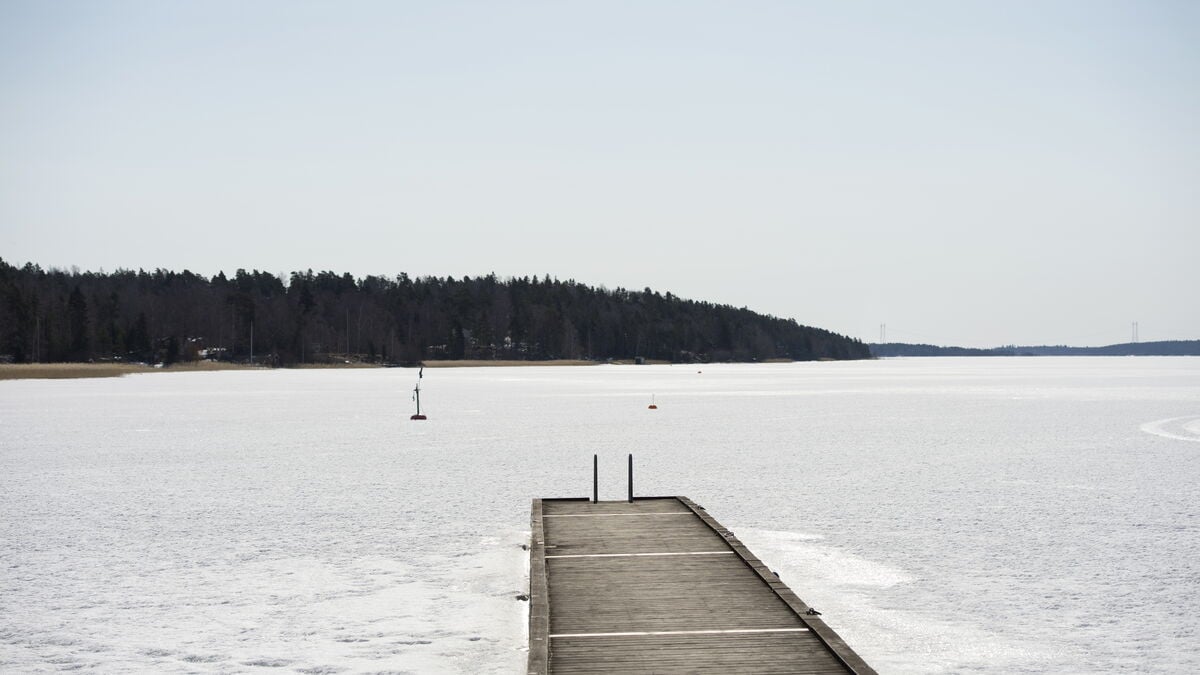
Cold weather alone is not enough. After the heavy snowfall, the ice in southern and central Sweden has not had time to form properly. Jan Insulander from the Ice Safety Council urges people to stay on land.
"The snow acts as an insulating down blanket over the ice. It can be very thin underneath without being visible," he says.
Lakes can retain heat, and with a thick layer of snow the ice does not thicken. Jan Insulander says there may be ice that will hold, especially in northern Sweden, but in many places now is not the time to go out.
Anyone thinking of going out on the ice should be knowledgeable and have proper equipment. Ice spikes for testing the ice, ice studs and a rescue rope. And above all, you should always have company.
"This is always the case when you are on the ice. Most accidents occur in men over 70 who are out fishing or cross-country skating alone. It is very strenuous to get out of a hole, and if you are also cold and in shock, it is extremely difficult," says Insulander.
When the ice is covered in snow, it's also impossible to see what it looks like.
"On clear black ice, you can more easily see how thick it is by looking at the different cracks, which is impossible under the snow," he says.
Another aspect is that milder winters lead to ice forming later and breaking up earlier.
Therefore, it is not enough to think that "it usually lasts like this for years".
Never go out on the ice alone. Most serious accidents happen to people alone, or to pairs where both have gone through the ice. Ideally, there should be three or more, and make sure to keep your distance so that not everyone falls in if the ice breaks.
Bring the right equipment. An ice pick to test whether the ice will hold, ice spikes worn around your neck near your chin so they are easy to reach, and a throwing rope to be able to rescue someone else who has fallen in.
Ask locals or the local fishing club - they often have a good idea of the ice conditions and know which places to avoid. Study the area before you head out, then you can find areas with weaker ice.
Adjust the tour according to the weather; check the weather forecast before the ice tour.
Stay close to the shore - that way you'll be closer to solid ground if something happens.
Bring a change of clothes, packed in a sealed plastic bag. In addition to having dry clothes on hand in case of an accident, the bag can act as a flotation aid.
If the ice breaks: Stay calm, breathe calmly, and turn in the direction you came from. Methodically use the ice cleats to get yourself out of the water.
Source: Mountain Safety Council, Ice Safety Council, Swedish Lifesaving Society.