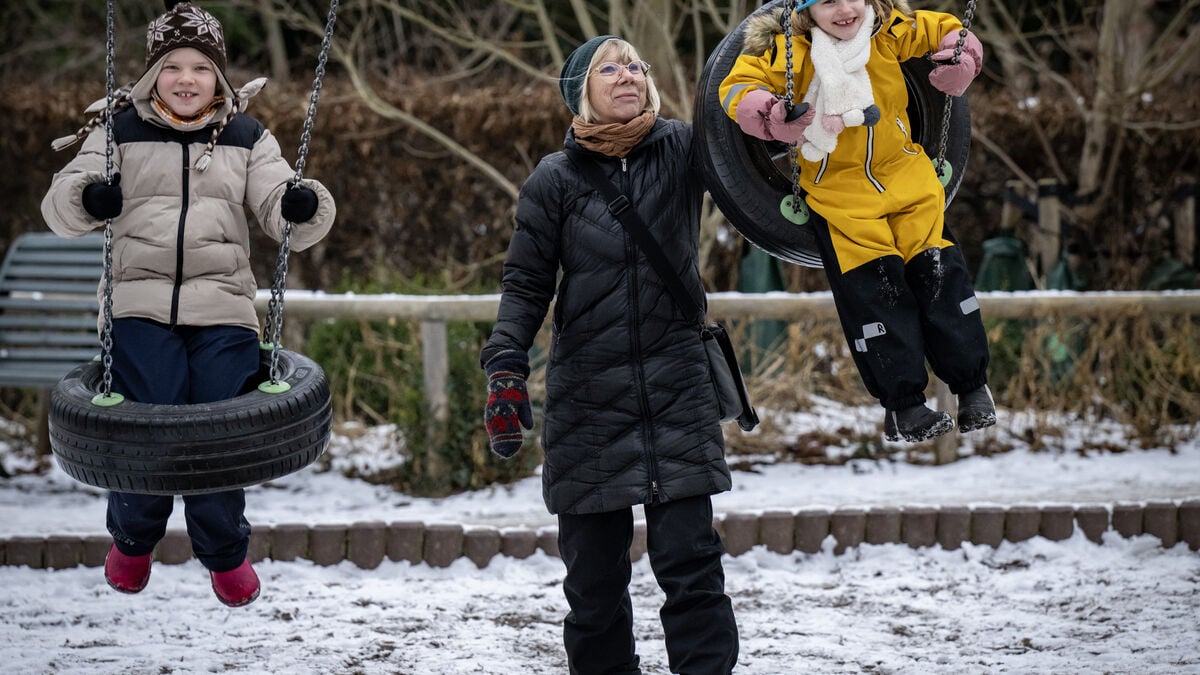
Playing in the park, doing crafts, giving them rides, or taking care of them when they're sick. All kinds of activities with grandchildren appear to benefit the brain. According to a new study, spending time with grandchildren acts as a buffer against cognitive decline.
The study involved nearly 3,000 grandparents with an average age of 67 in England. They completed questionnaires about how often they spent time with their grandchildren and its effects. They also took tests of memory and verbal ability on three occasions.
Better cognition
The researchers, who published their results in the journal Psychology and Aging, found that those who babysat grandchildren performed better on cognitive tests compared to those who did not, even after adjusting for factors such as age and health. This was true regardless of the type of activity or how often.
A weakness of the study is that researchers do not know the conditions under which participants cared for their grandchildren, or whether it was entirely voluntary or included elements of obligation.
Annika Hansson, who regularly spends time with her grandchildren, whose are soon to be six and nine, is not surprised by the study's results.
"Of course it's positive; it's so stimulating to be with them. Above all, I do things I wouldn't have done otherwise," she says.
Ever since they were born, Annika Hansson has prioritized the relationship with her grandchildren. Once a week she travels from Brösarp to Malmö to pick them up from preschool and school. They bake, do crafts and bathe. Sometimes it's just her, sometimes the children's grandfather is with them.
She highlights several aspects she believes may be behind the positive effect on cognition.
"I need to be present and alert. It also requires planning and foresight, and, above all, it gives me great joy and something to look forward to."
Going sledding
She also does things she wouldn't do otherwise.
"I would never go sledding by myself, even though I think it's fun, or spend three hours at a bathhouse."
Previous research has shown that social connections and continuing to learn new things as older adults can protect against cognitive decline. The researchers behind the current study point out that spending time with grandchildren often includes several of these aspects.
Annika Hansson sees another plus:
"Spending time with children is also physically demanding and keeps your body moving. It can be like a gym workout."