Unlike in 2018, when three prime ministerial votes were required before Stefan Löfven (S) could take office as prime minister of an S-MP government, the security situation in Europe and the world is completely different, and much more serious, he emphasizes.
Paralyzed
"You don't want a situation where the central government is paralyzed by a protracted government formation process," says Norlén.
Sweden needs a government with strong action.
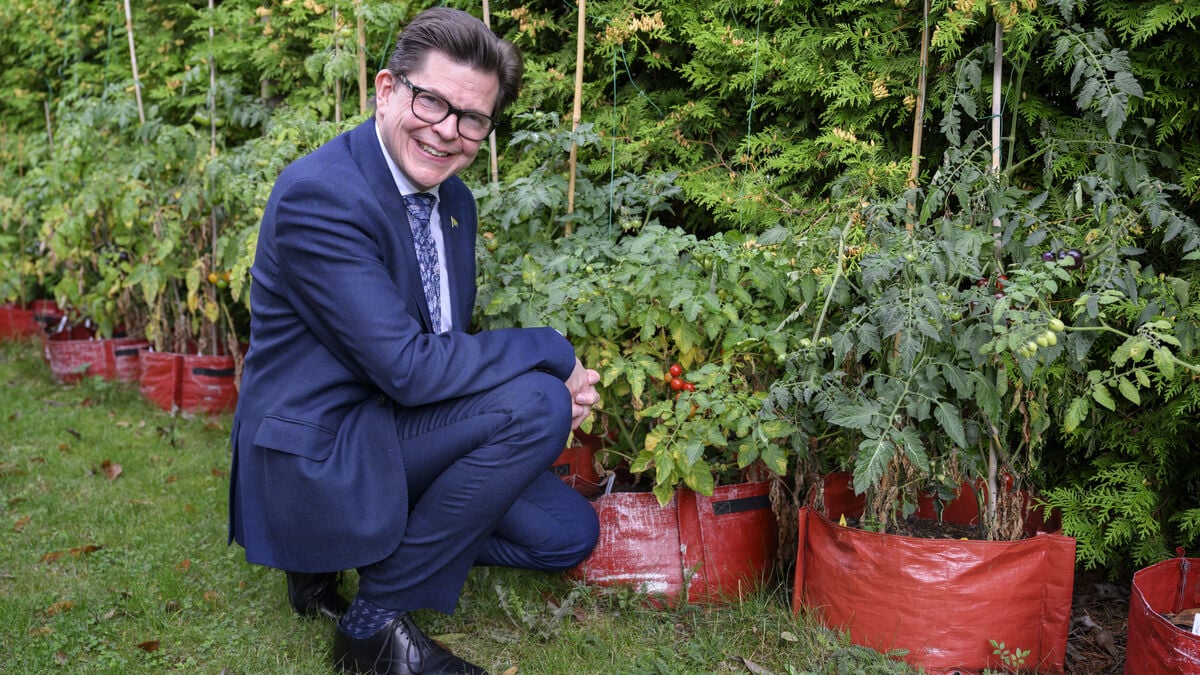
The Speaker is receiving guests at his home in Norrköping with just days left until Sunday's election. He does not want to say whether he, who also tops the Moderates' parliamentary list in Östergötland, wants to continue as Speaker for another four years.
If someone asks me that question after the election, I will decide then.
Got a jump start
Norlén was elected Speaker of the Riksdag in 2018 and got what he himself calls a “crash start.” During his eight years, he has been involved in four government formations - the long-drawn-out one in 2018, two in 2021, and the (simpler) one after the 2022 election.
He had to deal with a political situation that had been in place since 2010.
Until 2022, minority governments did not have secure support even for important budget proposals. This became particularly clear in 2018-2022.
"There was a majority that accepted a certain prime minister, but not the prime minister's policies. In parliamentary terms, it became very strange," says Norlén.
He adds at the same time that the situation was such that there was no majority for any government other than the one formed in 2019.
Received criticism
The Speaker himself has received some criticism for the countless speaker's rounds and press conferences in the fall of 2018, including in a study written by political scientists.
He says he could have put more pressure on the party leaders. He was elected speaker on September 24. The next day, Stefan Löfven was voted down in a mandatory vote for prime minister. On September 27, M leader Ulf Kristersson was tasked with forming a government, but came back empty-handed two weeks later. Löfven was then given two weeks, without success.
I lived in the belief that one of them would solve it in two weeks, I assumed they would go full steam ahead.
But it turned out that absolutely nothing happened.
Both Kristersson and Löfven were then voted down once each by the Riksdag before Löfven finally received support in January 2019.
The Speaker himself sees deadlocks within the previously close-knit Alliance, that is, the four bourgeois parties, as an explanation for why it took so long to gain support for a government.
Extra choices
He is glad there was no by-election in 2019, he says.
If you have an election and immediately afterwards a by-election, it sends a signal to the voters that the parties and the speaker were unable to handle the election results that the voters gave.