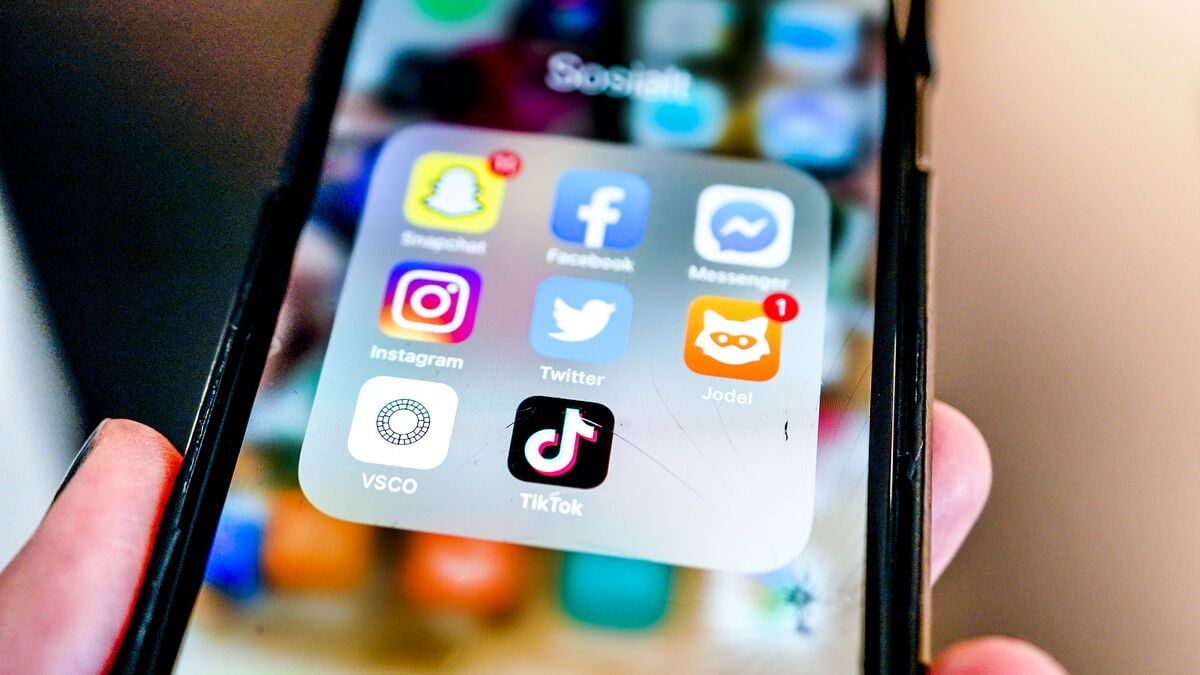
In the study, researchers followed over 8,000 children from the age of nine and four years onwards. The researchers wanted to investigate whether there was a link between screen habits and ADHD-related symptoms such as difficulties with concentration and attention.
The children, all residents of the United States, were asked to report how much time they spent on social media, computer games and watching TV. Their parents were asked to answer questions about their children's attention, hyperactivity and impulsivity. Children who spent a lot of time on social media, such as Instagram, Facebook or Messenger, experienced a gradual deterioration in their ability to concentrate.
No similar relationship was seen for television watching or computer games.
Constant interruptions
We can only guess what the reason is, but it is likely that social media provides constant distractions. Even when there are no notifications or messages, just the thought that something is coming can disrupt concentration, says Torkel Klingberg, professor of cognitive neuroscience at Karolinska Institutet and one of the study authors.
The deterioration in concentration was small at the individual level, and Torkel Klingberg points out that a child without concentration and attention problems need not be affected that much. But for those who have difficulties, the deterioration could put them within the scope of an ADHD diagnosis, the researchers reason.
Even though it is a simplification, one can think that at a population level, an additional hour of social media a day could increase the incidence of ADHD diagnoses by 30 percent, says Torkel Klingberg.
A puzzle piece
Experts explain the sharp increase in ADHD diagnoses in recent years by factors such as increased awareness, reduced stigma and changing demands in school.
This does not rule out the possibility that the concentration difficulties could be partly explained by the large increase in the use of social media we are seeing, says Torkel Klingberg.
In the study, published in Pediatrics Open Science, average time spent on social media increased from about 30 minutes per day at age 9 to 2.5 hours at age 13. The decline in concentration was not influenced by the families' socioeconomic status or genetic risk for ADHD.
97 percent of all children and young people aged 8–19 use social media and 86 percent do so every day.
Daily use increases as children get older. Just over 5 out of 10 elementary school children, almost 9 out of 10 middle school children, and basically everyone in middle school and high school use social media every day.
The five largest social media platforms among children and young people aged 8–19 are YouTube, Snapchat, TikTok, Instagram and Roblox. In daily use, YouTube and Snapchat switch places, with Snapchat becoming number one.
Source: The Internet Foundation's report Children and the Internet 2025