
Two small wires inserted into a plant reveal how it is doing.
“They go directly into the plant stem and help us understand what is happening physiologically inside,” says Michela Janni of the Institute for Electronics and Magnetism, part of Italy’s National Research Council (CNR).
The two wires measure the ion concentration in the plant’s sap. AI algorithms use the data to show how the plant is doing.
In Italy, where the technology has been tested in collaboration with tomato producer Mutti, the results have been promising.
“Can’t wait”
This year’s season was marked by a record-early tomato harvest, violent hailstorms and exceptionally high temperatures, resulting in a harvest below the five-year average.
“We can no longer wait to tackle the problems posed by climate change, especially water scarcity. As glaciers and snow cover gradually disappear, we are facing even drier summers,” says CEO Francesco Mutti in a press release.
Sensors can be an important tool. Instead of watering tomatoes too much, with excess water evaporating or disappearing into the soil, the technology can show when and how much the plants need to be watered.
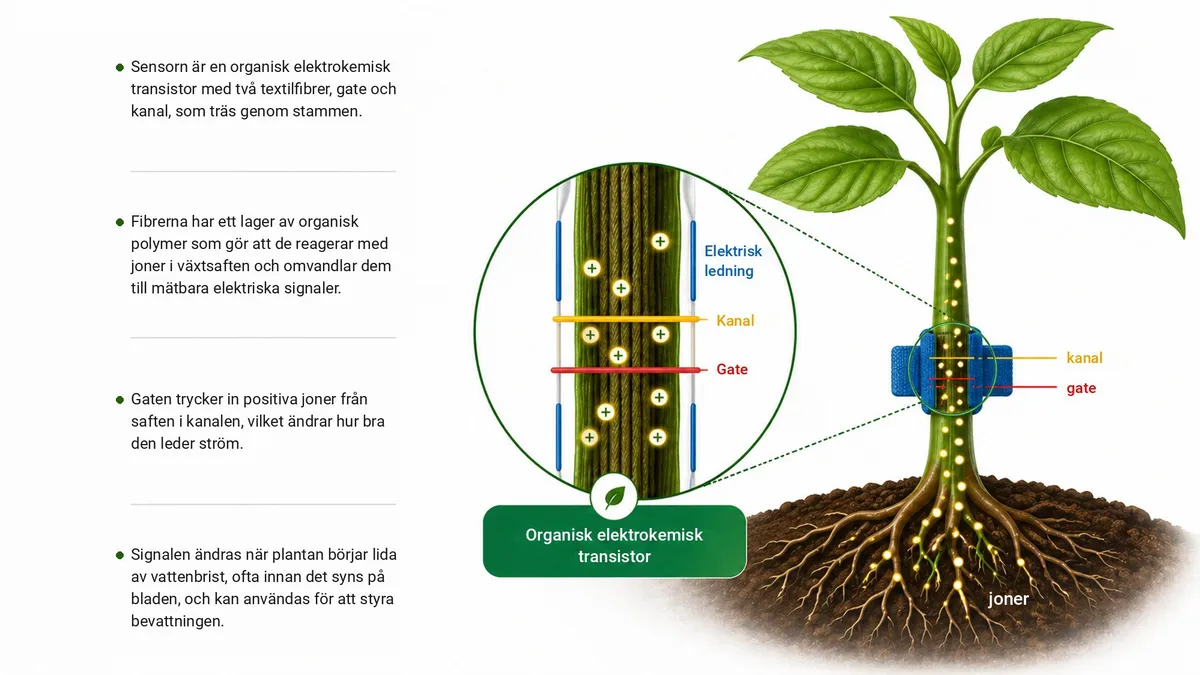
This is how the technology behind the sensor works. Press image.
Five sensors are connected to a box, which transmits the data. The farmer can see the results - for example, that a plant is under stress - in an app. Under certain conditions, up to half the water has been saved.
Not all farmers have embraced the idea of the new technology, Janni admits. Some fear they will eventually become redundant and be replaced.
“But many are curious, and we have several research projects underway.”
The sensor can be used on almost all plants, including corn and fruit trees.
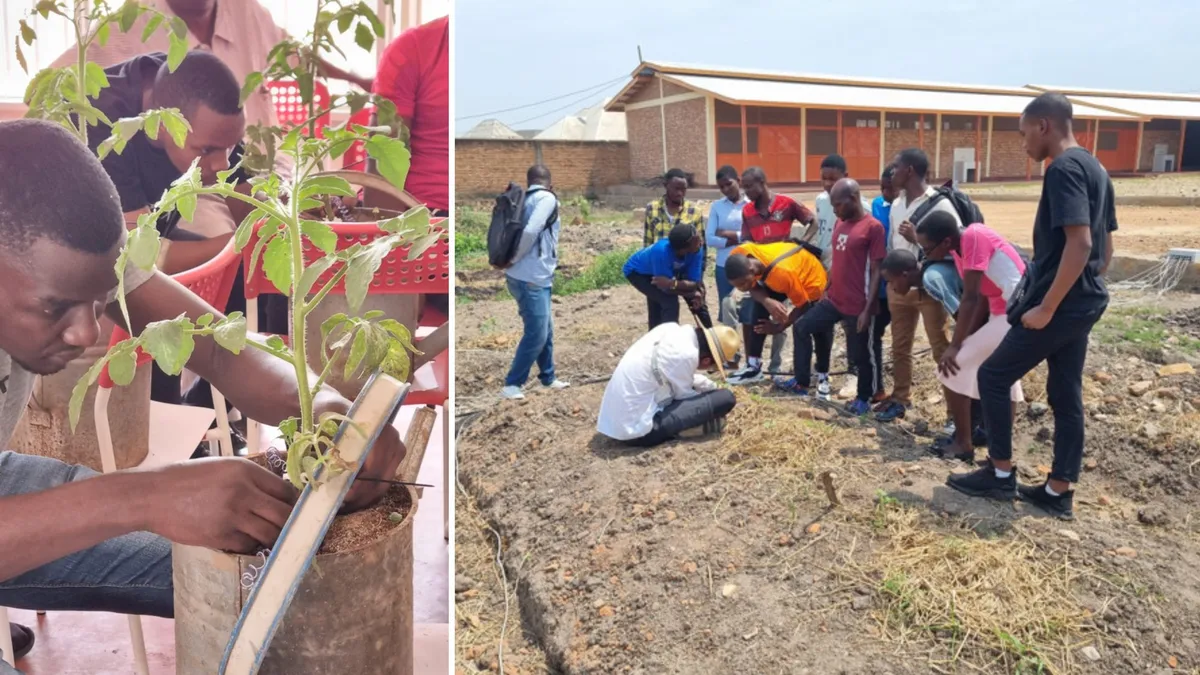
The Italian research council CNR is running projects linked to the new sensor in Burundi, Africa. Press photo.
The goal: fewer chemicals
In Burundi, Africa, a project is underway involving tomatoes, which are mainly exported as tomato sauce to richer neighboring countries. It will be expanded to include sweet potatoes and corn.
“They are very interested in the technology because they understand that it can make a big difference for them.”
The researchers are also trying to get the sensors to detect things other than water needs.
“We are working on detecting specific molecules linked to the need for fertilizers and to diseases. If we can detect the most common pathogens in a plant early, we can reduce the use of agricultural chemicals,” she says.






What do you think?