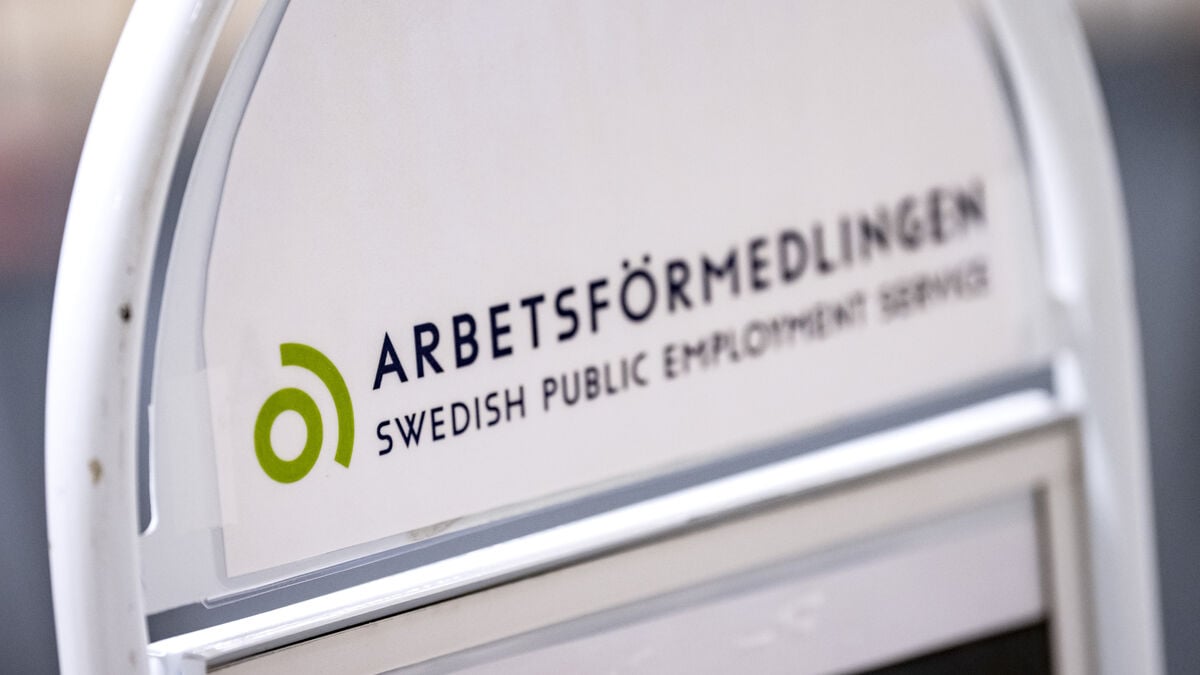
The trend for jobs has turned upward. This is evident in the monthly figures from the Swedish Public Employment Service during the autumn.
Fewer people are registering and slightly more have found jobs. This is of course very positive, says Marcus Löwing, an analyst at the agency.
But it will probably take until 2027 before unemployment has dropped back to pre-recession levels, according to Löwing.
The job market is a bit lagging behind, he says.
“From a high level”
What he and the Swedish Public Employment Service's experts see ahead right now is a "gradual reduction in the number of unemployed, from a high level."
The prolonged recession – first created by high inflation and rising interest rates – has been prolonged by geopolitical concerns and uncertainty about the effects of the Trump administration's tariffs. The decline in labor demand has made it more difficult for people with post-secondary education to find jobs.
Employers have been very cautious about increasing the number of employees, says Löwing.
In general, he expects a boost in demand for labor in the service sector during the forecast period, linked to increased household consumption. Another sector where things have clearly turned around is construction.
Construction employers have more positive expectations regarding the number of employees. But it should also be remembered that they are shifting up from relatively low levels, says Löwing.
Matching problems are expected to increase
Long-term unemployment in 2027 is assumed to have remained at a higher level than before the recession. Four groups dominate here, according to the analyst:
Short-term education, people born outside Europe, people with disabilities and the elderly tend to be at greater risk of being stuck in unemployment for longer periods. They make up 80 percent of the group with longer periods.
Experts usually call this “structural unemployment,” which is not affected by the economic cycle. To address this, internships, labor market training, and subsidized employment of various kinds are required, according to Löwing.
At the same time, the so-called matching problems are assumed to increase when the economy turns upward.
It is a challenge both for us at the Swedish Public Employment Service, but also for employers and the education sector. There is a lot that needs to come together, says Löwing.
Facts: Unemployment is expected to fall slightly
The number of people registered as unemployed is expected to fall from 367,000 this year to 345,000 in 2026 and 328,000 in 2027.
This would mean that unemployment – according to the Public Employment Service's calculation – would fall from an average of 6.9 percent this year to 6.5 percent in 2026 and 6.2 percent in 2027. Converted to the official unemployment figures from Statistics Sweden (SCB), this would mean 8.7 percent this year, 8.4 percent in 2026 and 7.9 percent in 2027, according to the Public Employment Service.
The number of long-term unemployed – those registered as unemployed for 12 months or more – is expected to decline slightly as the economy recovers. The forecast calls for an average of 145,000 people in 2027, which is higher than before the recession. And the share of long-term unemployed in the total number of unemployed is expected to increase even as the economy recovers.
"A large group of registered unemployed people lack the skills that are in demand, which means that there is a risk that matching problems will increase as the economy strengthens," the Swedish Public Employment Service writes in its forecast.
Source: Swedish Employment Agency