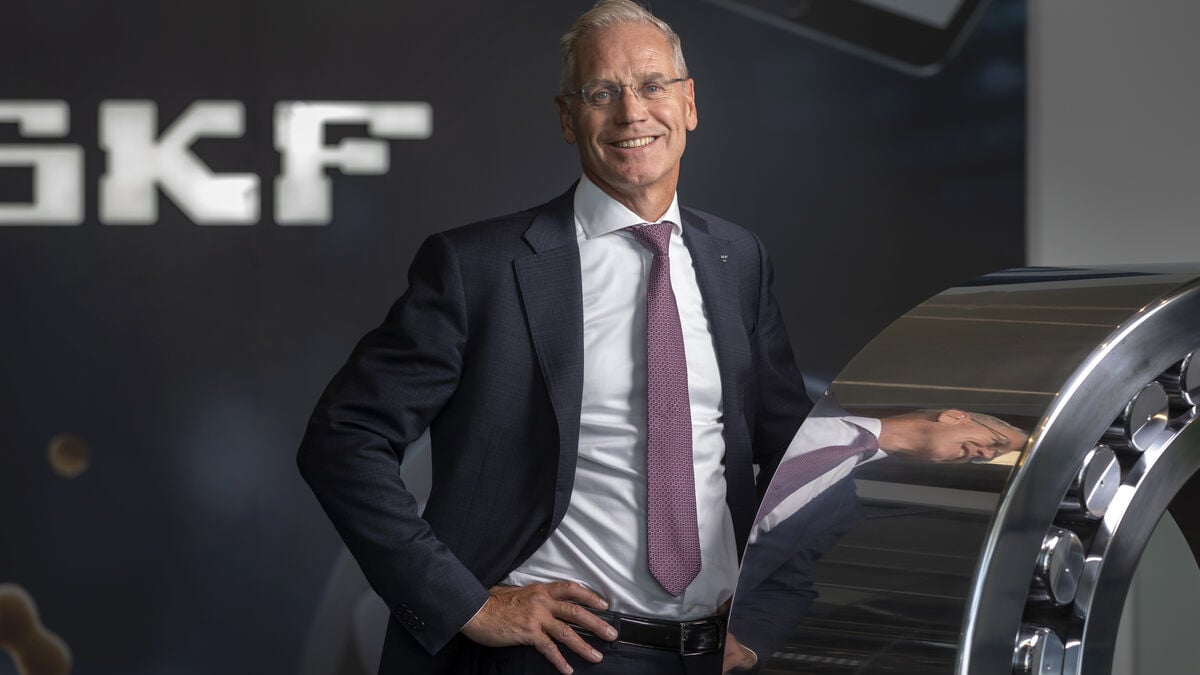
The company's restructuring has resulted in cost reductions of almost SEK 200 million during the fourth quarter. At the same time, the ball-bearing manufacturer has faced a currency headwind and seen weak market demand.
The tariffs have had a major impact on us, but above all on the willingness to invest in general in the world. It is gratifying that, through various activities, not least by working with prices, we have largely managed to compensate for the tariffs in the result.
Trade agreement with India
In the shadow of all the tariff threats from the US, the EU and India have, on the contrary, signed a major free trade agreement. India has already been one of SKF's growth markets.
I think it's very positive, not only for SKF but for the world economy and for Europe, says Rickard Gustafson and adds:
I hope this will be an injection that will make the wheels turn faster in Europe.
The ball-bearing manufacturer's costly spin-off of its automotive operations has been postponed until the fourth quarter of 2026.
We stand by the cost framework that we presented at the Capital Markets Day in November last year.
Strengthens the margin
SKF reports an adjusted operating profit of SEK 2.6 billion for the fourth quarter. In the same period a year earlier, profit was SEK 2.7 billion. The result was in line with expectations, according to a compilation of forecasts made by Bloomberg. Net sales fell to SEK 22 billion, down from SEK 24.7 billion in the corresponding quarter a year earlier. The operating margin was above expectations.
We are actually strengthening the margin for the full year despite a very difficult environment with tariffs and currency headwinds.
SKF expects that the first-quarter result will be burdened by a currency shock of approximately SEK 800 million. The board of directors proposes a dividend of SEK 7.75 per share, which is the same as last year.