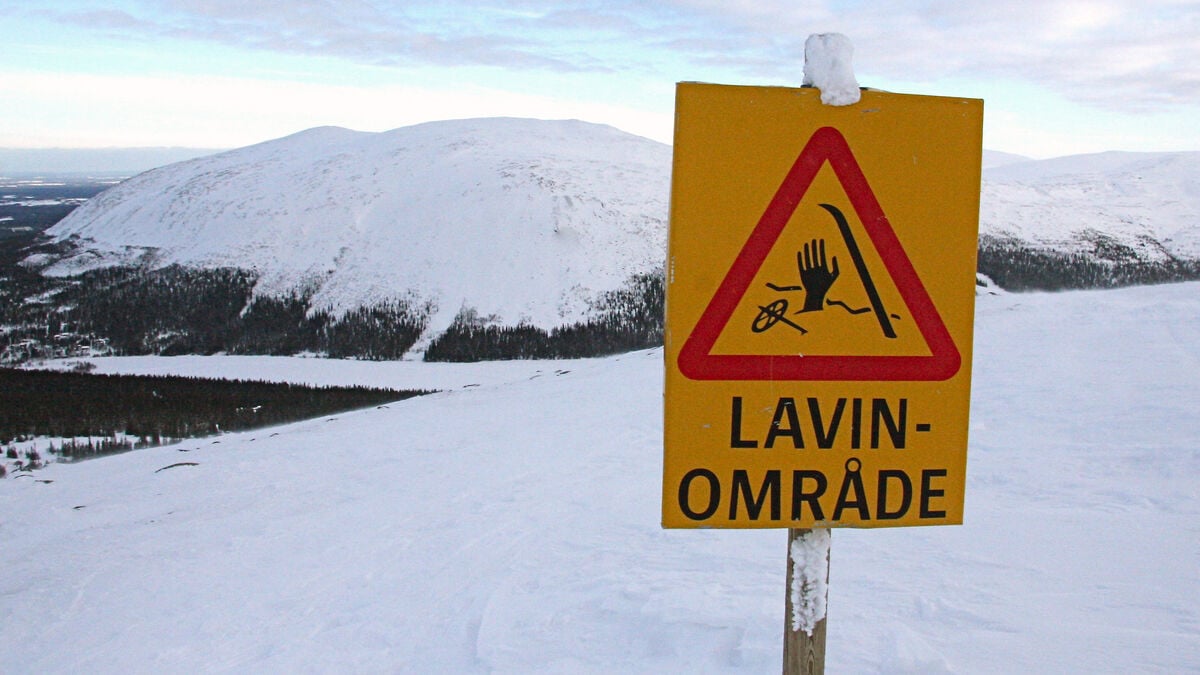
Earlier on Saturday, a 75-meter-wide avalanche occurred on Ramundberget in the municipality of Härjedalen. There is no indication that anyone was injured in the avalanche, according to Tidningen Härjedalen.
The avalanche danger is considered significant in the western Härjedalen mountains.
"It takes very little for avalanches to be triggered, and they can be large enough to bury a person," Avalanche Forecasts writes about the area.
There is also a significant avalanche danger in four other mountain areas in Sweden. These include the Abisko/Riksgränsfjällen mountains, the western Vindelfjällen mountains, the southern Lapland mountains and the southern Jämtland mountains.
In the Kebnekaise Mountains, the avalanche danger is considered moderate.
The forecast is valid until 6 p.m. on Sunday.
Facts: The avalanche scale
Avalanche danger is divided into a five-point scale:
1. Low danger. Conditions are generally safe. Snow may be unstable in isolated places. Avalanches unlikely.
2. Moderate danger. Hazardous conditions in parts of the terrain. It is possible for people to trigger avalanches, but spontaneous avalanches are unlikely.
3. Significant hazard. Hazardous conditions. Human-triggered avalanches are likely and spontaneous avalanches are possible.
4. High danger. Very dangerous conditions. Very likely to have spontaneous avalanches and people triggering avalanches.
5. Very high danger. Human-triggered and spontaneous avalanches are certain to occur.
Source: Avalanche Forecasts.se