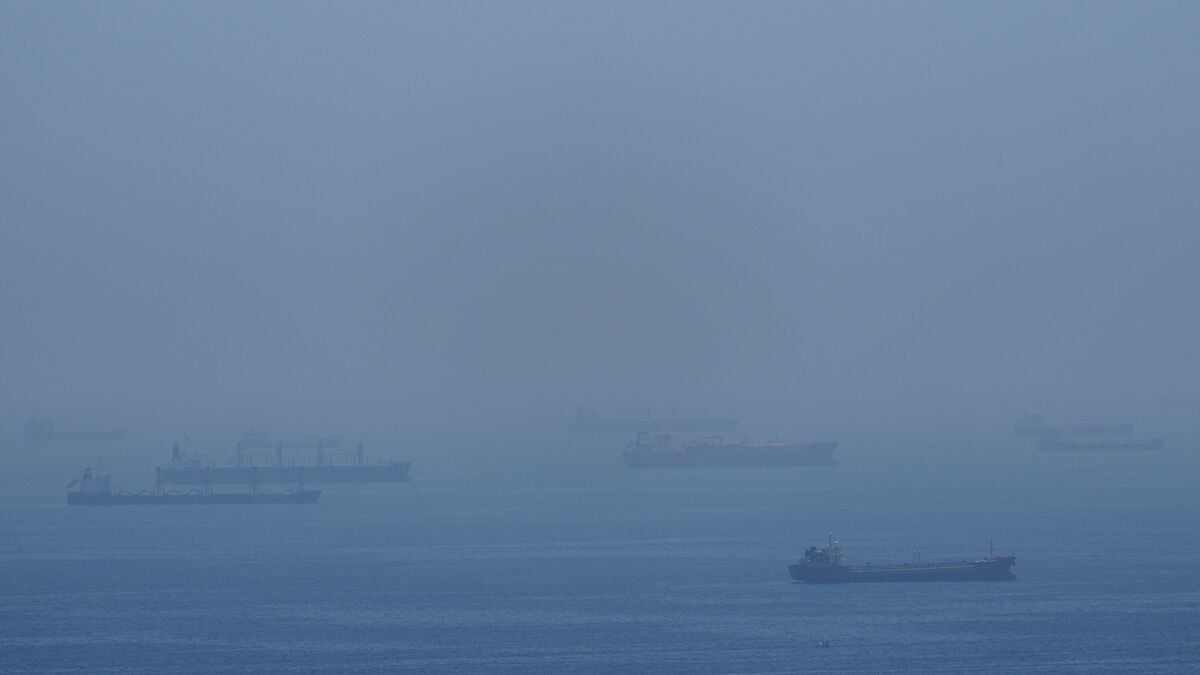
Uncertainty surrounding the Persian Gulf and the Strait of Hormuz has continued this weekend, with different statements from the United States and Iran about whether the narrow strait is open or closed to maritime traffic.
However, a shaky ceasefire between the United States and Iran, which expires on Wednesday, is holding.
"It's probably a negotiation technique by both sides to put pressure on each other. I remain cautiously optimistic, as long as the ceasefire is maintained," says Erik Hånell on Sunday morning.
Swedish Stena Bulk has “fewer than a handful” of its ships stuck in the Persian Gulf since the U.S. and Israel attacked Iran, and Iran responded with counterattacks on countries in the region. The U.S.-flagged Stena Imperative, one of about 60 tankers in the company’s fleet, was damaged in early March by Iranian shelling in Bahrain.
Awaiting clear message
Several ships began moving towards the strait after Friday's announcement of the opening, only to turn back on Saturday, when there were also reports that ships had been shelled.
"We didn't make such a quick decision to start moving, but we waited for clearer information than that," says Hånell.
He says it was not particularly unexpected that the uncertainty would continue.
"It's really a situation that we have to monitor and simply manage with the actions that are being taken. That's probably the toughest. But it's most difficult for the crews on board to hear these messages."
“No hasty decisions”
It's about keeping the crews informed as best as possible.
"They are not making any hasty decisions and certainly not leaving their positions without our order. But it is clear that this is a pressured situation for them that they have to deal with."
According to the International Maritime Organization (IMO), 20,000 seafarers and nearly 2,000 ships are stranded in the Persian Gulf, and the organization has begun work on developing a framework for evacuation.
"We also have the option to change crews if we feel that the situation is becoming unsustainable for the people currently on board," says Hånell.