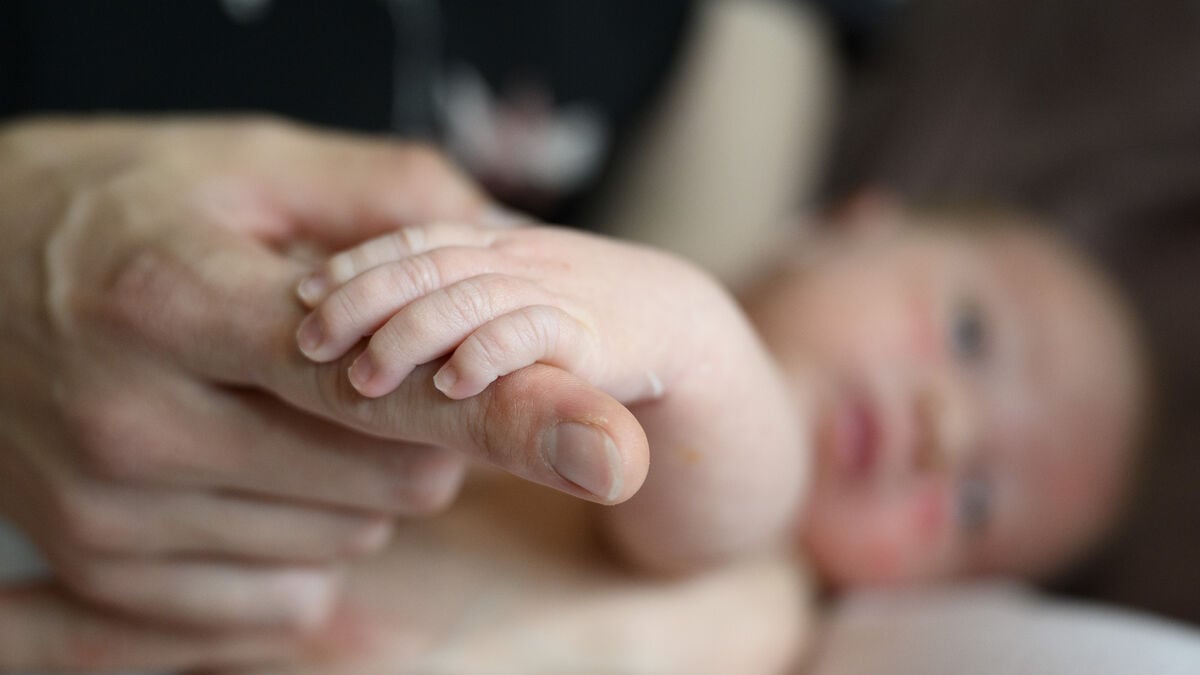
The gift of life is one of the greatest things you can give. But despite the laudable goal, few people donate.
In the Västra Götaland region, efforts are being made to raise awareness.
Many people are not aware of the great need, says Sara Malchau Lauesgaard, specialist at the Reproductive Medicine Clinic at Sahlgrenska.
At the same time, the donation process itself takes time because of the high demands placed on it.
It's not as simple as, for example, donating blood. The investigation is a painstaking process that you have to go through before you can be approved as a donor, notes Sara Malchau Lauesgaard.
Out of a hundred donors, only about 15 are selected. Many factors come into play, such as hereditary diseases, taking certain medications and the quality of the sperm.
Kind-hearted act
TT has been in contact with the seven hospitals and clinics that work with sperm donation. There is also a shortage in the regions of Östergötland and Örebro. In Skåne, they are also trying to reach more donors.
We have made film clips, provided information on Instagram and are trying to recruit through universities, says senior physician Margareta Kitlinski at the Reproductive Medicine Center at Skåne University Hospital.
She regrets that the financial muscle is lacking for larger advertising campaigns.
Many people don't know, or think about, how much happiness you bring to childless people by donating. It's one of the kindest acts you can do.
In the Umeå and Uppsala regions, however, the situation looks good. However, Uppsala also risks suffering from a shortage as the number of donors has decreased in recent years, according to the Academic University Hospital.
“Introduce a register”
At Karolinska University Hospital in Stockholm, they are getting help from the private clinic Livio Stockholm to shorten waiting times. For regionally funded treatments, Karolinska's own donors are used. Due to a shortage of donors, Karolinska has also been buying sperm from Denmark for just over a year now. Swedish legislation is followed regardless of where the sperm comes from.
What is really needed is a Swedish – and an international – registry of donors. This is needed to control and limit the number of families a donor can give rise to, says Camilla Stenfelt, fertility doctor and operations manager at Livio Stockholm.
The National Board of Health and Welfare has been commissioned by the government to establish and be responsible for a national register of gamete donors.
Approximately 700 children are born per year through sperm donation in Sweden.
The donor is anonymous to the parents, but the child has the right by law to know the donor's identity at the age of 18.
The donor must be between 23 and 45 years old and physically and mentally healthy. The donor must have been smoke-free for three months.
It is common to receive compensation when you donate. The amount you receive varies between regions.
Sources: 1177 and others.