Early Monday morning, Belgrade residents head to work after a night many spent out on the streets, in cafes and with friends. Fireworks followed one another, cars honked incessantly and people streamed into the city.
I was sitting in a cafe when someone shouted, “We won.” I just ran out and cried. We’ve been fighting for justice for two years now, says 21-year-old student Adriana.
She went to bed at three in the morning but is radiantly happy as she makes her way to work.
There were people everywhere, and in all the cars. No one was tired. People have never been so happy here. And it was completely non-violent. We didn’t burn anything like I’ve seen them do at other protests in Europe. We just cheered and sang.
For the first time, she didn’t feel afraid in the crowd either.
The police have beaten us at all the protests, but now they just stood there. I’m so happy and proud of us.
It has been going on for a long time
Outside the parliament building, cars are honking persistently even early Monday morning. People stick their clenched fists out of the windows, and people on the sidewalks respond with encouraging shouts and victory gestures.
According to the independent election monitoring organization CRTA, 67.8 percent of the population voted, an unusually high turnout. In connection with Vucic conceding defeat in the election, he estimated that the youth-backed “Student List” would win between 135 and 140 seats, while his own party, the SNS, was expected to win around 105, according to the AP.
“I was shocked. I didn’t think he would resign. This has been going on for a long time, ten years. The first big demonstration against him was in 2016,” says Tamara Zivkovic, who celebrated from her balcony because the children were asleep.
Her husband, Nikola Zivkovic, ran out into the streets around the parliament. Demolished riot barriers and rubble lie on the ground. The statues are draped in Serbian flags.
“We brought back the park that they had kept closed for a year,” he says, adding:
There were very strong emotions.
Awakening
Some still temper their joyous frenzy with a “we’ll see” when asked whether the Student List will crack down on corruption. But Nikola Zivkovic thinks recent events mark an awakening for Serbs.
“We have to organize from the bottom up. The local community is the only institution that has worked. So I hope it continues that way,” he says.
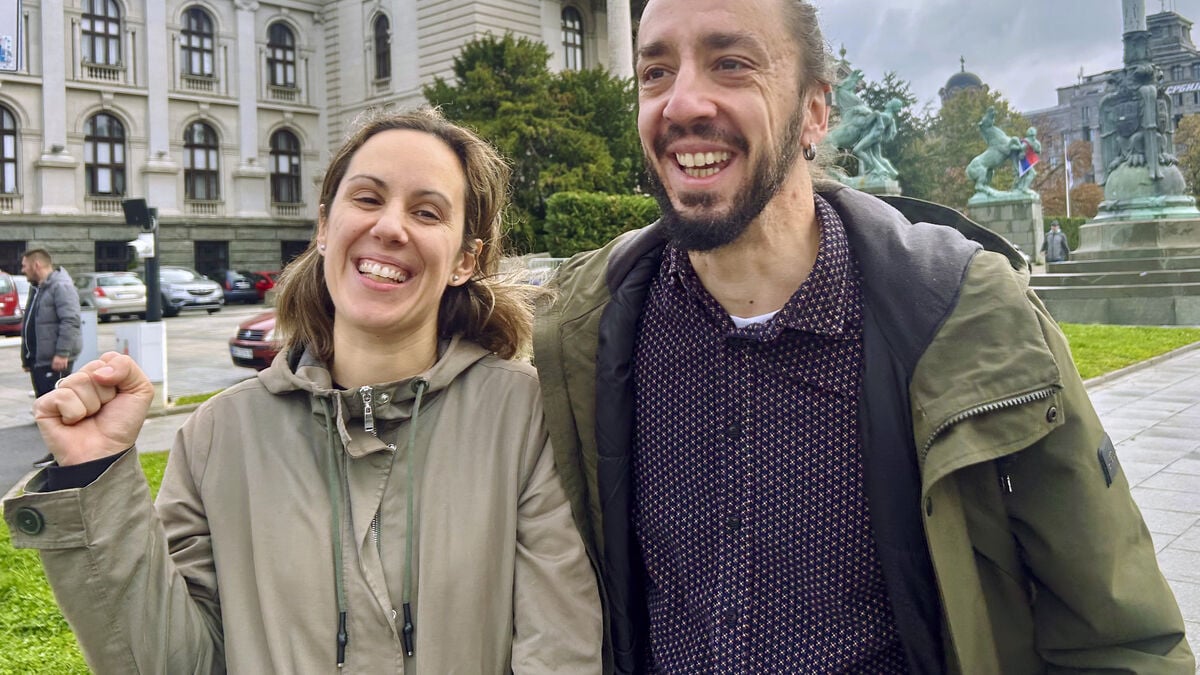
Katerina Pavlovic and Maraja have also had enough of “strong leaders”.
I said that if Vucic won, I would leave Serbia forever, so we are so happy now, says Katerina Pavlovic.
Facts: Elections in Serbia
Serbia held elections on October 25 after two years of widespread and sometimes violent protests. The unrest stemmed from demands for a transparent investigation after the roof of a newly renovated train station collapsed, killing 16 people.
The protests grew rapidly, fueled by dissatisfaction with widespread corruption and President Aleksandar Vucic’s autocratic rule.
Vucic and his nationalist ruling party, the Serbian Progressive Party (SNS), have dominated politics since 2012. The SNS ran in the elections together with several smaller nationalist and conservative parties under the name “A United Serbia”.
The biggest opponent to the SNS was the relatively newly formed “Student List”. The students have chosen candidates without much political experience. At the top of the list is cardiologist Ilija Srdanovic.
Serbia elected 250 members of parliament. A majority requires 126 seats. In total, around 18 parties and coalitions participated.