In the assessment of the Swedish school system, which is carried out every three years, the Swedish National Agency for Education concludes that students' knowledge stands up well in an international comparison.
But there are trends that are worrying.
Failing in mathematics
The difference in results between students is increasing, and we also see that socio-economic background continues to have a major impact on how students perform, says Anna Castberg, head of department at the Swedish National Agency for Education.
Last school year, around 20,000 students graduated from primary school without qualifying for upper secondary school. In the most recent assessment, 85 percent of students qualified for upper secondary school. This time, the figure is 84 percent.
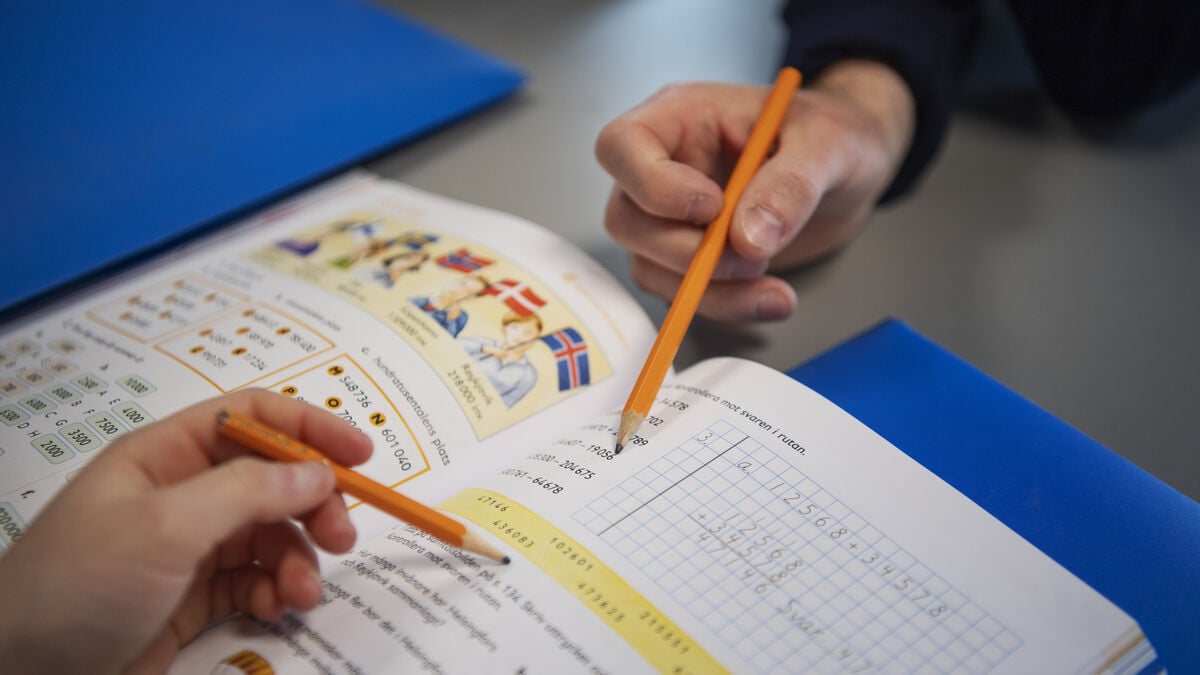
"Mathematics is an important area here. It is also a subject where you see that socioeconomics has a major impact. One in six students does not qualify for upper secondary school, and it is often mathematics that they fail," says Castberg.
Many reforms
Anna Castberg believes that hard work is required to address the problem of knowledge gaps - but that a lot is being done politically right now.
The government has presented a large number of reforms that are on the Riksdag's table and which aim to improve knowledge levels in schools, but which also review what is required to qualify for upper secondary school, she says.
Socioeconomic conditions have long characterized the debate about student performance in schools.
We need to review the pedagogical segregation, meaning we have a lower proportion of qualified teachers in schools with difficult socioeconomic conditions, says Anna Castberg.
Every three years, the Swedish National Agency for Education makes a comprehensive assessment of the situation within Swedish schools. The report describes developments in preschool, school and municipal adult education.
The situation assessment is based on statistics and reports from authorities and other actors.
Assessments of Swedish students' knowledge development are based on official statistics and results from international knowledge measurements.
Source: Swedish National Agency for Education