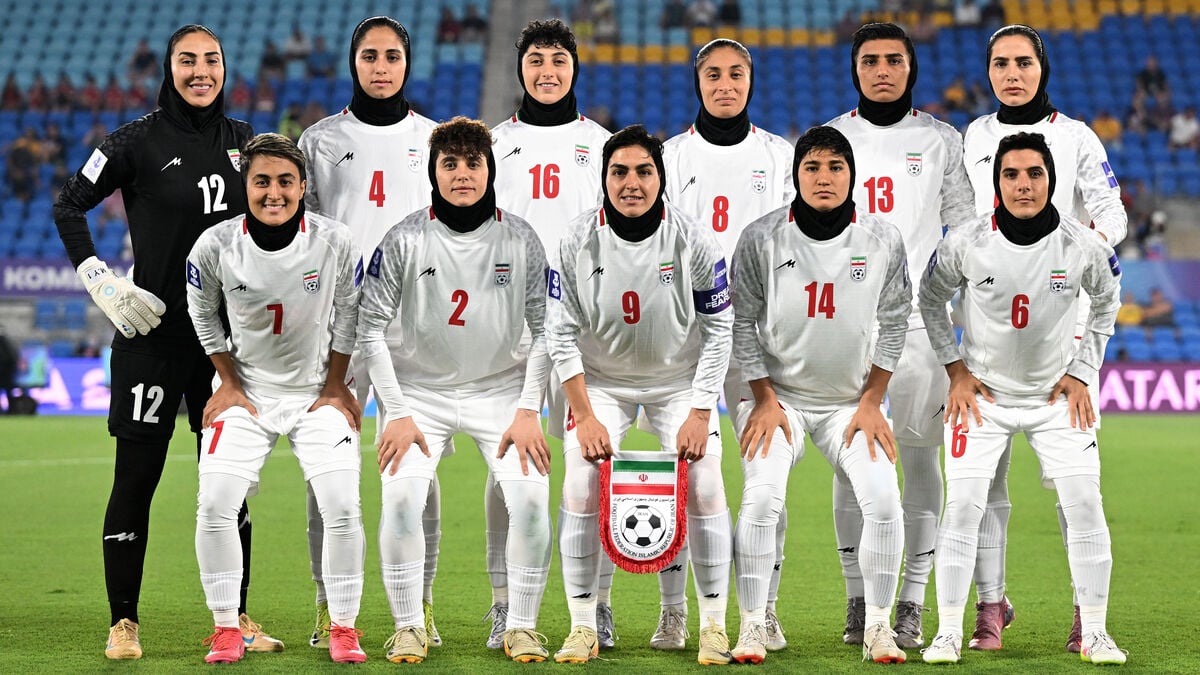
Iran lost all three of its group stage matches at the Asian Championships in Australia, but the media pressure surrounding the football team and players has, for obvious reasons, been enormous.
Both players and officials stood completely silent while the Iranian national anthem was played before the team's opening match against South Korea. The gesture was interpreted as a silent protest against the regime - and provoked strong reactions.
The players' stance is also associated with major risks, fears Maja Åberg, who is an expert at Amnesty.
Granted asylum
It is a vulnerable situation in general for women in Iran who fight for women's rights in various ways, or, for example, choose to go out without a headscarf, she says.
But with female footballers getting so much international attention, there's another layer. When they chose not to sing the national anthem, they were called traitors, which is of course incredibly serious.
The stance prompted, among others, Reza Pahlavi, the son of Iran's overthrown shah, to urge Australia to grant the players asylum to protect them from reprisals in their home country.
A handful of players and leaders have since also been granted asylum - which is not without risk, however, according to Middle East expert Anders Persson, who is an associate professor of political science and a researcher at Linnaeus University.
There is no doubt that these footballers are taking a certain risk. It should be remembered that Iran has been killing regime critics in the West for many, many years, he says.
Threats and harassment
What happened could also pose risks for the players' families in Iran, continues Maja Åberg.
Amnesty has long documented various cases where families have been harmed, she says.
This may involve them being harassed, threatened or forced to make statements on state channels in which they distance themselves from what their family members have done.
Anders Persson shares that image.
Many authoritarian regimes use families and their situation in their home country to put pressure on exiled Iranians, as in this case, he says.
We have had cases in Sweden as well. Threatening the family is, of course, a very effective way to put pressure on individuals.