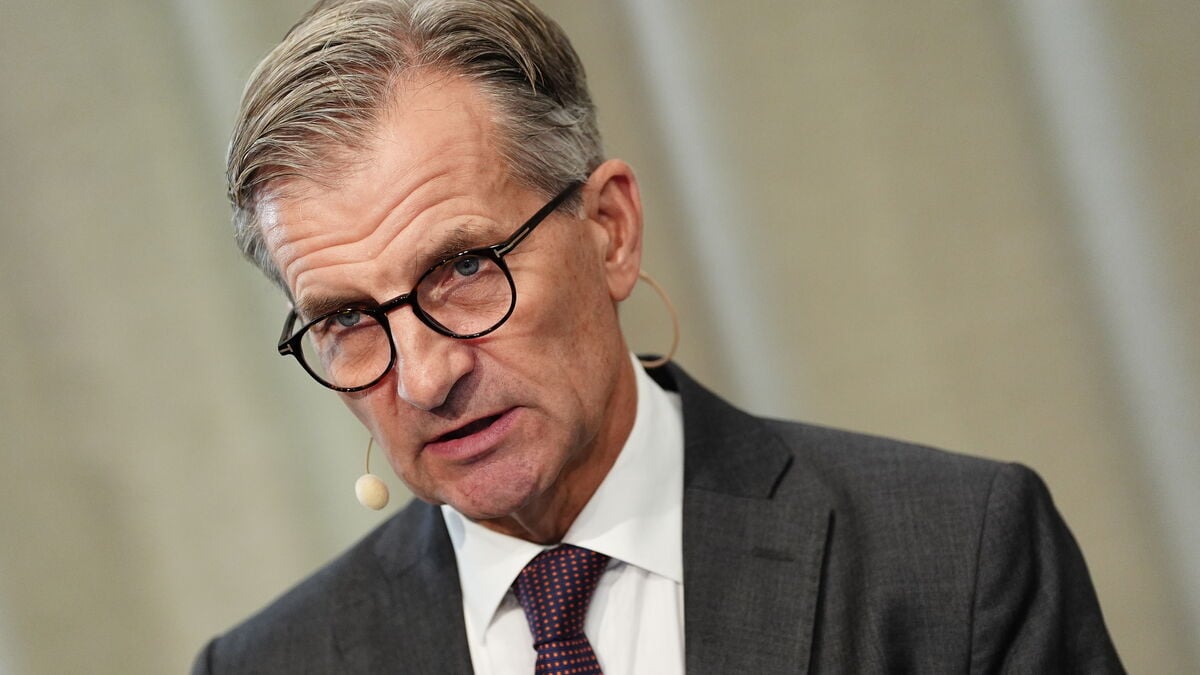
Stronger Swedish growth, high global interest-rate pressure and leading central banks raising their policy rates mean that the Swedish Central Bank will soon have to start tightening with interest-rate hikes, according to Erik Thedéen. Not least because inflation risks are increasing as a result of major supply disruptions in oil, diesel and petrol - as a direct effect of the Middle East war, but also Ukrainian attacks on energy facilities in Russia.
Our best assessment is about two and a half increases from here, says Thedéen at a press conference at the West Sweden Chamber of Commerce in Gothenburg.
“No acute inflation problem”
He explains that the key interest rate will not be raised right now by free resources in the Swedish economy - that is, unemployment is too high - and a good starting point when it comes to inflation in Sweden compared with many other economies.
We don't have an acute inflation problem, says Thedéen.
An uncertainty factor that could pressure the Swedish Central Bank to raise rates even more is if the government - whichever it is - does not reduce the scope for reform in the state budget and withdraw all the fiscal support measures that have been introduced, such as halving food VAT, halving public transport fees and lowering taxes on fossil fuels.
"Those are pretty big stimulus effects. Maybe 0.5 percentage points on GDP, maybe even a little more," says Erik Thedéen.
"There's no math involved in this, but it could lead to us needing to raise the interest rate even more. But our forecast assumes that they will actually withdraw this," he adds.
Wage inflation may be important
The upcoming wage round must not be derailed either. Significantly higher wage increases than the approximately 3.5 percent per year that the Swedish Central Bank has in its forecast could cause this, according to Thedéen.
"If it were not matched by a very large increase in productivity at the same time, it is clear that we would then have large wage inflation. Yes, then it matters," he says.
Although he downplays the risks of this scenario:
We have a very good system for wage formation, where employees receive ongoing real wage increases, even though they lost a lot in 2022 and 2023.
The krona strengthened marginally after the announcement.
"Significantly more hawkish than we thought it would be," says Amanda Sundström, interest rate strategist at SEB, about the new interest rate path.
Facts: How three interest rate increases affect mortgage borrowers
The Swedish Central Bank's policy rate primarily affects short-term interest rates in the economy, such as variable mortgage rates. However, expectations of future increases in the policy rate also affect interest rates on loans with longer maturities.
Three rate hikes of 0.25 percentage points would push the key rate up to 2.50 percent, from today's 1.75 percent. This is the same level that the ECB's comparable key rate - the deposit rate - is already at.
If the interest rate on a mortgage of three million kronor were to be increased by 0.75 percentage points, it would increase the interest cost of the loan by 22,500 kronor per year or 1,875 kronor per month.