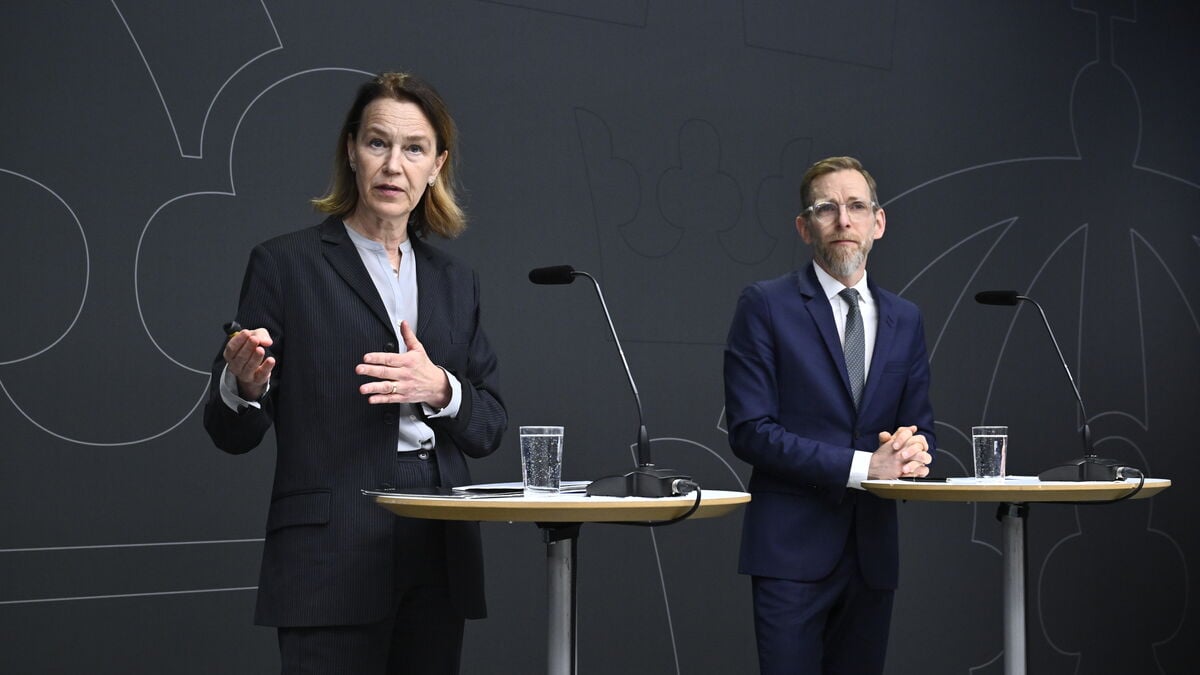
Children and young people are sleeping too little, and we see a negative trend over time, says Director General Olivia Wigzell at a press conference.
Today, nearly six out of ten young people go to bed after 11 p.m., compared to about one in six in the 1980s.
This summer, the agency was therefore commissioned by the government to develop recommendations to promote the sleep habits of children and young people.
We have a sleep crisis in Sweden, says Minister of Social Affairs Jakob Forssmed (KD) and adds:
We are in a situation where it is absolutely necessary to raise awareness about the importance of sleep, but also to provide concrete guidance.
Most important to consider
The Public Health Agency's new guidelines recommend that schoolchildren aged 6–12, for example, get 9–11 hours of sleep.
The agency also lists areas to pay attention to for good sleep, such as caffeinated beverages, alcohol, tobacco and nicotine products, and screens before bedtime.
According to Wigzell, routines are the most important thing to introduce in families where sleep is a problem.
It can be anything from having similar routines when you wake up to having routines before you go to bed. What are we doing to slow down a bit?
Physical activity
Wigzell highlights screen time routines as a potential measure because screens stimulate and activate the brain in a way that reduces the perceived need for sleep. The light from screens also disrupts normal circadian rhythms.
It could be a routine not to have a screen in the bedroom or to avoid looking at it right before going to sleep.
Another measure could be to think about physical activity.
Getting enough movement during the day can also make it easier to relax and help you sleep better. Being active outdoors during the day helps your body's circadian rhythm, says Wigzell.
This is how much sleep children and young people need, according to the Swedish Public Health Agency.
Children 0–3 months: 14–18 hours
Children 4–11 months: 12–16 hours
Children 1–2 years: 10–16 hours
Children 3–5 years: 10–14 hours
Children 6–12 years: 9–11 hours
Youth 13–17 years: 8–10 hours
Young adults 18–25 years old: 7–9 hours
Source: Public Health Agency of Sweden