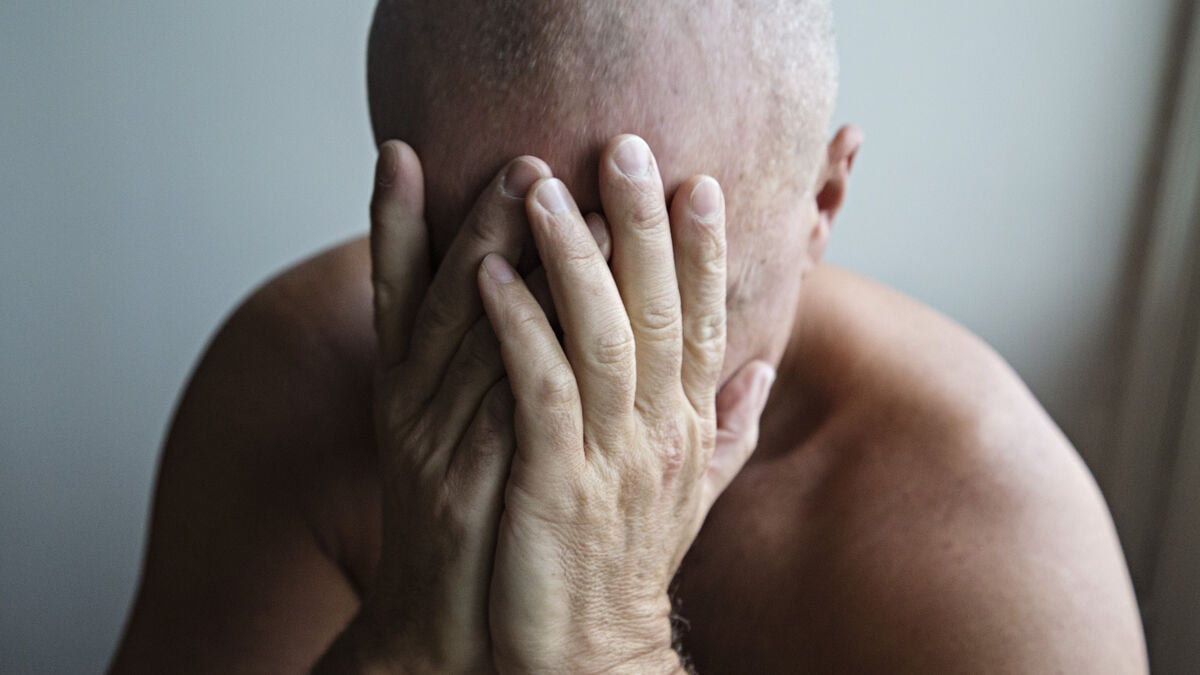
Benign prostatic hyperplasia affects about half of all men over the age of 50 - and the number increases with age. This means, among other things, that you have to run to the bathroom more often. It may sound harmless, but over time, an enlarged prostate can lead to much more serious complications, such as kidney problems.
It is not uncommon for people to get up four or five times a night to pee. For some, it can take five minutes to empty their bladder completely. You can also have problems during the day, and you may not have time to go to the toilet and pee. This causes some men to isolate themselves, says Dag Sandblom, a urologist at Örebro University Hospital.
For many of the men he meets, prostate enlargement has also had other consequences.
It affects love relationships, work ability, and social life.
Starting guide line
Dag Sandblom is supported by general practitioner Marcus Romberg at the health center in Kramfors.
They rarely come to me and say, “I think I have benign prostatic hyperplasia.” Instead, they come to me because of sleep problems or depression.
Marcus Romberg is one of the initiators of the new patient association Manlig hälsa. The association has opened a support line and wants to raise awareness of the almost non-existent care for prostate enlargement. He believes that money should be earmarked for treatment.
Help is needed, and it is available if you know where to look.
"You can start having problems as early as your 50s, when you have many years left in your working life. And we're going to be working longer and longer. If you have a job you can't leave, it becomes difficult," says Romberg.
Have a catheter unnecessarily
He also believes that many of the tens of thousands of men who currently have a permanent catheter due to prostate enlargement could avoid it. There is a directive from the National Board of Health and Welfare that everyone with a urinary catheter has the right to receive curative treatment urgently if it is available.
The problem is that no one is ensuring that the directive is complied with, says Marcus Romberg.
Imagine having to insert a plastic tube into your urethra several times a day to be able to urinate.
Today, benign prostatic hyperplasia is most often treated with surgery or medication. Dag Sandblom also works with microwave therapy.
I see pros and cons to the methods. However, microwave treatment is faster and gentler, and you don't have to be hospitalized.
The association's support line can be reached at 010 189 92 70 or at manlighalsa.se
Also called BPH, benign prostatic hyperplasia.
Just over 400,000 men in Sweden are affected. At the age of 50, approximately 50 percent of men are affected, and at the age of 70, the figure is 70 percent.
Common symptoms include the prostate pressing against the urethra, leading to frequent visits to the toilet 24/7. It may also be difficult to empty the bladder completely.
Benign prostatic hyperplasia can lead to complete blockage of the urethra, known as urinary tract obstruction, and urinary tract infection. You can also get repeated urinary tract infections, urine leakage, and kidney problems.
According to the statistics database Waiting times in healthcare, half of patients waited longer than the healthcare guarantee's 90 days for surgery in July 2020.
The reasons for the long waiting lists for care for men with benign prostatic hyperplasia include a major shortage of urologists and a growing patient group.
Approximately 75,000 men used catheters in 2020 while waiting for treatment - often resulting in poorer quality of life and social limitations.
Sources: Male Health Patient Association, Läkartidningen, etc.
A normal-sized prostate weighs approximately 30 grams.
Many people are given the drug finasteride, which shrinks the prostate. However, it can have side effects such as depression and erection problems.
Also common is surgery with so-called planing, TURP (transurethral resection of the prostate). The operation is done under spinal anesthesia or general anesthesia. As a rule, you have to stay in the hospital for a few days.
Prostates weighing more than 100 grams cannot be treated with TURP.
There are also treatments where the prostate is shrunk using heat from water vapor or microwaves, TUMT (transurethral microwave therapy). With this treatment, even a prostate weighing up to 300 grams can be treated.