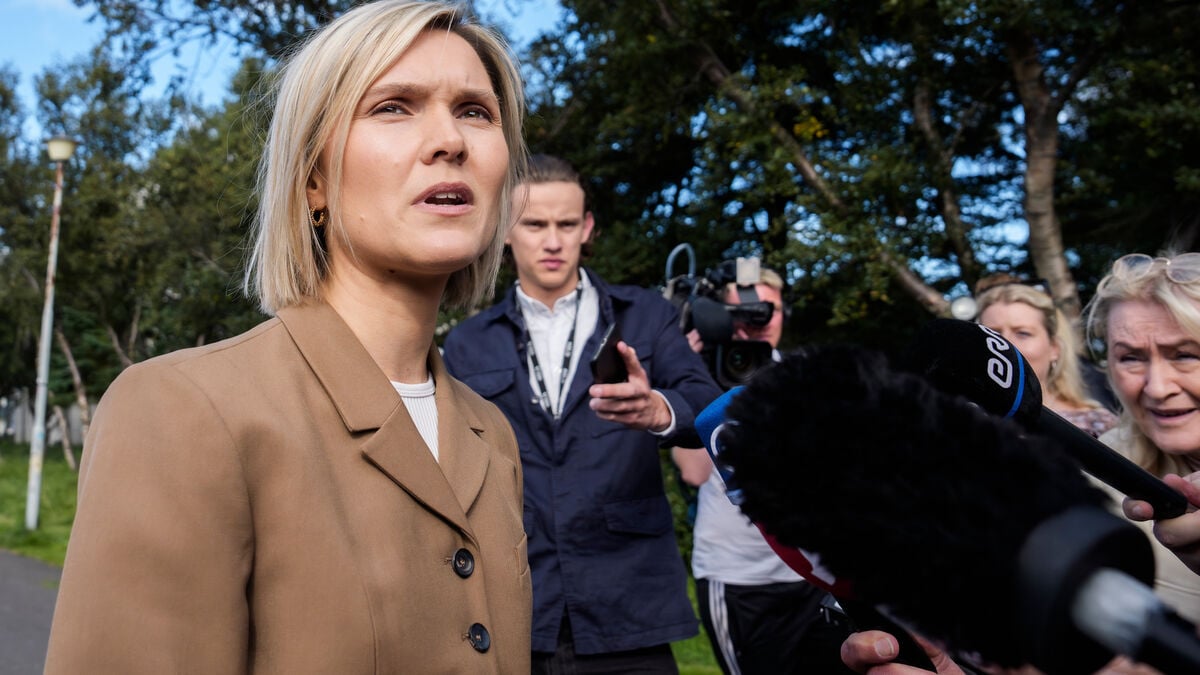
Government representatives who were on the yes side for membership spoke cautiously at a press conference on Sunday afternoon.
The Prime Minister confirmed, according to Icelandic public service broadcaster Rúv, that "the government will not proceed with membership talks during this term of office."
She also said that she had been in contact with the President of the European Council, Antonio Costa, and noted that contacts between the EU and Iceland should remain strong.
Costa confirmed through his spokesperson that he had been in contact with Kristrún Frostadóttir, and that he fully respected the democratic decision of the Icelandic people - and that Iceland is one of the EU's closest and most reliable partners.
However, the Icelandic Prime Minister did not want to determine how the Icelandic process of contacts with the EU should continue.
"We will discuss with the Althingi Foreign Affairs Committee how this chapter can best be closed. We are not making any definitive commitments," said Prime Minister Kristrún Frostadóttir.
The people have spoken.
At the same time, there was great joy on the no side:
"The people have spoken," writes Gudrún Hafsteinsdóttir, party leader of the conservative Independence Party and one of the strongest voices for the no side, on X.
For a long time, the vote count was extremely close after Iceland's referendum on negotiations for EU membership, but in the end it was clear. With 52.8 percent, the no side won over the yes side's 47.2, according to Rúv .
This means that just over 105,000 Icelanders voted in favor and 118,000 voted no. The voter turnout was 82.5 percent, the highest since the parliamentary elections in April 2009, when 85.1 percent went to the polls.
The referendum is only advisory and Icelanders are not voting on EU membership directly, but on whether the country should resume the accession negotiations that were put on hold in 2013 by the then Eurosceptic government.
More EU-friendly government
The current government has a more pro-EU stance and the debate in Iceland has changed in step with the world. For example, the country does not have its own military, but relies on its membership in NATO and a bilateral defense agreement with the United States.
Many Icelanders are concerned about American threats to take over Greenland - and that it could affect Iceland.
The yes side's arguments also concern rising inflation and the US tariff war, while the no side sees EU accession as a loss of the freedom the country has fought for.