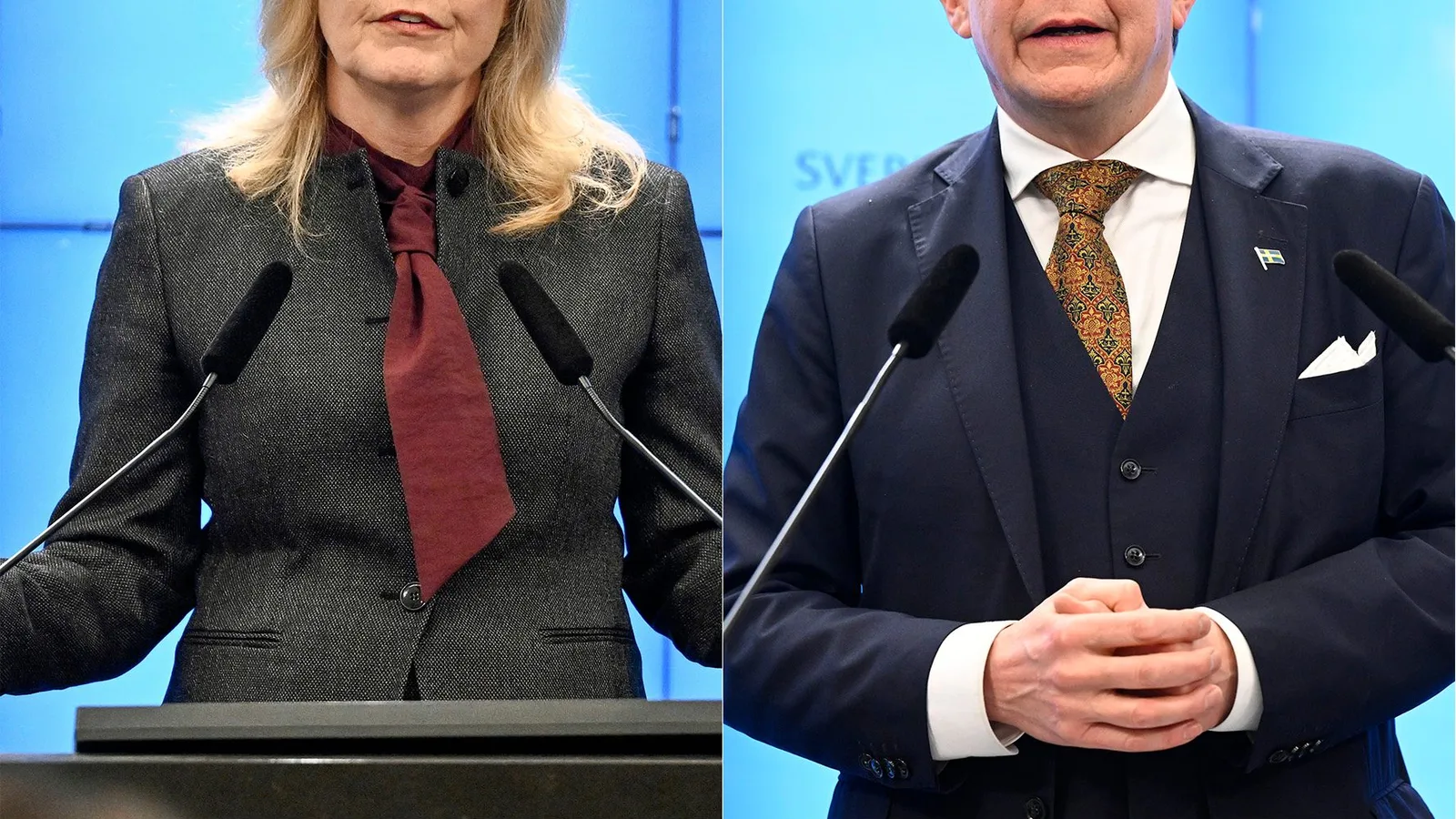
According to him, the threat of a by-election is probably what can kick-start the process of forming a government.
The uncertainty about what a by-election might lead to makes people start to change their minds about various red lines when they are faced with a cliffhanger, so to speak, says Jonas Hinnfors, professor emeritus of political science.
Speaker Andreas Norlén has made clear that he wants to avoid a government formation process as protracted as the one in 2018, when it took 134 days to form a government.
At the same time, the passage of time also played a role in helping the parties abandon their previous positions and agree on something completely new.
"It won't happen by itself"
But even then, things only really moved forward when the speaker began giving the Riksdag the opportunity to vote on different candidates, Hinnfors points out.
He does not believe that the Speaker, with his new approach of making a vote the outcome of a government probe, risks forcing the process.
Given all the deadlocks and red lines, it probably won't happen by itself. Everyone is waiting for someone else to change their mind.
Now everyone knows that there will be a third vote in a few weeks, and perhaps that is what will make the parties start discussing seriously.
On Tuesday, the Riksdag will try Elisabeth Thand Ringqvist (C), whose middle-ground alternative will, by all accounts, be voted down. After that, the assignment will go to M leader Ulf Kristersson.
His assignment will also be followed by a vote. But it is not certain that the vote will be on Kristersson if he comes back and says he has failed.
If the Speaker notices that things have started to move among the red-greens, he can extend the probe and hand it over to Andersson, says Jonas Hinnfors.
“Closer this time”
He believes that the process will really pick up speed around the third or fourth vote.
It may drag on into December, but it probably won't take much longer, Hinnfors says of the timeline.
The most likely outcome is that the red-green bloc, with its 176 seats, will finally agree on Andersson, he believes.
He guesses that C will have to drop its red line against V being in the government, while V may have to give way on important issues and accept centrist policies.
If they don't make it, then maybe there will be a by-election. It's probably closer this time than it was in 2018.



What do you think?