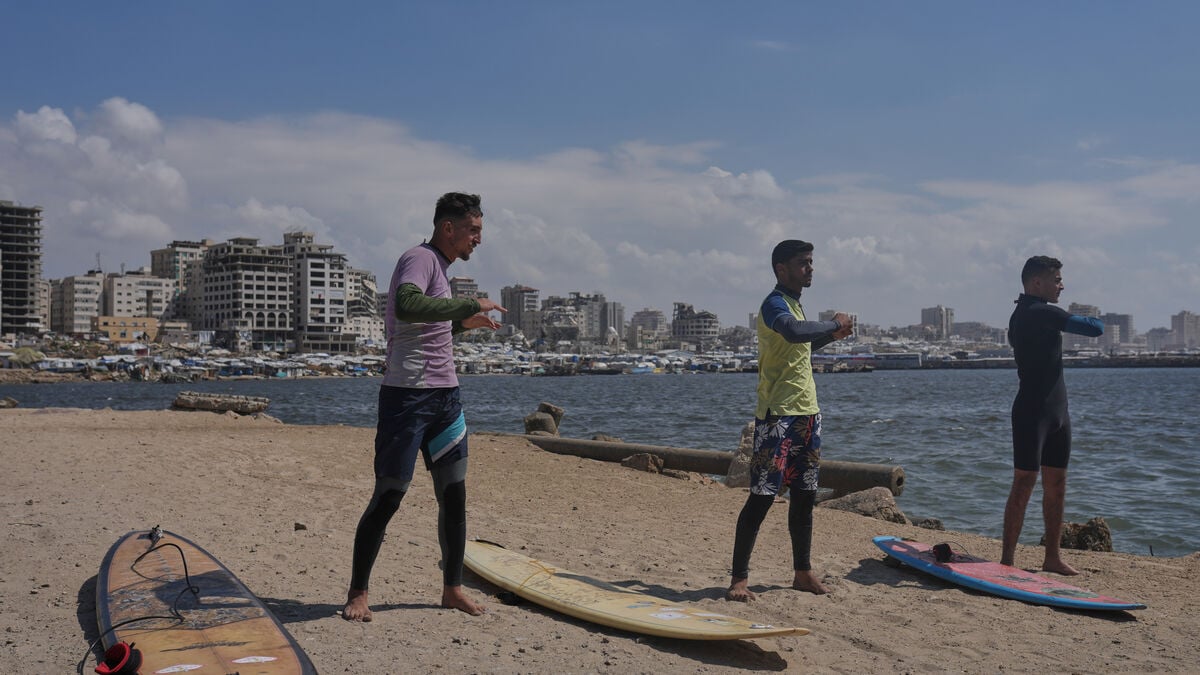
When 31-year-old Mohammed Abu Hasira paddles out into the waves, a mix of emotions rushes through his body - fear, anxiety and freedom. Once he stands on the board and catches a wave that lasts only a few seconds, there is one feeling that remains: freedom.
"For me, surfing is about feeling free. This little board is the source of joy and happiness for my heart," he says.
Mohammed Abu Hasira grew up by the port of Gaza City and started surfing as a child. His interest came from his uncle, Ahmed Abu Hasira. But when the war in Gaza broke out, his life changed. He lost his home and several relatives were killed, including his uncle.
I escape the difficulties of life at sea, where I feel comfort and joy, says Mohammed Abu Hasira.
At the same time, he describes how the beach has changed, from a place for fun to an area filled with tent camps for refugees.
“Maybe this is the end”
Last year, Israel banned access to the waters off northern and southern Gaza. It is also risky to venture into the waters off central Gaza because of Israeli patrols, writes AP.
But Mohammed Abu Hasira gets out anyway. And he's not alone.
23-year-old Mohammed Abu Ghanem, from the coastal village of Sheikh Ajilin, also continues to surf.
I am like a bird trapped in a cage of injustice and the waves are the only thing that gives me peace and freedom, says Mohammed Abu Ghanem.
He says that the sea inspires fear, but that the joy lies in facing the risks.
One of my most beautiful moments surfing during the war was when there were warships and heavy shelling in Gaza and people were fleeing. I thought to myself: maybe this is the end. My end will be doing something I love.
Lack of surfboards
Mohammed Abu Hasira says that very few people go out to sea and points out that no new surfboards have arrived in the Palestinian territory since 2007.
"Most people have either been killed or lost their surfboards. I was lucky enough to borrow equipment from a friend when mine was destroyed," says Mohammed Abu Hasira.
Otherwise, the days are spent carrying food and water long distances to support the families.
"The war has really affected my ability to surf. My health and fitness are not what they once were," says Mohammed Abu Ghanem.