When researchers at the SOM Institute at the University of Gothenburg asked people in a survey why they didn't want to have children, "wanting to focus on other things" came out on top. It was cited as a reason by significantly more people than those who cited having tried but being unable to, or concerns about war and climate.
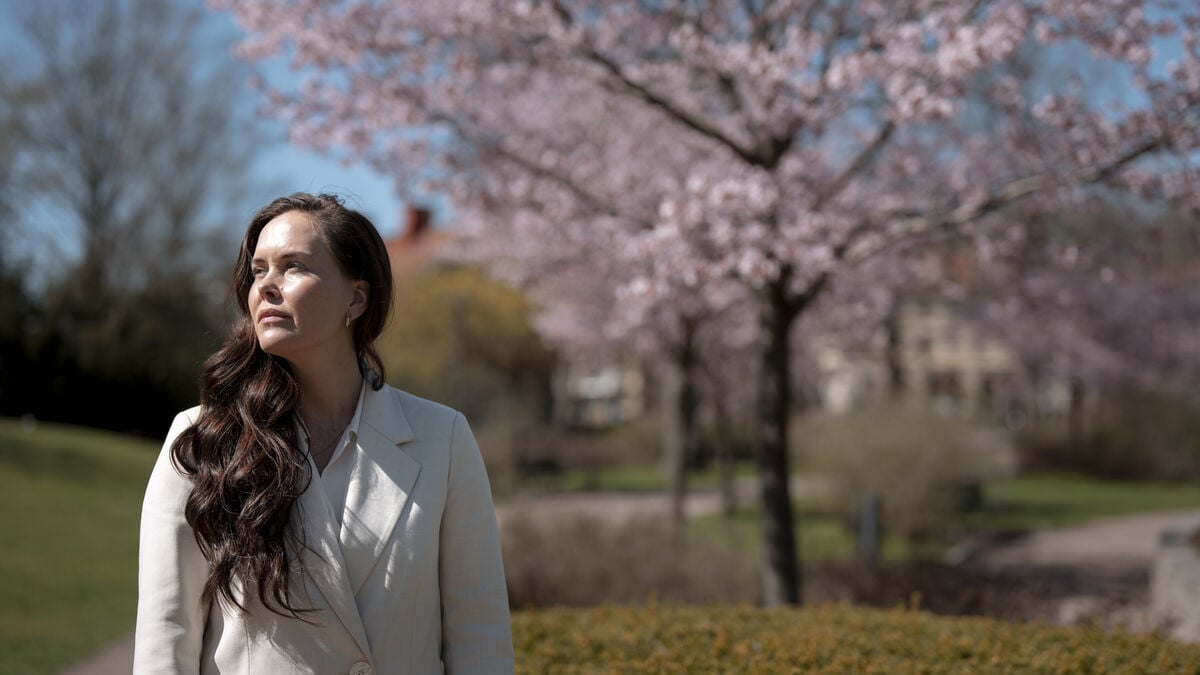
For Zanna Wiede, it's an obvious choice. Parenthood has never been something she longed for.
"When I was in my 30s and many around me got pregnant, I felt pity rather than envy," she says.
She is in a relationship with a man and they are in complete agreement about the decision. She simply wants to do something different, have the freedom to travel and be spontaneous.
As a teenager, I had to take on a lot of responsibility for my sick mother and my younger siblings. When that time was over, I felt a great relief at not having to take care of others.
Zanna Wiede has had to get used to the reactions of those around her. Among other things, she has heard that many people think it is selfish to choose not to have children.
In my world, it's more selfish to give birth to a child without having thought through whether you have the conditions. My choice is well thought out.
“Congratulations on a lonely old age”
Prejudices are common, says Merve Tunçer, a researcher in sociology at Örebro University. In a study published in the Journal of Family Studies, she interviewed women between the ages of 35 and 60 who had chosen to live childfree. Tunçer was surprised by all the mean comments many people received.
They hear things like, “Congratulations on choosing to live a lonely old age.” Prejudices about living a lonely old age are common and are based on the image that children automatically mean security and care, she says.
For Pia Elfdahl in Stockholm, that notion is incomprehensible. She is just over 60 and has never felt a desire for children. For her, genetic ties are secondary to the relationships she actively builds and maintains.
I can name many people in my circle who resent having to take care of their elderly mother, with whom they don't really have much in common. I don't think children are a guarantee against loneliness.
She believes the belittling comments and claims stem from the fact that her choices could be perceived as threatening to those who have built their identity on being part of a nuclear family, but that society's acceptance has increased.
I don't feel that women's identity is as tied to motherhood as it was in the 1990s. I think that younger people today, and perhaps especially in big cities, are choosing their own ways of living.
New social structures
While fewer children are being born, we are living longer. This presents society with extensive challenges, not least when it comes to staffing in care and healthcare.
Julia Schröders, a researcher in social epidemiology at Umeå University, has been interested in how states and societies can deal with declining birth rates. As the proportion of older people increases, this will pose challenges even in a country with a strong welfare system like Sweden.
There is an underlying expectation in the welfare system that relatives should be there to take care of the elderly, and above all, it is women who are expected to be responsible for both the practical and emotional care work, she says.
When demographics change, society needs to prepare for it.
We have an ongoing research project where we will look at how childless elderly people in Sweden experience their aging and how they handle challenges through informal social networks.
Fredrik Siljehag is turning against what he perceives as political pressure to have children. He had long believed that children were a mandatory part of life, especially if he, as a heterosexual man, wanted a relationship. The turning point came when he met his wife, who also did not want children.
It was a huge relief - in my world there were no girls who didn't want it, he says.
Women are blamed
He often encounters the argument that childless people are selfish and that they burden society, something he strongly opposes.
If the pension system requires us to constantly have new children in order to function, then perhaps it is the system that needs to be overhauled. I often say, half-jokingly, “we never give up.”
He has long been active in both digital and physical networks for childfree people. He has a large network and highlights the importance of the chosen circle of friends. As a man, he is struck by the fact that women who choose not to have children are blamed more harshly than men.
There is a trend in which men often take the right to judge women's choices, a kind of moral policing, which is unpleasant.
In her job as a funeral counselor in Gothenburg, Zanna Wiede meets people who have recently lost someone. She sees every day that children are not a surefire recipe for loneliness.
I trust my networks and my own ability to make connections. I'm not worried about becoming a lonely elderly person.
Life expectancy is expected to continue to increase. In 2025, life expectancy was 85.5 years for women and 82.5 years for men, and is expected to increase to 86.3 and 83.5 years, respectively, in 2035.
At the same time, the number of children born is expected to continue to decline in the coming years, even though the number of children born per woman is estimated to increase slightly from today's low level, 1.42 children per woman.
During the coming ten-year period 2025–2035, it is expected that:
30,000 more people die than are born
200,000 more people immigrate than emigrate
population increase by 170,000 people
182,000 fewer children in primary school
179,000 more over 85 years old
Source: Statistics Sweden