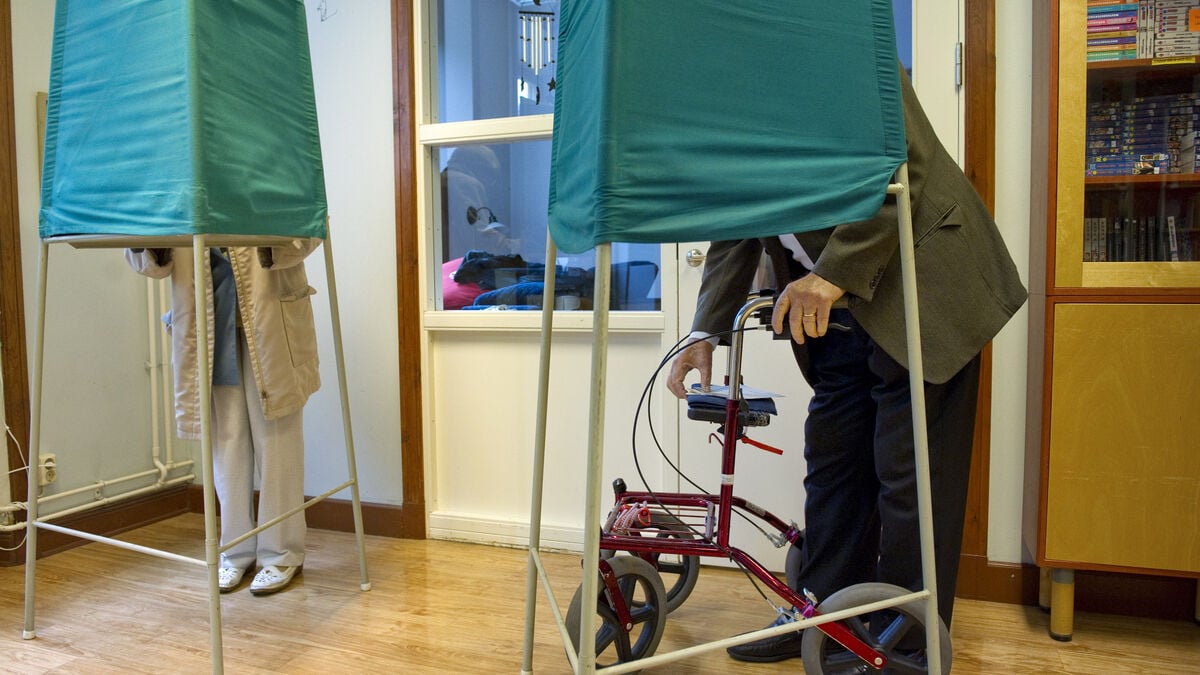
In this year's election, those over 65 make up 29 percent of those eligible to vote - a dramatic increase compared with the early 2000s, when they made up only 23 percent.
The problem is that it is easier said than done to attract new votes among the oldest - and it is those who have reached the age of 80 and over who account for the increase compared with the last election.
Above all, it is quite pointless to direct electoral propaganda at older people, because they care most about their grandchildren. Even if there are pensioners who are a little tight, people do not change their behavior after a life of voting just because they get a few hundred kronor more a month, says Henrik Ekengren Oscarsson, professor of political science at the University of Gothenburg.
Lingering effect
Jan Teorell, professor of political science at Stockholm University, is on the same line.
In the last election, the Social Democrats received 30.3 percent of all voters' votes. In the 71-plus group, they received 38.6 percent of the votes and in the 90-plus group, a full 52.6 percent.
"A great many of those we call older voters became voters sometime in the 1960s and then there were strong left-wing winds blowing. S even got its own majority in the 1968 election and a great many then formed a party sympathy that has held up. It is a slowly lingering effect of that," he says.
This advantage for S among the elderly is, however, moderated by the fact that voter turnout declines in old age.
Another group that is slightly larger this year than in the last election are first-time voters, although in total they only make up 6.5 percent of those eligible to vote.
"If I were a party strategist, I would perhaps think primarily about this large group of first-time voters. Although the increase is even greater when it comes to the group of older voters, it is a more difficult group to change," says Jan Teorell.
Age doesn't matter the most
But both experts agree that age is not the most decisive factor in how people vote. Gender, level of education, profession, whether they work in the public or private sector, for example, say more about how a particular person will vote than age.
There are greater differences between a younger man and a younger woman than there are between a younger woman and an older woman, says Jan Teorell.
It is very easy to identify people based on age and generation, but it is very difficult to tailor messages to these groups, says Henrik Ekengren Oscarsson.
Facts: Party affiliation and age
KD: Support is greater among those aged 50 and older than in the youngest age group, 18–29 years.
A: Support is greatest among those aged 65 and over, compared with other age groups.
V: Support is greater among those younger than 50 years of age than among those 50 years of age and older.
MP: Support is greater in the 18–29 age group than in the 65 and older age group.
SD: Support is highest in the 50–64 age group, compared with other age groups.
C, L and M do not have any clear patterns in support for their parties in terms of age.
Source: Statistics Sweden's party sympathy survey in May 2026