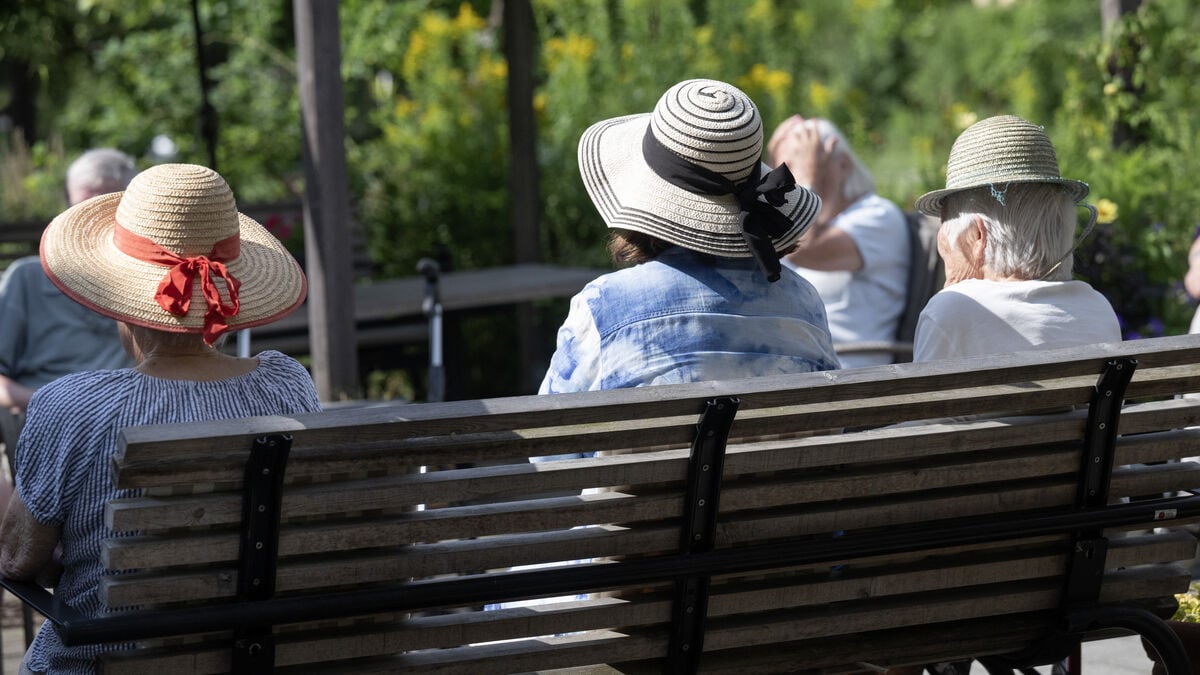
Researchers at the Stockholm School of Economics, together with Lund University, the University of Oslo in Norway and Harvard University, have studied happiness among Swedes.
The study is based on survey responses from over 15,000 Swedes and shows clear age differences in happiness and well-being. The comparison is primarily made between those aged 18–24 and those aged 70+.
It hardly matters what question we ask, whether it's about loneliness, meaning and purpose, or happiness. Younger people feel worse than older people, says Nora Hansson Bittár, a doctoral student at the Center for Wellbeing, Welfare and Happiness at the School of Economics, to TT.
Older people stand out
Young adults report less meaning in life and poorer financial security than older age groups. They experience twice as much loneliness and seven times higher levels of depression and anxiety than their elders.
It is important to point out that young Swedes are not feeling worse than young people in other countries. But what really stands out is that older people in Sweden are among the happiest in the world.
The researchers have also concluded that the well-established "U-curve" for happiness, where middle age is often described as the low point of life, does not apply in Sweden.
So we don't have a midlife crisis.
We don't see any of that, says Hansson Bittár.
But what is it that makes older Swedes dance and smile - while younger people have a tough time?
Nora Hansson Bittár allows herself to speculate.
The elderly were raised during a golden period in Sweden. Those who grew up in the 60s and 70s can live a life that their parents only dreamed of. They grew up with economic growth in a strong welfare society. In addition, they may have invested in housing and been able to see their assets grow, she says.
It is not as obvious why young people are feeling worse. One explanation is that important life phases have become more difficult to get through. The pressured housing market, the pandemic and an anxious world are making the steps into adulthood more difficult, which can create frustration.
Statistics Sweden's telling statistics
Around the same time as the study is published, Statistics Sweden (SCB) will release fresh figures from a survey on living conditions during the first half of 2025. There, too, older Swedes respond that they are happier than younger people.
The respondents were asked whether they had been happy over the past four weeks. A larger proportion of people over 65 feel happy most of the time, says statistician Anna Hagman.
The study is part of the Global Flourishing Study, a large international research project that follows over 200,000 people in 22 countries around the world to better understand how people are doing.
Through surveys over a five-year period, the researchers are investigating both well-being and the factors in society that affect quality of life. The surveys that form the basis of the study were collected in 2023.
As a whole, Sweden continues to rank relatively high in global comparisons.
If the results of young adults (18–24 years old) were the basis for the World Happiness Report's international happiness ranking, Sweden would end up in 30th place, after countries such as Lithuania, Belize and Kosovo.
If instead only the results of older Swedes (80 years and older) were used, Sweden would rank first in the world.
Facts: School of Business and Economics