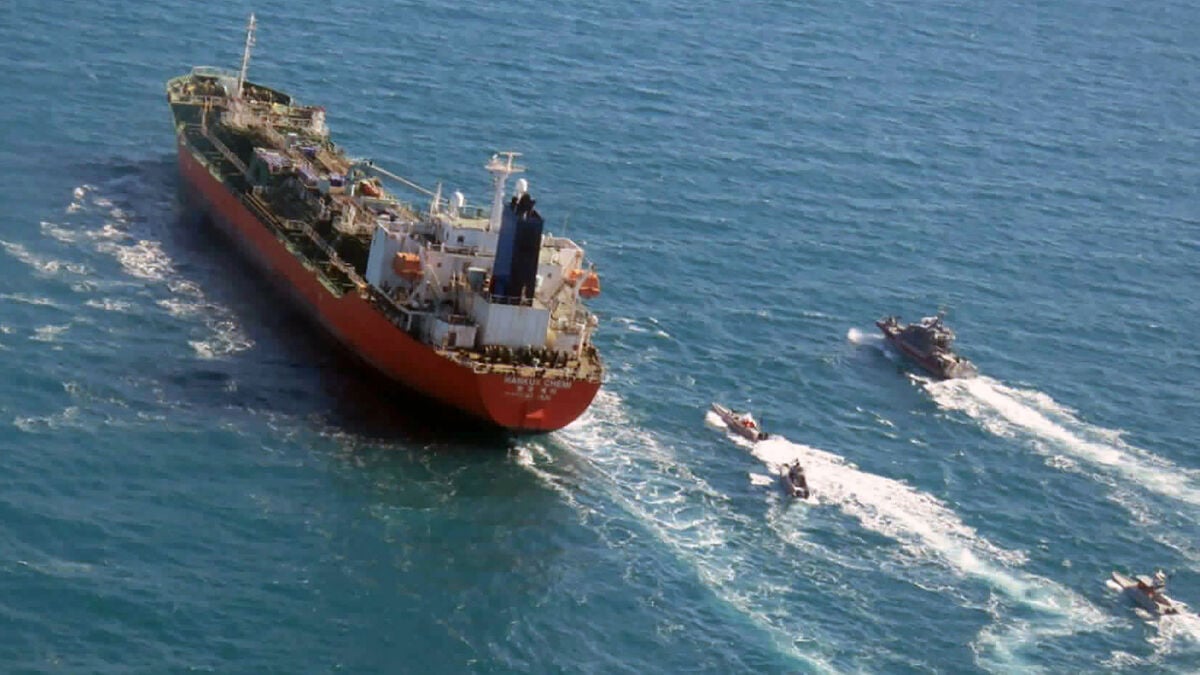
The oil market fears that the flare-up of the conflict will lead to serious disruptions. The nightmare had been that Iran would carry out the latent threat of blocking the Strait of Hormuz - the passage in and out of the Persian Gulf.
About a quarter of the world's seaborne oil passes through the Strait of Hormuz, en route from the oil-rich countries around the Persian Gulf - such as Saudi Arabia, Iraq, Kuwait, the United Arab Emirates and Iran - to China, Europe, the US and other major energy consumers. Natural gas from Qatar is also largely transported through this strait.
The strait was open on Saturday morning, but many shipping companies chose to stop traffic to avoid the risk of being attacked.
The Houthi movement has threatened to resume attacks
Another threat is that the Iran-allied Houthi movement in Yemen is taking seriously the threat of resuming its attacks on shipping in the Red Sea - which would threaten shipping to and from the Suez Canal.
A futures contract for Brent crude delivery next month - a global benchmark for fossil fuel prices - has risen from around $60 per barrel to almost $73 per barrel since the turn of the year.
When futures trading resumes overnight Monday local time in Sweden, new gains are expected. Data from IG Group indicates a price increase of 12 percent.
Commodity analyst Muyu Xu at the firm Kpler Ltd calculated this summer the effects of a 24-hour Iranian blockade of the Strait of Hormuz and warned that it could push up the price of oil to $120-150 per barrel, Bloomberg reports.
Considering increased oil production
The oil country Iran accounts for around 3 percent of global oil production, making the country the fourth-largest oil producer in the OPEC oil cartel.
After Saturday's attack on Iran and the Iranian response, including missiles at targets across a string of oil-producing countries around the Persian Gulf, OPEC is considering, in cooperation with Russia and other OPEC-plus members, increasing oil supply by more than previously announced.
Leading OPEC-plus countries, including Saudi Arabia and Russia, had previously planned a meeting on production volumes for Sunday.