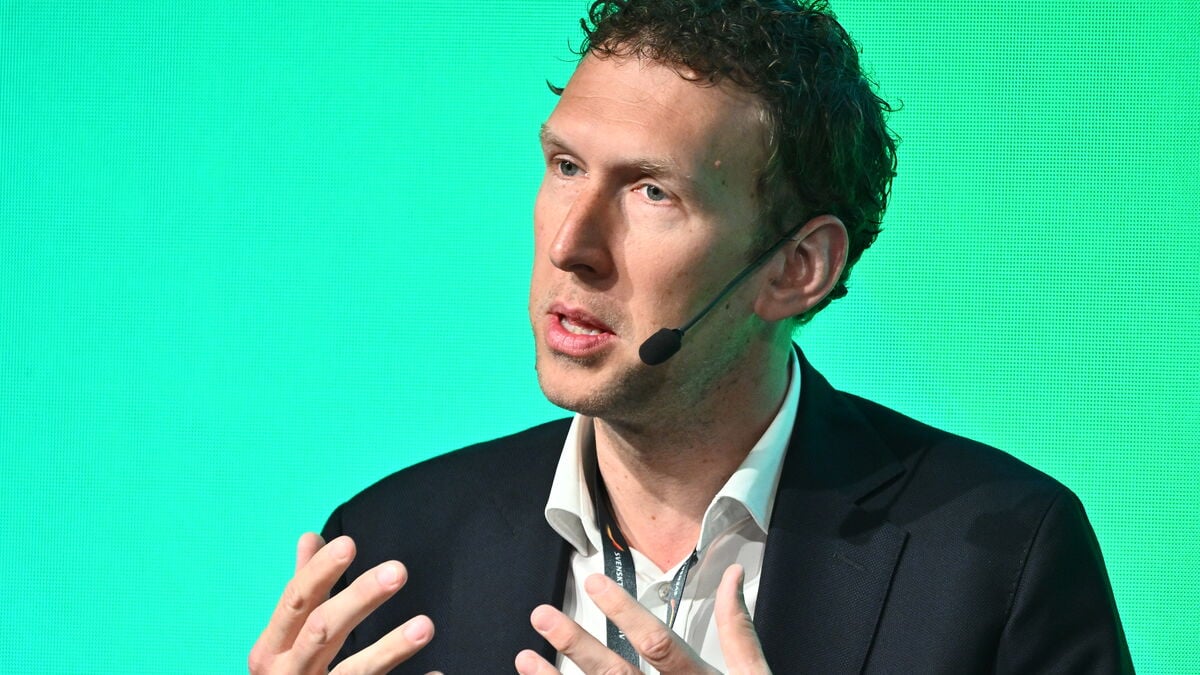
It's a fairly long process, going through authorities, the municipality, the land and environmental court and finally the government, which has its say on the whole thing. But if everything goes according to plan, it will be the first half of the 2030s, says Jacob Stedman about when the reactors can be started up.
But with this application, the state authorities are involved, and they are the ones who will say whether they also think this location is suitable, he adds.
Six reactors cooled with lead
Blykalla has already agreed with the port of Gävle to initiate an investigation into the conditions for the project, Gefle Dagblad reports.
The plant will consist of six lead-cooled reactors. Together, they will be able to produce approximately 300 megawatts of electricity.
SMR technology has many advantages, according to Stedman.
If you can build smaller, faster and simpler, then you can also shorten the construction time and you can support the grid and industry where needed, he says.
According to Stedman, the choice of Gävle as a location is based on "a fairly substantial analysis that we have done for quite a long time."
We have looked at many different places in Sweden, and when we did our analysis we identified where it would be interesting for us to start our first park, he says.
In Gävle, despite Forsmark's presence, there is a deficit in fossil-free energy. And there are also many other factors in Gävle. It has good logistics; it is isolated but still close to the railway, European roads and the port, he adds.
Just over eighty kilometers from Forsmark
The existing nuclear power plant in Forsmark is located just over eighty kilometers as the crow flies from the site where Blykalla now wants to build new reactors.
There are no commercial lead-cooled SMRs in operation in the West. But Russia has recently completed one: Brest-300, in Seversk, outside the Russian city of Tomsk, according to Stedman.
Since then this technology has been used in submarines and ships - lead-cooled technology dates back to the 1960s, and there is relatively extensive operational experience with it, says Stedman.