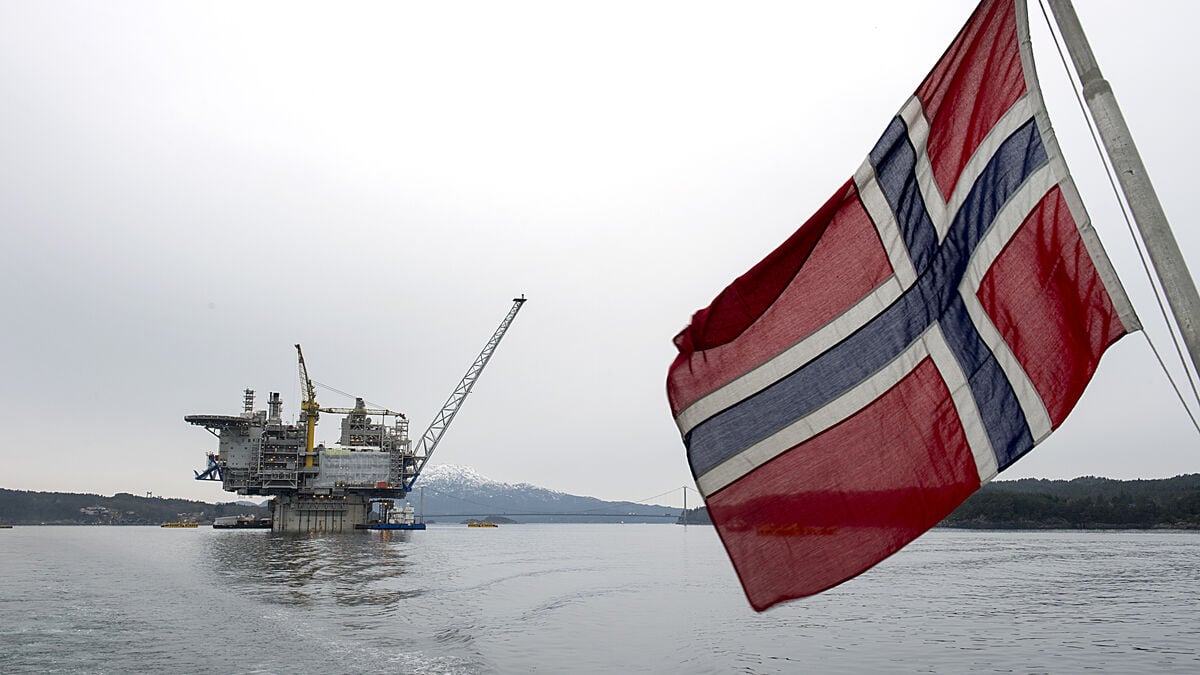
A large part of Sweden's oil imports come from its rich neighbor to the west. A favorable situation, since Norway, unlike other producers, does not use the sought-after raw material as a political tool, believes Saltvedt.
Norway is a stable and politically secure supplier - that is a big advantage compared to many other producers of fossil energy. Norway will continue to deliver what they can to Sweden, she says.
Faithful Sweden
A large part of the crude oil sold by Norwegian players to refineries in Sweden is governed by long-term agreements to ensure predictable deliveries, she explains.
Therefore, I am not too worried that Norwegian companies will prefer new customers in the short term as a result of the war in Iran and the delivery problems it causes.
But regardless of the business relationship between neighbors, the situation in the Middle East affects availability in the global market.
We in Norway are also concerned about this. We sell most of the oil, but we also need some ourselves and we are also dependent on imports.
Oil shipments have been stuck in the strategically important Strait of Hormuz since the war in Iran broke out on February 28. And now Asian customers, who usually buy from players around the Persian Gulf, have begun to notice that deliveries are not coming.
Fuel rationing has already begun in Southeast Asia. The question is what will happen if this continues. It may be that we in the Nordic countries will also need to change our consumption.
Following the money
The shutdown at the Strait of Hormuz has increased demand for other producers – oil that is not tied to long-term contracts, which is sold on the so-called spot market, is becoming sought after.
We have seen that ships with oil products that were heading to Europe from the US have changed direction towards Asian markets because Asian markets pay more, says Saltvedt.
Several Asian countries are now actively searching for new business relationships.
"Of course they want to turn to other suppliers, the US is one of them. And then we see that Russia is selling more to India and China," she says.
On Wednesday night, Iran and the United States agreed to a ceasefire. US Secretary of Defense Pete Hegseth said at a press conference on Wednesday that Iran will allow ships to pass through the Strait of Hormuz.
Facts: Sweden's oil imports
In 2025, Sweden imported just over 15 million tons of crude oil, a decrease compared to the peak of 18.8 million tons in 2022.
The majority of the oil comes from Norway. Imports are distributed as follows:
Norway, 57 percent. United States, 16 percent. Great Britain and Northern Ireland, 13 percent. Guyana, 11 percent. Nigeria, 3 percent.
Source: Statistics Sweden