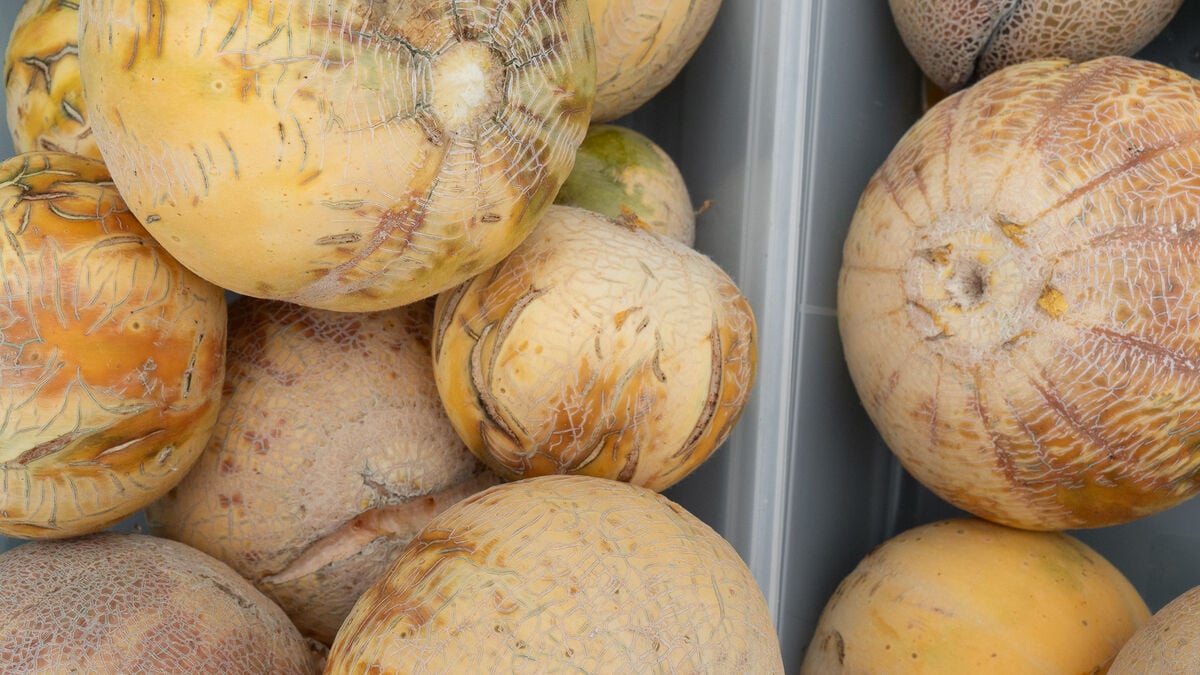
Pawel Chrominski, plant expert at the Nordic Genetic Resources Center, sees great potential for the old varieties that are adapted to our climate, both in commercial cultivation and in home gardens.
The advantage of growing melons in Sweden is that you can harvest them when they are ripe. Then they are tastier and sweeter, he says.
It is documented in written sources that melons were grown in Sweden as early as the beginning of the 17th century. Initially, they were grown in hotbeds or orangeries, but breeding then began to find varieties that also work outdoors in the warmer parts of Sweden (zone 1 and zone 2).
Practical guidance
In 1975, there were around 100 Swedish melon growers producing 377 tonnes. During the 1980s, domestic production shrank sharply and in 2023 there were only 14 Swedish growers left, with an annual production of 4 tonnes.
The trial with twelve melon varieties preserved in gene banks is ongoing during the summer, both in the open field and in greenhouses. This will be followed by an evaluation of yield, quality, aroma and texture. All of this will result in practical guidance for those who want to try it themselves.
Advantages in Sweden
There are several advantages to growing melons in Sweden, emphasizes Pawel Chrominski.
There is better access to water here and disease pressure is not as high, since not as many cucumber plants are grown in Sweden.
Just like other domestic food production, melon cultivation can also be seen as a preparedness issue, he says.
Vegetables are a sector where hobby growers can play a big role in food security in Sweden. Melons are great for hobby farming, so you can get a little extra income in times of crisis, says Pawel Chrominski.