The year started a little weaker than expected for the Swedish economy. Then came the US and Israel's bombing of Iran on February 28, which has created great uncertainty.
This means that it will take a little longer before Sweden fully reaches the consumption level that we had expected this year, says Annika Winsth to TT in connection with the presentation of a new forecast.
The Strait of Hormuz Decides
How things ultimately go will be determined by whether shipping of oil and gas through the blocked Strait of Hormuz - from the oil countries around the Persian Gulf - can resume, according to Winsth.
"We imagine that they will manage to open the Strait of Hormuz in some way sometime during the summer. That is what our scenario is based on and we still think that there are quite good conditions for it," she says.
She believes that both the US and China - ahead of the summit this week between President Donald Trump and Chinese leader Xi Jinping - are committed to finding a way to open the strait. But even if it remains closed into the fall, the Swedish economy can grow, according to Winsth.
Then there is a risk that these price plans among companies that point upwards in many parts of the world - and also in Sweden - will actually be realized and that prices will be raised. We will get some inflation and the central banks will then need to raise interest rates. It is a worse scenario for the Swedish economy, but absolutely manageable, she says.
Then the Swedish Central Bank can raise
Then the Swedish Central Bank may need to make its two increases as early as this fall, to slow inflation from energy and other input goods that are affected by disruptions from the Iran war, according to Winsth.
But Sweden has good conditions. We have employment that is close to record levels and that seems to continue to increase. We have unemployment that has fallen back. We have had a recovery since the summer of 2024, she says.
She also downplays the risk of sharp corrections in stock markets, despite record levels in many places amid all the uncertainty surrounding the Iran war.
So, so far, the economies have proven to be very resilient. And it has been completely rational to be on the stock market, because you have received a return for it, says Winsth.
She reminds us that world trade increased by 4.2 percent last year despite last year's historic tariff shock.
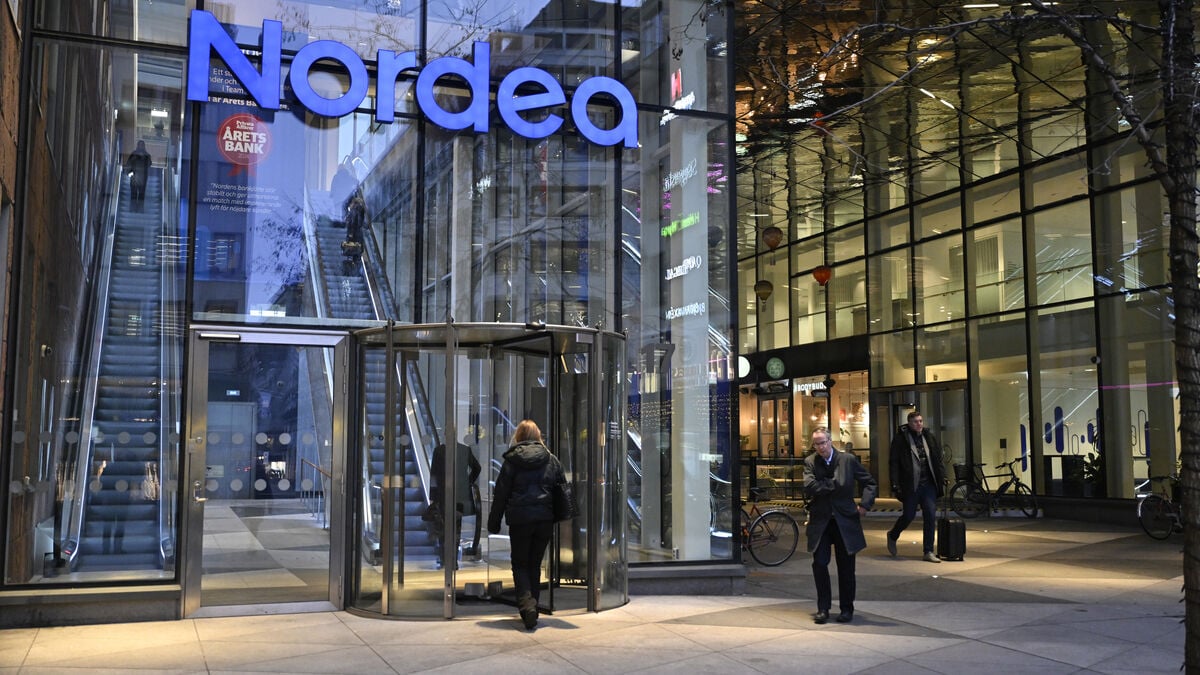
Facts: Nordea lowers forecast
Nordea's economists have lowered the growth forecast for 2026 to 2.6 percent, from 3.3 percent in the most recent forecast in January this year.
The inflation forecast for this year is also being raised to 1.2 percent, up from 0.9 percent. Inflation in 2027 is now estimated at 1.6 percent, compared with the previous 1.7 percent.
The Swedish Central Bank is assumed to leave the policy rate unchanged at 1.75 percent this year, but will raise the policy rate twice next year to 2.25 percent.
Unemployment is expected to average 8.5 percent this year and fall back to 7.9 percent in 2027.
House prices are expected to increase by 4.5 percent per year, in line with nominal income increases, and household consumption is expected to increase by 2.5 percent this year and 2.8 percent in 2027.
Source: Nordea