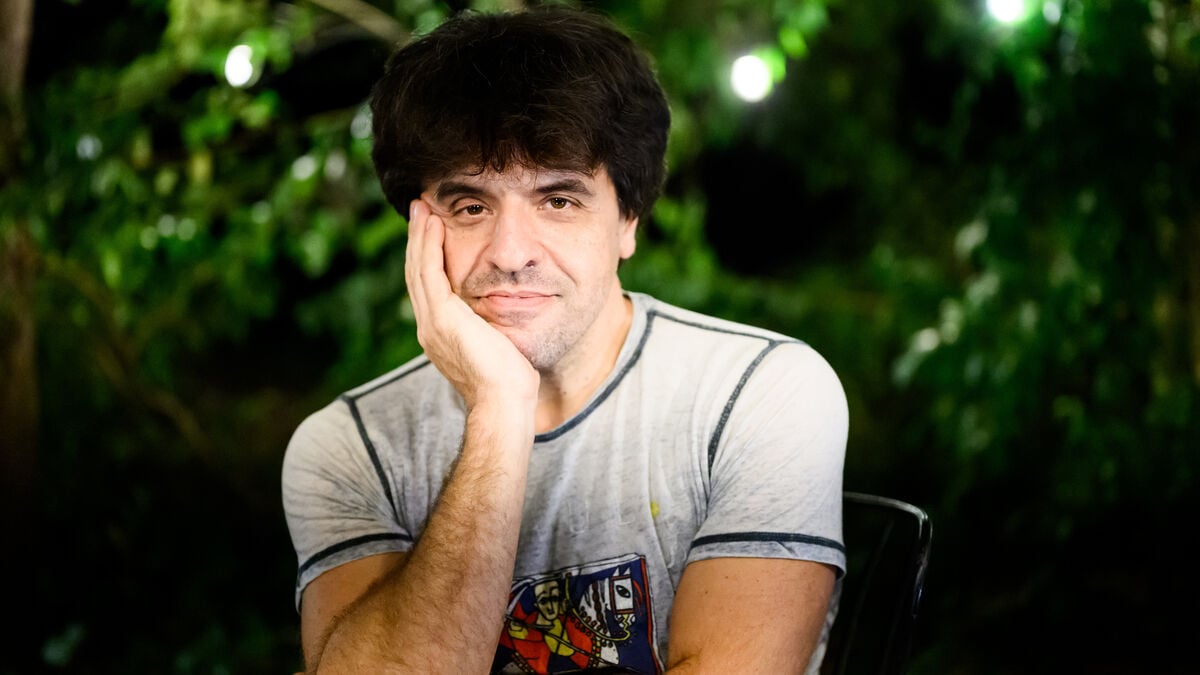
As a researcher at the Epilepsy Center in Lund, he has collaborated for many years with one of the laureates, Karl Deisseroth of Stanford University in the US. Deisseroth is also an honorary doctor at Lund University.
He has been very cooperative and very humble.
Deisseroth has wanted to share his method and has shared not only his knowledge but also biological tools, Merab Kokaia emphasizes.
Nerve cells can be controlled
Optogenetics has made it possible for researchers to control selected neurons in the brain with light, he explains. This makes it possible to test whether a particular cell type or neural circuit causes a particular behavior or disease symptom.
It has contributed to a better understanding of epilepsy, Parkinson's disease and depression, among other things.
In the long term, this technology could also contribute to treatments by restoring or dampening activity in specific neural circuits.
Merab Kokaia has collaborated with Karl Deisseroth on how optogenetics can be used to treat epilepsy. It works in mice and rats, but has not yet been tested in humans.
“Great potential”
I think it has great potential. When epileptic seizures occur, you can quickly activate those channels in the cells and thus inhibit the abnormal activity that causes seizures.
It will also be some time before the method can be used in humans to treat Parkinson's disease and depression.
The clinical studies being conducted now are focused on vision problems - using optogenetics to restore the function of the eye, at least partially, says Merab Kokaia.