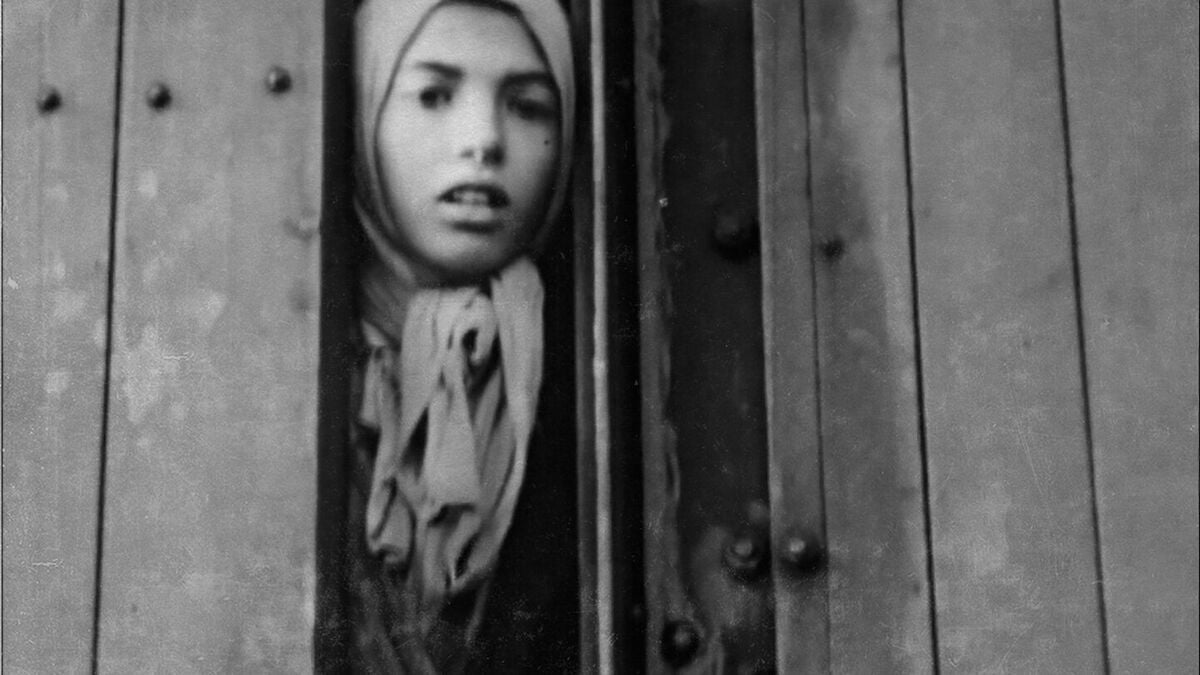
The films are launched by the Forum for Living History and are aimed at middle and high school students.
The series not only tells the story of the worst genocide in history, but also tries to explain how it could happen and what preceded it.
The assignment went to Göran Hugo Olsson and the production company Story AB.
I think this is more important than any other film I've made.
He is behind several notable documentaries, such as “The Black Power Mixtape 1967–1975” and “About Violence.” Making an educational film for young people felt both more difficult and more urgent, he says.
The fact that we have an audience in ninth grade and high school feels so incredibly inspiring. It is a civic duty and a responsibility to try to do this in the best way possible for them and to give them a chance to understand, learn and find ways to look further on their own.
Draws parallels
Olsson does not believe anyone can engage with history without drawing parallels to what is happening in the world right now, mentioning Ukraine, Gaza and the West Bank.
You can have different opinions, but I don't think you can watch a minute of this series without thinking about everything that's happening today. That doesn't mean relativizing the Holocaust, but using it as a starting point for how things can go.
The film initiative is part of a mission that the Forum for Living History received from the government in 2024 to increase knowledge about the Holocaust.
“This is a comprehensive and long-term initiative to continue to develop the knowledge and lessons learned from the Holocaust based on new research and also proven experience,” says Petra Mårselius, superintendent of the Forum for Living History.
Roma in focus
It has been over 25 years since the book “…of this you may tell…” was written. Although the historical events remain the same, much has happened since then. Competition for young people’s attention has intensified, anti-Semitism and racism are on the rise, and living testimonies from survivors are disappearing.
"It is an important background to this entire initiative. I believe that the change is reflected in the fact that personal testimony is becoming less prominent, but also that we now have more research into what happened," says Mårselius.
This time, more space is given to the extermination of Europe's Roma.
There had previously been relatively little research on this. The genocide of the Roma was, for example, only recognized in the 1980s in West Germany. There, knowledge has increased over the past 30 years.
During the Holocaust, the mass murder of Jews by Nazi Germany between 1939 and 1945, about six million Jews were killed, according to the United Nations. About half of them were gassed, the rest were shot, starved or froze to death.
Four to five million non-Jews – political opponents, Poles, Russians, Roma, Jehovah's Witnesses, homosexuals and the mentally ill – were also murdered by the Nazis.
The majority of the victims were killed during 1941–1945, after Germany's pact with the Soviet Union had broken down and the two countries had gone to war, with the period from February 1942 to April 1943 being the culmination.
Auschwitz, the German name for the town of Oświecim in southern Poland, was the site of the largest and most notorious Nazi concentration and extermination camp during World War II. By January 1945, there were around 730 concentration camps and satellite camps of various types.
Source: National Encyclopedia