Today’s election has been described in advance as historic, partly because the political direction is expected to differ significantly between the two main blocs.
The Hamas terror attack on October 7, 2023, and the wars and conflicts that followed are central issues for many Israelis in the election, and criticism of Netanyahu’s government for its handling of the attack is fierce. Calls for a state investigation have been growing, and former military chief Gadi Eisenkot - who leads the newly formed centrist Yashar party - accuses Netanyahu of being hungry for power and of isolating Israel from the rest of the world.
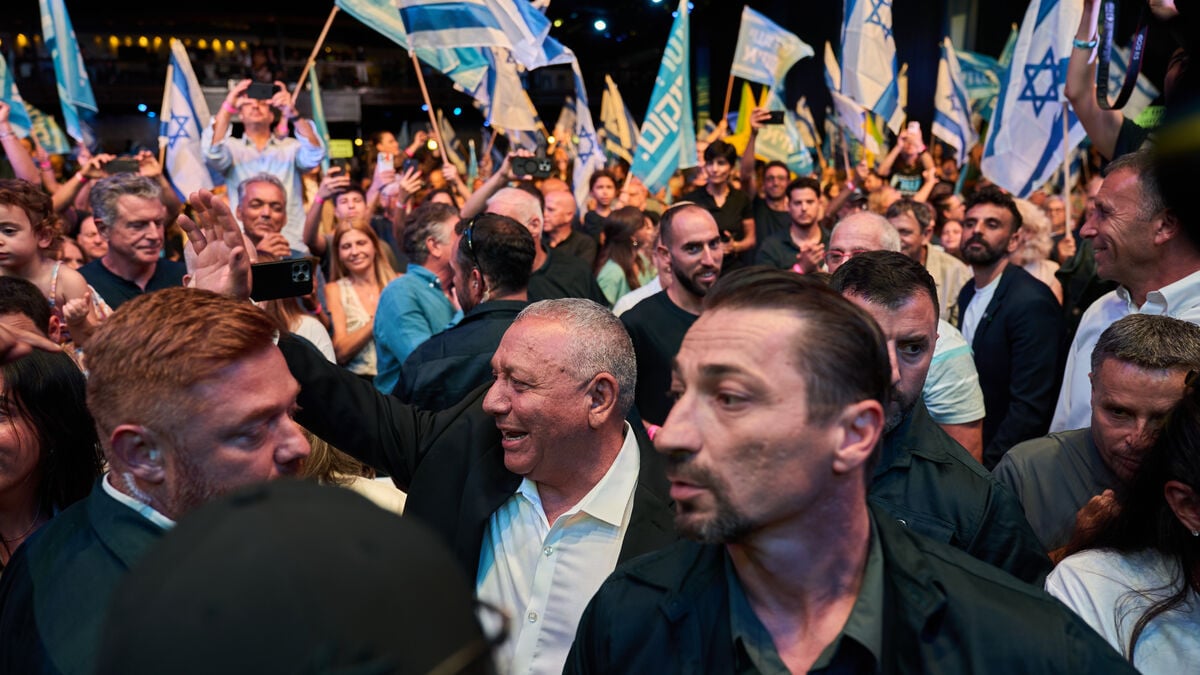
“If we continue on this path, Israel will very soon cease to be the country we know. This is the last chance for an awakening,” Eisenkot said at a campaign rally the Sunday before the election, the Times of Israel reports.
Yael Shkedi, 66, works as a jeweler and is there to support Eisenkot.
“He is our rock. I trust him,” she tells AFP.
What really means something to me amid all the chaos is the feeling that someone can bring us together.
United against Netanyahu
The opposition bloc is pushing, among other things, to abolish the exemption from compulsory military service for ultra-Orthodox Jews. But the path forward is not obvious - the bloc’s four parties are characterized by internal disagreements that are openly discussed.
For example, the demand for a two-state solution between Israel and a Palestinian state has been ignored. Eisenkot is outspokenly against the establishment of a Palestinian state but promises to address escalating settler violence in the West Bank.
A boost for the right
Netanyahu’s bloc, led by the right-wing conservative Likud, has ramped up its rhetoric about external and internal threats during the election campaign and has benefited from US President Donald Trump’s public stance on Netanyahu. This may have paid off. In opinion polls, the right-wing conservative and religious bloc has seen a slight boost in recent days.
A loyal supporter is pensioner Ruti Ohana, who lives in the desert town of Dimona, one of Likud’s stronger strongholds, in southern Israel.
“I will never let Likud down,” Ohana, who migrated to Israel from North Africa over 60 years ago, told Reuters.
Israel will hold elections on October 27. According to opinion polls, it is a dead heat between the two main blocs for or against Prime Minister Benjamin Netanyahu.
Both blocs receive 51 seats each in a poll by Zman Yisrael. To gain a majority in the Knesset, the Israeli parliament, 61 seats are required. The electoral threshold for entry is 3.25 percent.
Netanyahu’s right-wing and religious bloc includes Likud (Netanyahu’s right-wing conservative government party), Shas (an ultra-Orthodox religious party), the Torah Party (also an ultra-Orthodox right-wing party), Jewish Power (Otzma Yehudit, a far-right, ultra-nationalist party led by Security Minister Itamar Ben-Gvir), Religious Zionism (a right-wing nationalist party led by Finance Minister Bezalel Smotrich) and Noam (a small, ultra-conservative religious party).
The opposition “change bloc” includes Yashar (a newly formed centrist party led by former military chief Gadi Eisenkot), Beyahad (“Together,” a centrist party formed through a merger of Yair Lapid’s Yesh Atid and former Prime Minister Naftali Bennett’s party), the Democrats (a left-wing party led by Yair Golan), and Yisrael Beiteinu (a secular right-wing party).
Outside the two blocs are two Arab parties (the Joint List and Ra’am), which have made common cause and could have a unique role as kingmakers.