The National Board of Health and Welfare has investigated cases involving 98 crime victims, of which 41 were children and 57 were adults.
Children who have been abused by a parent or other close relative have often been exposed to violence or lack of care for a long time. In several of the cases, both healthcare and social services have had extensive contact with the family - but despite this, the child has not been protected.
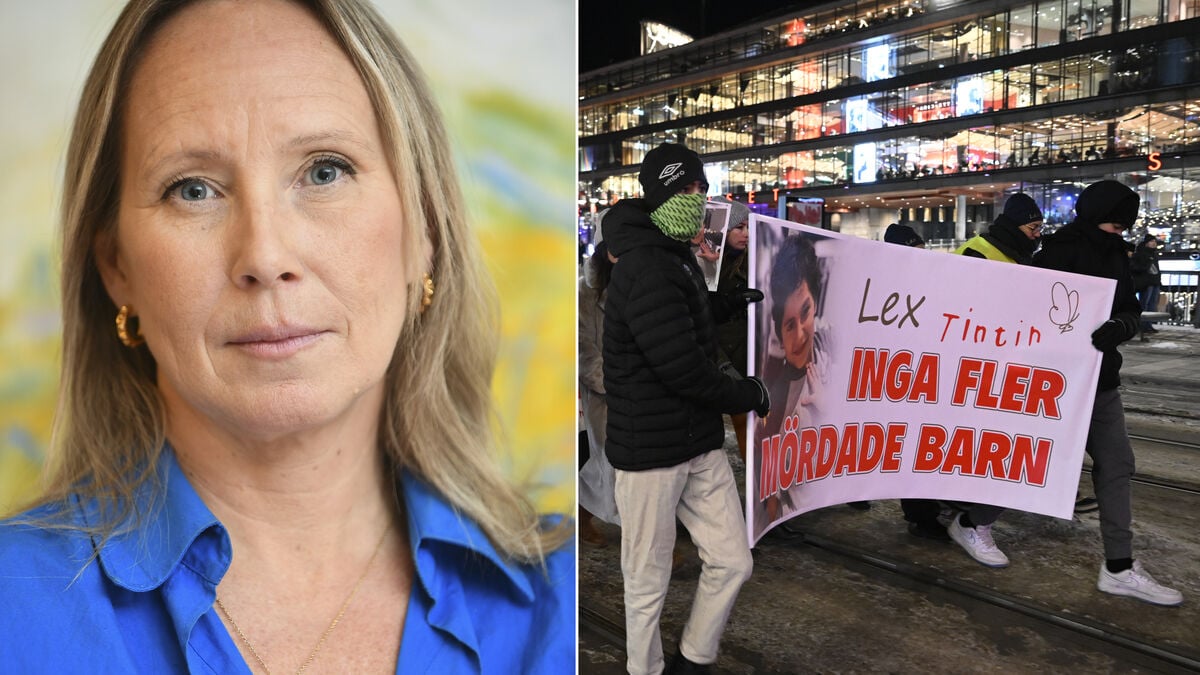
It is the voices of the adults that are heard. Even though the concern is about how the child is doing at home and the parents' ability to care, it is the parents who are the main informants, Moa Mannheimer says.
“Fear of making mistakes”
When the child's parents do not want to accept voluntary interventions, the case is closed.
I think there is a fear of being uncomfortable, of making a mistake or suspecting someone innocent. Instead, we risk missing the children who are most vulnerable.
The victim is often a woman
In the majority of the 57 cases involving adults, the victim was a woman and the perpetrator was a man, often someone with whom the woman had or had had a relationship.
The same pattern recurs there: the women who were later killed or subjected to attempted murder had in many cases also previously been subjected to violence, but the protection from society was broken. Police reports were not followed up, preliminary investigations were not pursued and witnesses were not questioned. Coordination of efforts between different actors, such as social services and the police, was almost completely lacking.
In many cases, there have been previous police reports or even convictions for violence against relatives. Despite this, we see that the crimes are not being investigated sufficiently, Moa Mannheimer says.
“A huge responsibility”
This is the eighth time a similar survey has been conducted - and many of the shortcomings highlighted have recurred year after year. The National Board of Health and Welfare is making a number of proposals for measures in connection with the report, including the desire for the healthcare system to take greater responsibility for assessing the risk of violence against loved ones.
Many of the perpetrators have contact with healthcare due to psychiatric conditions or addiction, says Moa Mannheimer.
In addition, in some areas, it is necessary to look at how different authorities can share information with each other to a greater extent when there is a risk of violence in close relationships.
Society has a huge responsibility to pay attention to this.
Facts: Deadly violence in Sweden
During the years 2020 to 2024, an average of 14 people were killed each year by a partner or former partner, most of whom are adult women killed by a man.
On average, ten children are killed each year, most often by a parent or by a peer or young adult.
There are no figures for fatal violence against adults committed by a close relative other than a partner or former partner.
Source: Swedish Crime Prevention Council via the National Board of Health and Welfare