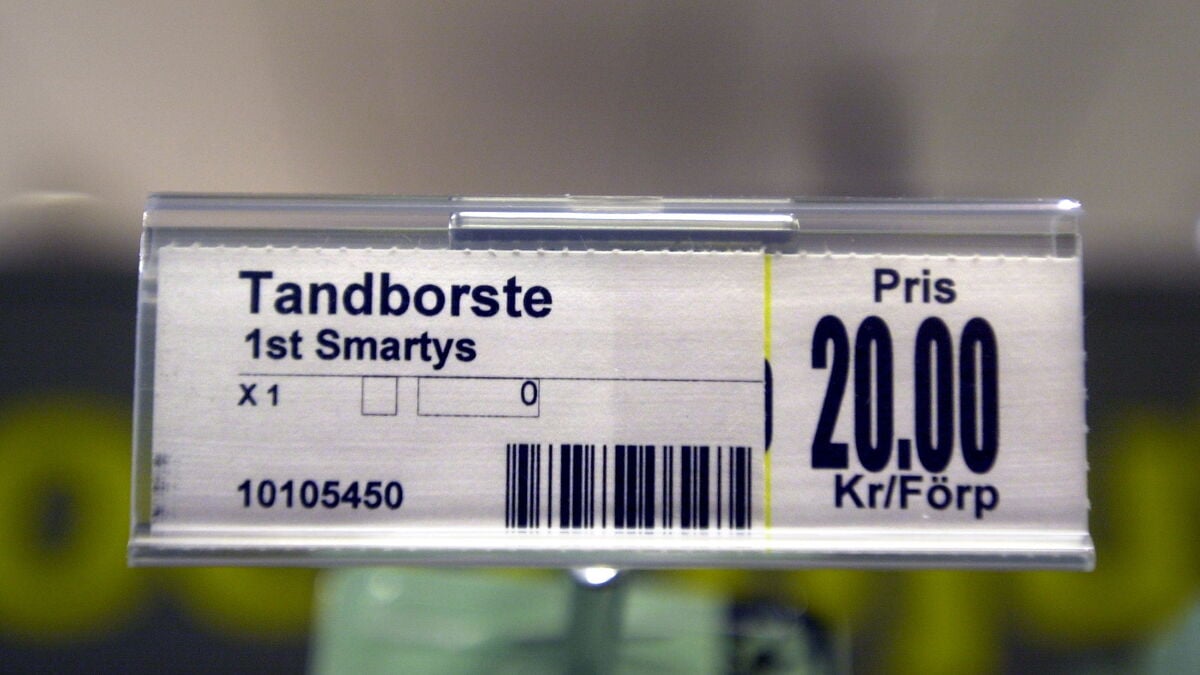
Prices that vary with demand have long existed in the travel industry, but have now made their way into other areas of e-commerce. In practice, this means that gadgets that sell well automatically get higher prices. The systems also give retailers the opportunity to test higher prices to gauge consumer limits.
It is absolutely a concern because it is becoming unpredictable, says Maria Wiezell, adding that they receive complaints from consumers who are primarily dissatisfied with the travel industry.
Could be more expensive
When researchers at Dalarna University conducted a survey in October 2024, around 10 percent of e-retailers in Sweden used dynamic pricing. That figure is expected to have risen over the past year. Dynamic pricing is most common among retailers of electronic gadgets, while non-essential purchases such as white goods are less common.
You could basically say that until 2017, this didn't exist at all in e-commerce, but back then it was people who set the price, says Kenneth Carling, professor of microdata analysis.
In the US, a study by Groundwork showed that e-commerce giant Instacart, with its dynamic pricing, was able to set different prices for different customers. Kenneth Carling says that this does not occur in the European market.
Algorithmic cartels
However, one of the risks of dynamic pricing in e-commerce is that different traders' algorithms may start to cooperate to coordinate prices. Within the EU, antitrust legislation covers price coordination that occurs with the help of algorithms.
We have identified markets that do not appear to be functioning. However, we have no evidence that the players in that market are violating competition law.
If this happens, it is not the system provider but the e-retailers themselves who bear the legal responsibility.
Although they most likely do not have a clue how this works, they just use it.
Kenneth Carling says he is not particularly worried that two e-retailers' systems would start coordinating prices, as it would probably take decades before they would learn that they can benefit from cooperating. However, he is concerned that many e-retailers have systems from the same suppliers.
They are almost like twins. They will learn to cooperate much more quickly.