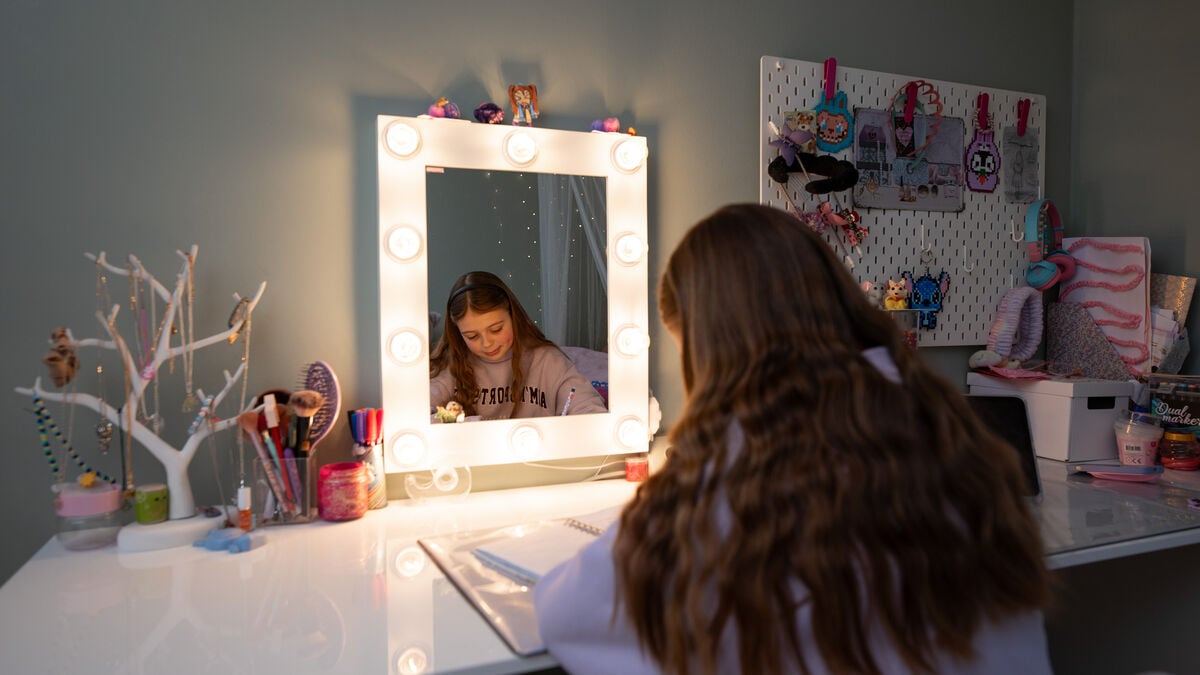
Gabriella Nevala and Johan Troedsson's daughter Mirjam was one and a half years old when she was diagnosed with acute myeloid leukemia (AML). They thought she had a bad cold.
Instead, they underwent intensive treatments with cytostatics - chemotherapy. Gabriella, Johan and older brother Ville essentially moved into the Academic Hospital in Uppsala for six months.
AML, which affects 10-15 children a year in Sweden, is a blood cancer that arises in the bone marrow. The treatment makes the patient extremely susceptible to infections because the immune system is weakened.
"We weren't allowed to see anyone else and couldn't do much except be in the hospital. We pulled the hospital beds together to make a double bed, and Ville cleaned the corridors," says Gabriella.
More survive
As with many other forms of childhood cancer, survival rates for AML have increased. According to the Swedish Childhood Cancer Foundation, the five-year survival rate - the proportion of children who are alive five years after diagnosis - is 84 percent.
With the help of new treatments and analysis methods, it is now possible to better predict relapse.
Thanks to the family being part of a research study, Mirjam's relapse was detected early. She had responded well to the first treatment and had completed treatment in two months. The family began to look ahead.
They had bought an old summer cottage that they were going to rebuild to live closer to nature. The same day they were going to show Johan's mother the house, they got the call that new cancer cells had been discovered.
To Denmark
They were offered participation in another study in which a new type of inhibitory drug was tested before a bone marrow transplant. The family accepted. The study was conducted in Copenhagen and involved commuting from their home in Sandviken.
"It took eleven hours of travel time for a blood test. But you don't think, you just do. Mirjam became an expert at going through airport security," says Johan.
The inhibitory drug worked, and when a suitable donor was found, Mirjam was able to undergo a stem cell transplant. In October 2018, she received healthy blood-forming stem cells to replace the diseased cells.
Mirjam, who is now in third grade, knows that she had cancer.
"When she asks, we tell her and she usually says that she is a superhero who has had cancer twice. In a way, we're grateful that she was so young that she doesn't really remember all the hard things," says Johan.
The family feels it is important to tell their story, not least to give hope to others.
"When Mirjam was at her sickest, we were desperately looking for good examples. You feel quite alone and lost," says Gabriella.
Facts: Stem cell transplant
When the body receives healthy stem cells, a new immune system is formed. This makes it more difficult for the disease to come back. The new stem cells are given as an IV drip.
A stem cell transplant (SCT) involves replacing the stem cells in the diseased bone marrow with healthy stem cells. This creates new blood cells that become a new immune system.
The transplant stops the progression of the disease and reduces the risk of it coming back.
The stem cells can be taken from the blood or from the bone marrow in the pelvic bone of a healthy donor. It is also possible to use frozen stem cells from umbilical cord blood.
Not all stem cells are compatible with everyone, so a suitable donor must be found.
Anyone who wants to become a donor can register with a registry. In Sweden there is the Tobias Registry. There are also international registries.
Source: Cancer Center, Swedish Childhood Cancer Foundation, 1177