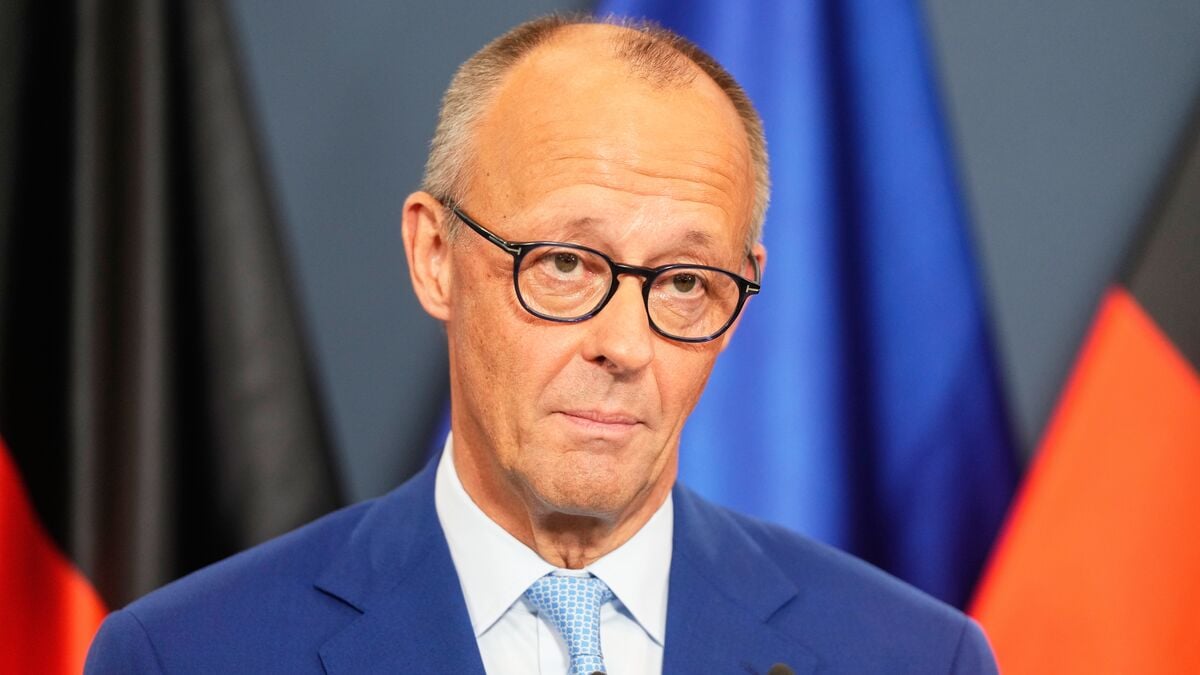
"We are determined to live up to the historical responsibility that comes with the expectations for our country," Merz said on Monday, referring to the government coalition that his Christian Democrats (CDU) are in together with the Social Democrats (SPD).
It is about nothing more and nothing less than the democratic future of our country, he said.
Promises reforms
In his first comments since the election on Sunday night, Merz argued that the country's economic and political problems make difficult and likely unpopular reforms even more urgent, pledging to push ahead with "determination, perseverance and patience."
Merz's CDU looks set to win 4.9 percent in the eastern German state of Mecklenburg-Western Pomerania, thus failing to pass the 5 percent threshold to enter the state parliament.
The far-right party AfD (Alternative for Germany) is up by more than 21 percentage points and has become the largest party with just over 38 percent in the state.
“The People's Party”
AfD's top candidate in Mecklenburg-Western Pomerania, Leif-Erik Holm, who despite his Swedish-sounding name is German, predicts that Merz will leave the chancellorship before the end of the year.
"I believe the Chancellor's twilight years have begun," Holm said on Monday, and his party claims to have "replaced" the CDU as the "people's party."
In the capital Berlin, the other side appears to be the winner. The left-wing party Die Linke is making strong gains and is expected to win around 25.5 percent - an increase of 13 percentage points. There, the governing CDU has now lost 9 percentage points and is expected to win 19 percent, according to a forecast.