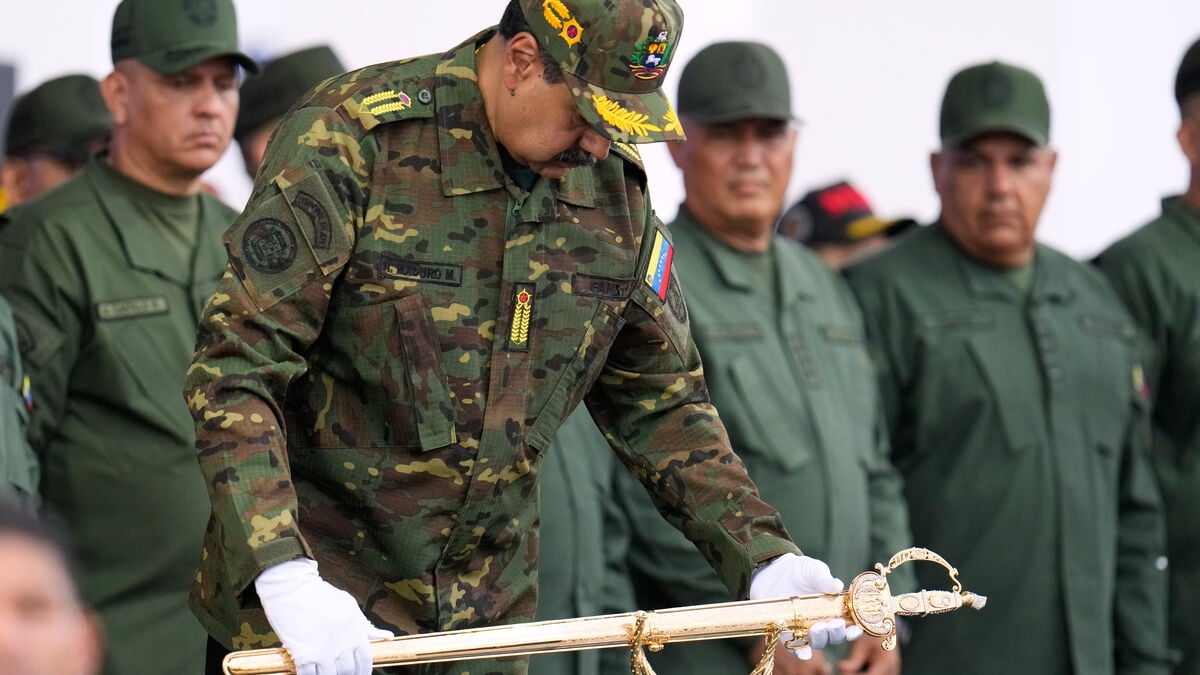
This weekend, President Trump ordered the closure of Venezuelan airspace, increasing the threat of US military attacks against Venezuela and President Maduro's inner circle.
According to the American newspaper Miami Herald, which is often an insider in matters concerning Latin America, Trump called the authoritarian leader Maduro and made him a threatening offer.
Maduro, his wife Cilia Flores and his son would be allowed to leave Venezuela, but only if he immediately decided to resign. Maduro responded by demanding “global amnesty for every crime committed by him and his closest associates – which was rejected,” the newspaper reports.
Get to lead the military
Maduro also demanded in the conversation, which was relayed to Turkey, Qatar and Brazil, that he should have continued control over the military in the country, and that he did not intend to resign with immediate effect.
Washington responded by cutting off contacts with Caracas, despite attempts by Maduro's government to resume talks. On Saturday, Trump ordered the closure of Venezuelan airspace - a possible indication of a military attack.
"I believe that a military operation could be launched in the near future," former diplomat Vanessa Neumann from Venezuela told Fox News.
She claims that targets for a US attack are set out through several years of US intelligence work inside Venezuela.
It's about capturing and killing, but there's a limit to how many people you can take out at once, Neumann tells conservative Fox, who is close to Trump.
Attacking ships
The US has previously attacked and sunk several ships and killed crew members accused of smuggling drugs. The Cartel of the Suns (Cartel de los soles) group has been placed on the US list of terrorist organizations and President Maduro and his closest associates are identified as responsible for the drug trade.
Trump said aboard Air Force One that too much should not be read into the announcement of closed airspace. In addition, an armada led by the US aircraft carrier USS Gerald R Ford is off the country's coast.
Hollow military power
Former diplomat Neumann, who left his homeland and now works for the lobby group Asymmetrica group, says that Venezuela's military is greatly weakened as military equipment is poorly maintained or old if it came from the United States.
Washington is also reportedly considering how much support Venezuela would receive from the superpowers China, Russia and former ally Iran – three countries that have their own problems to discuss.