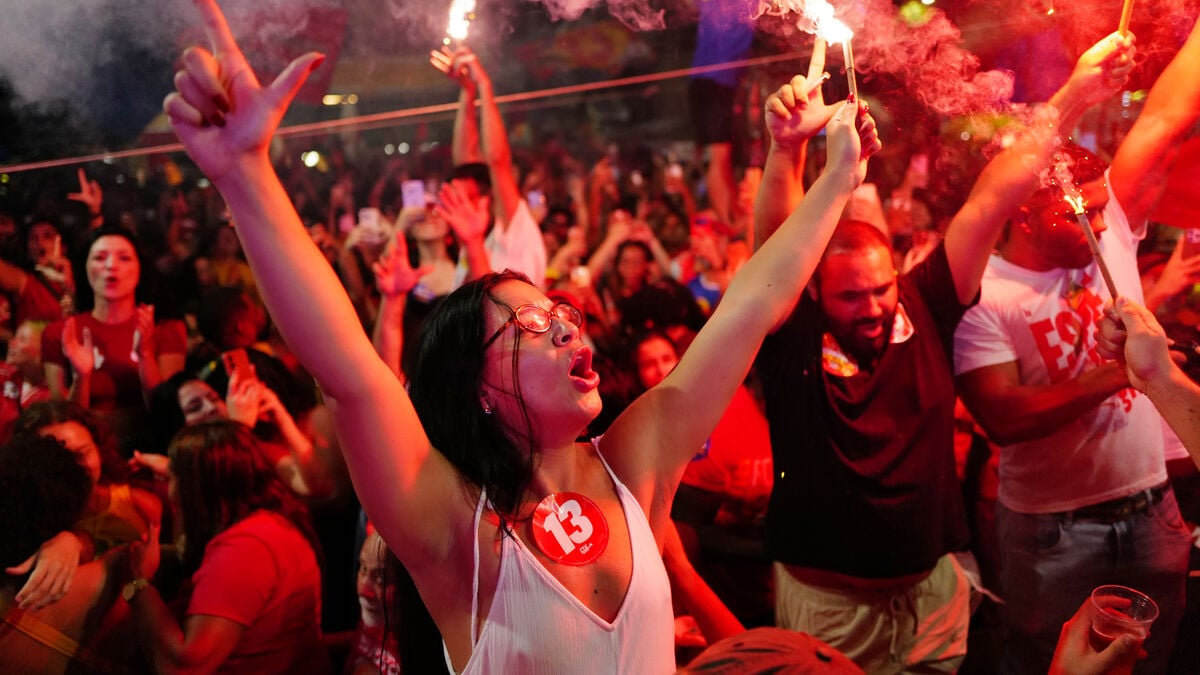
Fireworks explode and car horns sound along São Paulo's main street, Avenida Paulista, after the election results are announced.
"Lula's victory represents many things for us: freedom, our democracy, our history," 43-year-old Anna Zanatta told AFP.
Like many of Lula's voters, she sees challenger Flávio Bolsonaro, who was defeated by the incumbent president by just over four million votes, according to the election results, as a threat to democracy.
I was born during the dictatorship, and I have promised my grandson that we Brazilians will never go through it again.
Lula's victory is historic: for the first time since Brazil returned to democracy in the 1980s, a candidate who lost the first round of elections has managed to turn things around and win in the second.
33-year-old Mateus Freitas calls it a victory for minorities, the people and workers.
"We stopped a government that would have been fascist, led by militias, criminals, racists and homophobes," he told AFP.
The crowd in São Paulo chants "no amnesty" - referring to Flávio Bolsonaro's promise to pardon his imprisoned father, former President Jair Bolsonaro, who was convicted last year of attempting a coup d'état after losing the 2022 election, if Flávio Bolsonaro wins the election.
In Flávio Bolsonaro's camp, the mood is gloomy after the loss, which the senator has so far refused to acknowledge. In the capital, Brasília, 49-year-old Valéria Maria de Melo is crying.
"We know we've been robbed," she told The New York Times.