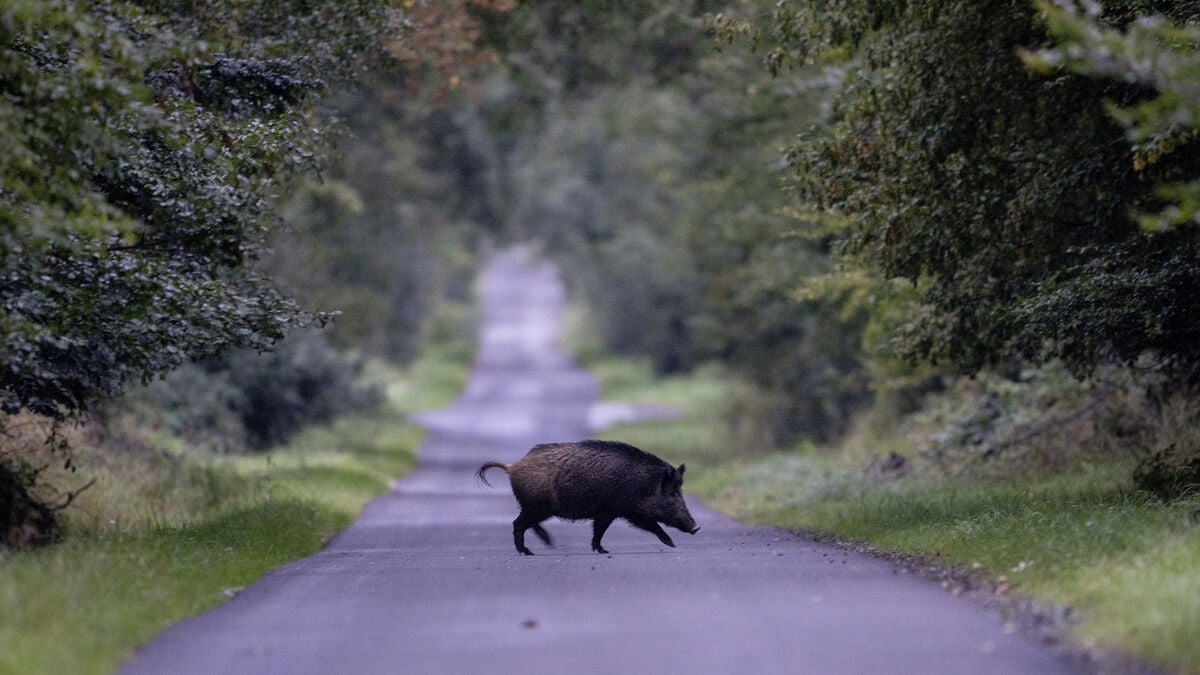
Sweden had its most recent outbreak of African swine fever in 2023 in Västmanland. 70 wild boars were infected and 116 were killed for infection control reasons, and a 100-square-kilometre area had to be fenced off to prevent the spread of the infection.
"We are very concerned that it will happen again in Sweden. We have raised the risk of having such a large wild boar population as we have," says Mikaela Johnsson.
According to LRF, Finland has around 2,400 wild boars, while Sweden has around half a million. In addition, the population is growing.
A large strain means more carriers and it is much harder to control. The infection is just a truck or a hot dog sandwich away, she says.
African swine fever is not only transmitted from animal to animal. It can be spread by a hot dog sandwich from another country ending up in the wild where a wild boar eats it, as the virus survives for a long time in meat.
The association wants to reduce the Swedish wild boar population by 90 percent, not only to prevent swine fever from potentially damaging Swedish food production.
Wild boars are a seriously damaging and socially disruptive species. The fact that the population is so large makes us extra vulnerable in several ways, says Mikaela Johnsson.
Facts: African swine fever
The virus infects wild boars and pigs with a serious and often fatal disease. There is no vaccine or treatment.
The disease does not affect humans.
Sweden experienced its first outbreak of African swine fever in the autumn of 2023. Infected wild boars were found in Fagersta and Norberg municipalities in Västmanland.
Sweden was officially declared free of the disease in September 2024.
The cost of the outbreak in Sweden has been estimated at 96 million SEK.