Different generations have often been appalled by the style choices of the next generation in terms of clothing, hairstyles and attitudes. Breaking free from the parents' generation is part of growing up. But in looksmaxing - a popular trend among young men on social media and live-streaming platforms, among other things - it is literally the kind of thing that is advocated.
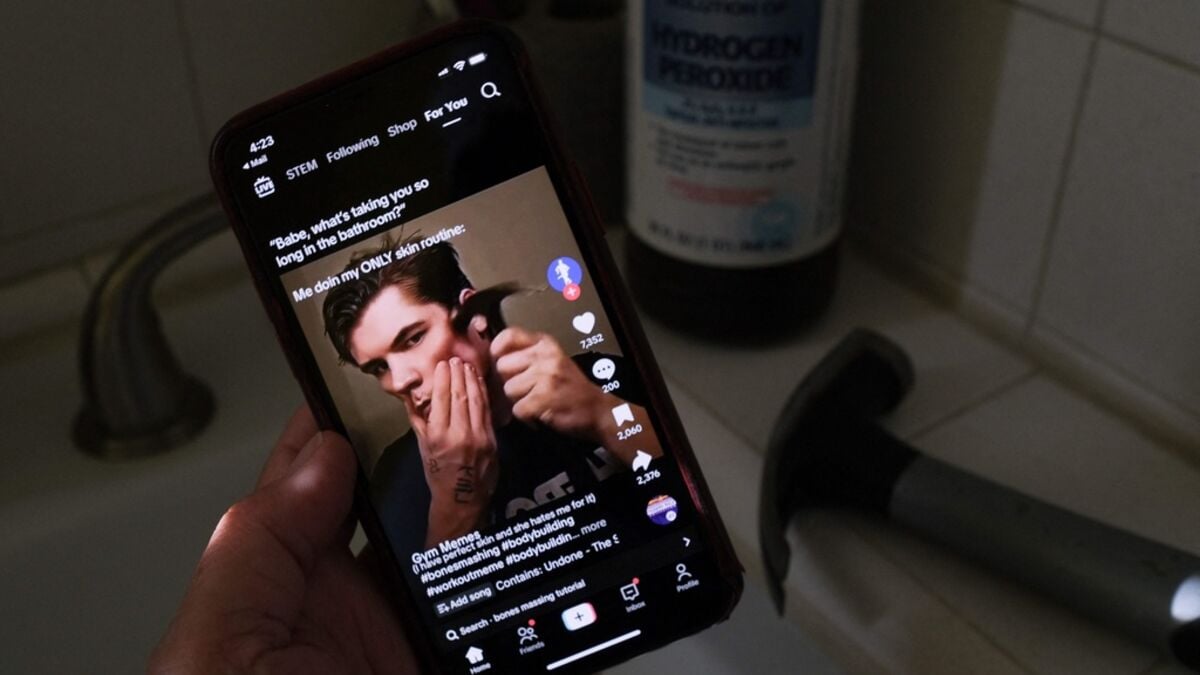
One aspect of looksmaxing, bonesmashing, as the name suggests, involves breaking parts of your own face so that it will “heal” in a more optimal, aesthetically pleasing way. More technically, it involves creating microfractures in the jawbone that, when healed, will create a more pronounced jawline. Simply beating yourself up. In extreme cases, with a hammer.
To kind of sculpt the face in a different way, says Magnus Kilger, senior lecturer and associate professor at the Department of Child and Adolescent Studies at Stockholm University.
According to Kilger, there are aspects of looksmaxing that are new compared with other beauty trends.
What distinguishes it from many other types of practices is that there is a lot of focus on the face.
A person who maximises, for example, their jawline, according to the logic of looksmaxing, has a better-looking face and thus higher status. Status that is ultimately considered, more than education and other “softer” skills, to lead to success. The concept of looksmaxing originally comes from the incel movement and the manosphere - roughly simplified, an internet-based culture where both men and women are ranked strictly based on appearance.
Glorifies suicide
At the end of May, the Swedish Agency for Youth and Civil Society (MUCF) published the report “Boys and young men’s gender equality challenges”. It states that, as far as MUCF is aware, looksmaxing has not been studied in Sweden, but that there seem to be tendencies that it may have also spread among young people outside the incel sphere.
In July of this year, the Swedish Gender Equality Authority was tasked with examining the manosphere and how that type of content on social media affects boys and young men.
"Boys can encounter content that glorifies suicide, ridicules mental illness and creates an almost obsessive fixation on appearance, muscles and status. This becomes a problem not only for girls and women but also for boys and men," Minister for Gender Equality Nina Larsson (L) told TT at the time.
Cheating to success
Reaching the top of the pyramid in looksmaxing and becoming a “chad” is not something that is done in a flash. Within the culture, it is openly emphasised that anabolic steroids give faster training results when it comes to getting visible muscles. Other substances are also openly advocated by the most popular proponents of looksmaxing. Admitting that you have taken shortcuts is not ugly, rather it is seen as having “cheated the system”, according to Magnus Kilger.
In all contexts, you should maximise. This also applies to maximising your career. But it is very much about looks and that girls only want good-looking guys, he says and continues:
It's very much "they say personality and being nice and likeable matter. But when it comes down to it, they want a good-looking guy."
The view is that career or personality are not enough.
It's part of a broader trend where fewer and fewer young guys see themselves as feminists, for example, says Magnus Kilger.
Illegal?
There are various regulations that cover encouraging self-harm, whether with a hammer or prohibited substances. This is according to Johanna Lindström, a lawyer at Familjens Jurist and a doctoral student in child law at Stockholm University:
You can report the type of content from influencers or advertising that may be promoting harmful content, she says, continuing:
But within the EU, the Digital Services Act (DSA) also requires platforms to design their services in a way that is compatible with the rights of the child.
Several countries, including Sweden, have either introduced or discussed introducing age limits for the use of social media.
You should be aware that it is a rather blunt tool that will include children who have completely different situations, says Johanna Lindström.
In emergencies or if you have thoughts of suicide, always call 112.
This is where you can turn if you feel unwell:
Mind.se.
Suicide Zero - suicidezero.se.
Spes - National Association for Suicide Prevention and Survivor Support. spes.se.
Bris - children's rights in society. bris.se.
Save the Children - raddabarnen.se. Also for parents.
Alcoholics Anonymous - aa.se.
On-call buddy - receives calls from children and young people up to the age of 25. jourhavandekompis.se.
On-call fellow human being - can be reached at night on 08–702 16 80.
Friends - friends.se.
1177 - healthcare advice and information about the nearest psychiatric emergency department. 1177.se
National mental health and suicide prevention helpline - reachable 24/7 at 90390.