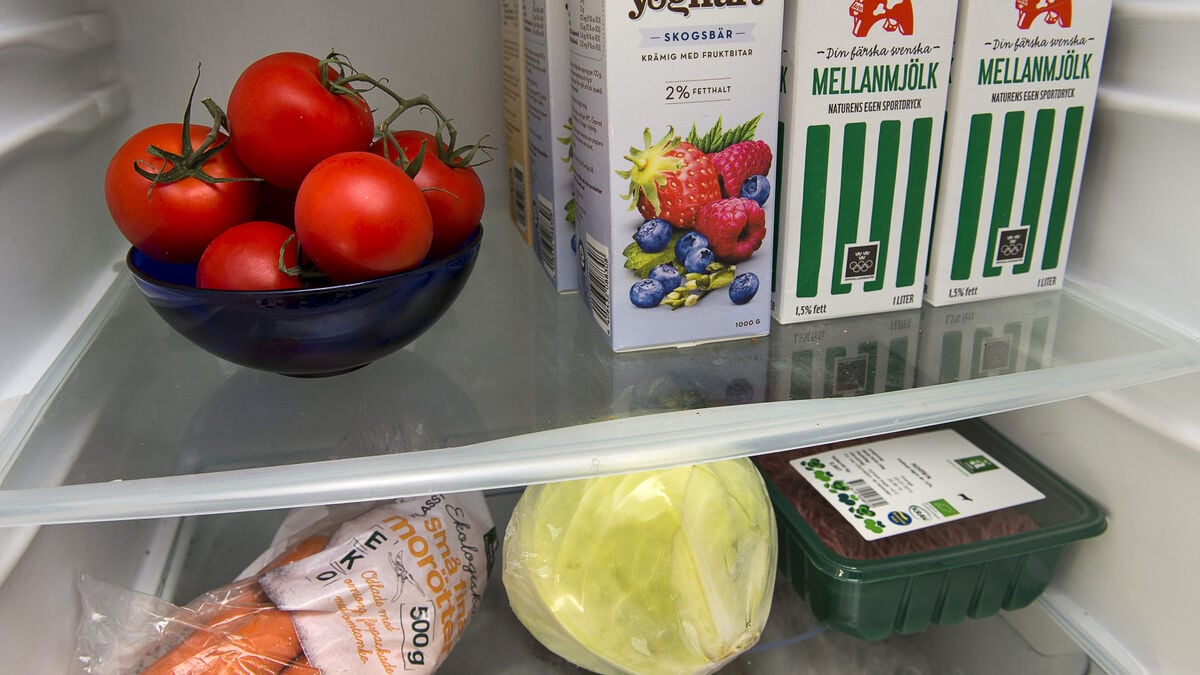
The traditional month of rot is said to begin on July 22-24 and last until August 22-24. However, it is the combination of high temperatures and high humidity that drives it. This leads to rapid growth of microorganisms such as bacteria, yeast and mould in food.
Refrigerated goods such as milk, meat and fish are most affected by heat, while high humidity can cause mould growth on dry foods such as bread, and on fruit and vegetables.
Promotes mould growth
That's why it's important to store berries, fruit and vegetables in the refrigerator. Bread should be kept as dry as possible, preferably in the freezer and preferably packaged in portions. Vegetables and fruit can be wiped off from time to time because moisture promotes mould growth even in the refrigerator, continues Ellen Edgren.
Simple rules are that hot food should be kept hot and cold food cold. Do not leave refrigerated items out in the summer heat for longer than two hours. And make sure the refrigerator maintains a temperature of four degrees.
Before placing hot food in the refrigerator, it should be cooled down quickly.
Ice packs can also be used when transporting refrigerated goods home from the store - if you don't have a cooler bag at hand, advises Ellen Edgren.
Microorganisms, especially bacteria, grow rapidly on fresh produce such as milk, fish, meat, chicken and shellfish. Lactic acid bacteria, which are naturally found in milk, cause the milk to sour when it is warm.
Listeria bacteria are sometimes found in fish, mainly in raw and smoked fish. Listeria can cause fever, muscle aches, nausea, vomiting and diarrhoea. Pregnant women, the elderly and people with weakened immune systems are particularly susceptible to listeria.
Check hygiene
Chicken often carries the bacteria campylobacter. Therefore, you should always cook chicken thoroughly, and be careful with hygiene when handling raw chicken meat, Edgren points out.
All bacteria disappear when the food is cooked through.
In general, we advise looking, smelling and tasting a food that you are unsure about, for example whether it has passed its best before date. However, food that has passed its best before date must be thrown away because the food can be harmful to health. In that case, you should not eat the food, says Ellen Edgren.
Facts: Is it possible to eat food that has started to mould?
You should not eat food that has mould because it is not possible to see whether it contains mould toxins, which make us sick.
But there are exceptions. On citrus fruits, apples, potatoes and hard cheese, the mould spots can be cut away with a margin of at least two centimetres.
However, watery vegetables and fruits such as tomatoes, cucumbers, pears and watermelon should be thrown away if they are mouldy. This also applies to bread, where invisible mould spores have a greater chance of spreading.
1. Dare to trust your senses - look, smell and taste food to check if it is okay to eat.
2. Plan your meals for the day, don't take out too much food in the heat. Freeze bread in portion packs.
3. The refrigerator should have a temperature of 4 degrees.
4. Refrigerated goods may be left out for a maximum of two hours in the summer heat.
5. Pay attention to hygiene in the kitchen: wash your hands, make sure the utensils are clean, change dishcloths and towels often.
6. Also store fruit and vegetables in the refrigerator during periods of rot.
7. Frozen food should preferably be thawed in the refrigerator overnight.