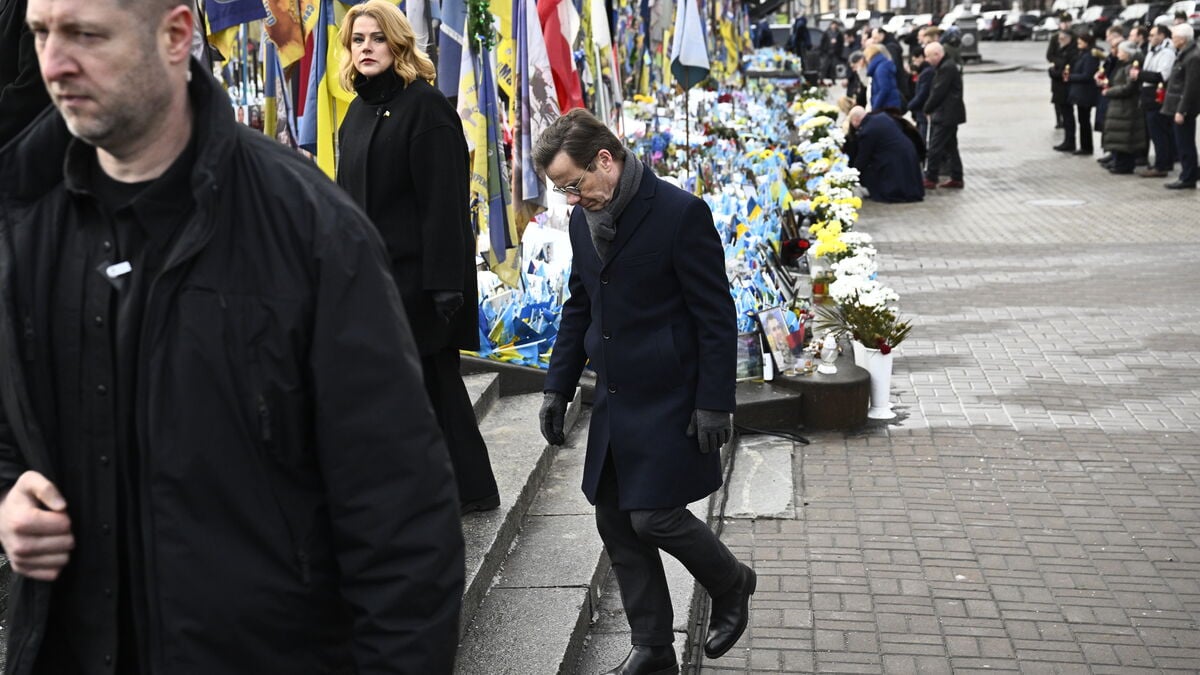
The Prime Minister, together with other Nordic-Baltic leaders, had taken the train to Kyiv on the day four years after Russia launched its full-scale attack.
In the Ukrainian capital, they participated, among other things, in a memorial ceremony on Maidan Square.
The strongest impression was made by a visit to a bombed combined heat and power plant in central Kyiv, which supplies heat to half a million people. Repairs were in full swing there.
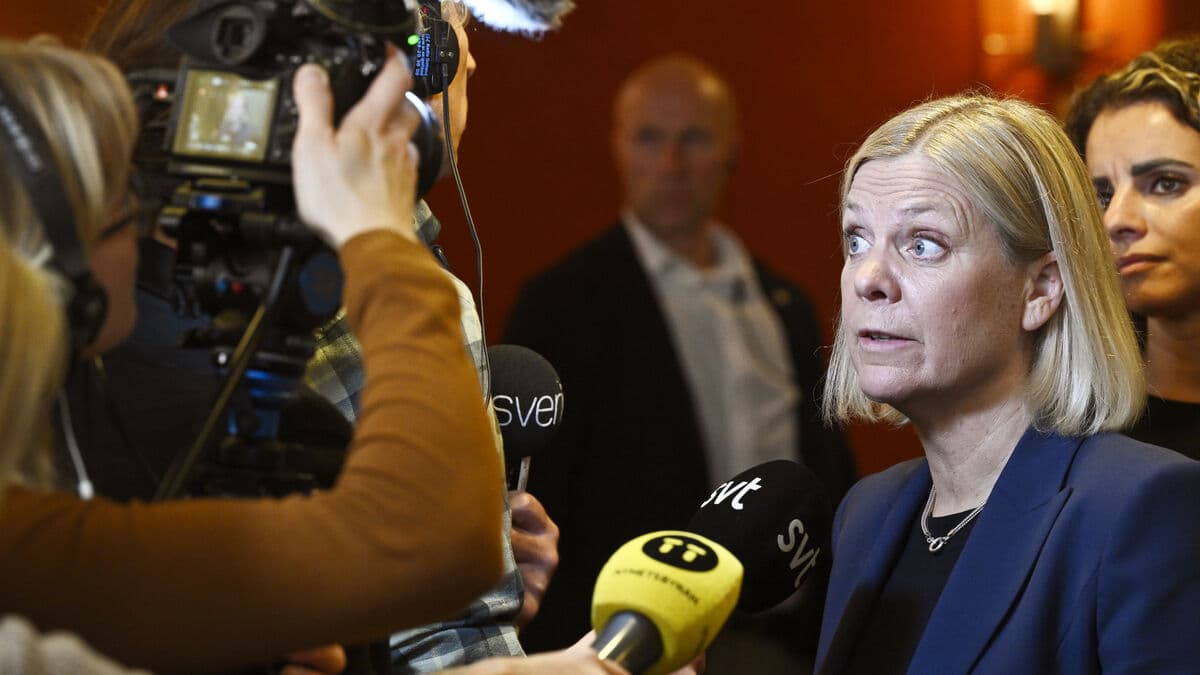
"You understand what happens when it's minus 25 degrees in a country where there's war and there's no heat in the apartments. It has devastating consequences," says Kristersson (M).
Holds them at bay
In the afternoon, the Nordic-Baltic leaders, European Commission President Ursula von der Leyen, and Council President António Costa had a meeting with Volodymyr Zelenskyy.
The President reported on the situation at the front and the Russian attacks on energy infrastructure.
"The good news is that they are keeping the Russians at bay at the front, but at high cost, of course," says Kristersson.
Does Ukraine have a chance to win the war?
"That it would be possible to win the war is quite obvious, but more must be done," says Kristersson.
"It must cost Russia so much that they realize that, sooner or later, they must negotiate a peace that is also acceptable to Ukraine."
According to Kristersson, this requires much more extensive sanctions from more countries.
"Simply shameful"
"Russia's economy is weak. Breaking down the Russian economy would have been the quickest way to stop this war. Unfortunately, we are not there."
Kristersson also emphasizes the importance of more countries donating or purchasing more air defense to Ukraine.
Sweden was the third largest donor of military aid to Ukraine last year.
Zelenskyy's appeal during the meeting was about increased pressure on Russia, a faster EU accession process for Ukraine, and continued arms deliveries.
The day before the memorial ceremony in Kyiv, Hungary threatened to block the EU's disbursements of 90 billion euros that will be borrowed to, among other things, finance continued military support to Ukraine.
"The signal from Hungary is really bad. Simply shameful," says Kristersson.
According to him, however, Ursula von der Leyen assured them that the EU will pay out the money.