Sweden's economic recovery continues. Just as before the summer, KI maintains in its new forecast that the long-term recession will finally ebb in 2027.
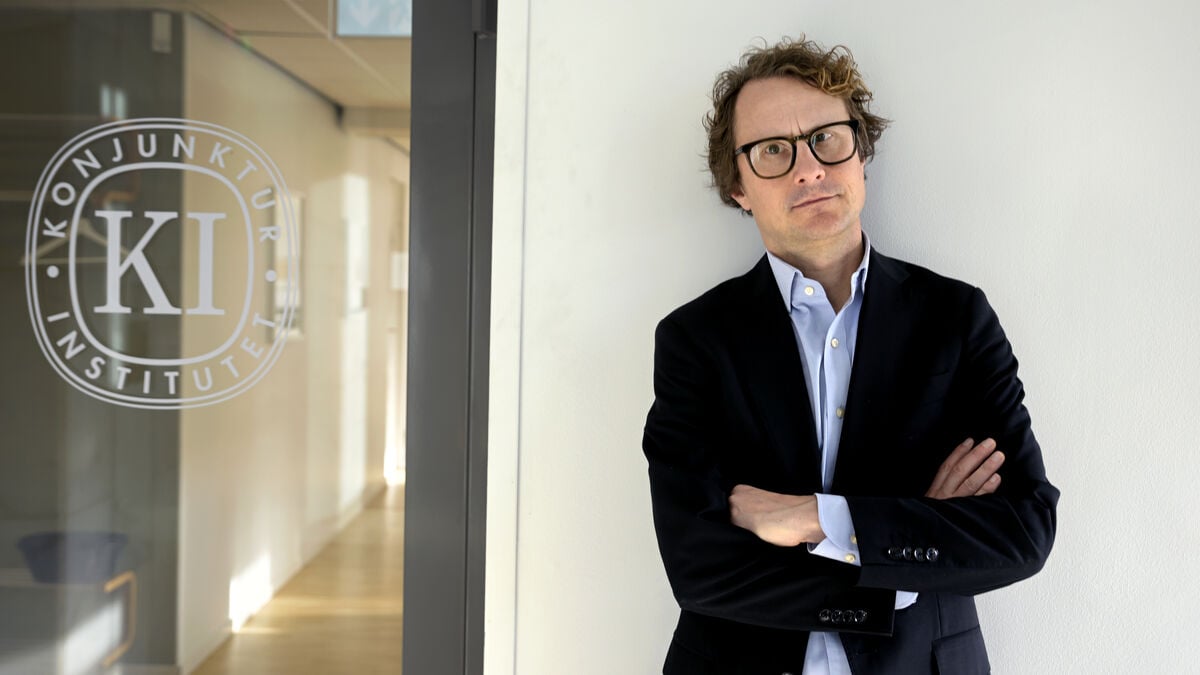
The information that has come in continues to show that the Swedish and global economies are resilient and growing. The economic downturn is far behind us, says KI's Director General Albin Kainelainen to TT.
Revising the forecast
This means, among other things, that GDP growth will be increased from 2.2 percent to 2.4 percent this year, while the 2027 figure will remain at 2.8 percent.
A series of tax cuts have contributed to inflation currently being well below the Swedish Central Bank's inflation target of 2.0 percent. However, it is expected to rise in 2027, and therefore KI now continues to forecast two interest rate increases, the first of which will take place in December this year.
This forecast goes against the picture of the four major banks, where no one believes in an interest rate increase this year. The Swedish Central Bank, in turn, has flagged that there is "a certain probability" of an increase.
What does KI see that the big banks don't?
We have a hike in December and it is clear that it is difficult to say exactly. The banks are perhaps six months or a few quarters ahead, at the same time, if we look at the market, it says that the hike will come in October rather than December.
From KI's perspective, the forecast is now four increases during the forecast period, which would mean a key interest rate of 2.75 percent in 2028.
Is the economic recovery stable enough to withstand all increases?
Yes, we see that the economy is more in balance next year and then it is natural that the interest rate will also be approximately at the long-term level and that is higher than today's 1.75 percent.
Unchanged unemployment
The side that emerges as the winner in the parliamentary elections in a couple of weeks may – if KI is right – avoid having to fight against headwinds in the form of a troublesome recession during the initial term of office, even though unemployment is expected to remain at almost 8 percent.
Sweden continues to have very low public debt, notes Albin Kainelainen, and according to KI, the so-called reform space amounts to around 23 billion per year for the next four years.
Voters who have seen various tax cuts on, for example, food and fuel will, however, be met with a different reality going forward, he points out:
There is some room for unfunded measures each year, but it is certainly not as large as it has been over the past eight years on average, he points out.
The National Institute of Economic Research (NIER) is raising its growth forecast and expects the recession to ebb in 2027.
GDP growth is expected to reach 2.4 percent this year, up from the previous forecast of 2.2 percent. Next year, growth is expected to reach 2.8 percent.
Unemployment is expected to reach 8.6 percent this year, the same figure as the previous forecast. In 2027, unemployment is expected to fall to 7.9 percent, before falling further to 7.2 percent the following year.
Inflation measured as CPIF is expected to amount to 1.3 percent this year, increasing to 2.1 percent next year.